
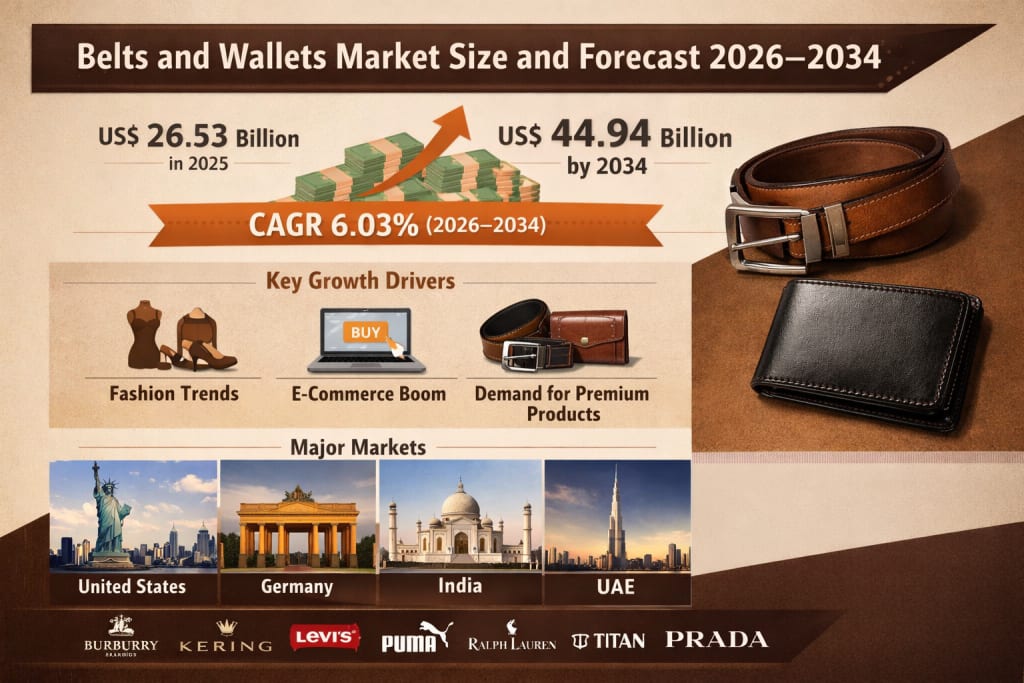
Belts & Wallets Market Hits $44.9B by 2034 | Seller Opportunities in Fashion Accessories
- $44.94B market by 2034 (6.03% CAGR) driven by Gen Z/millennial fashion consciousness, e-commerce personalization, and premiumization trends creating high-margin opportunities for cross-border sellers
Overview
The global belts and wallets market is undergoing a fundamental transformation from utility-focused commodity products into premium fashion lifestyle categories, representing a critical opportunity for e-commerce sellers. According to Renub Research, the market will expand from $26.53 billion in 2025 to $44.94 billion by 2034—a 69% increase at 6.03% CAGR—driven by shifting consumer perception among millennials and Gen Z who view accessories as central to personal identity and style expression.
E-commerce platforms have become the dominant sales channel, with social commerce and influencer marketing amplifying demand through limited-edition collections and designer collaborations. Personalization features like monogramming, custom colors, and modular designs are now table-stakes for competitive sellers. This creates immediate opportunities for sellers to differentiate through customization capabilities on Amazon, Shopify, TikTok Shop, and Pinterest—platforms where accessories marketing shows 3-5x higher engagement than traditional channels.
Premiumization is the primary profit driver, with consumers increasingly investing in branded, high-quality products featuring genuine leather, advanced synthetics, RFID-blocking technology, and sustainable materials. This segment commands 40-60% price premiums over mass-market alternatives, enabling sellers to achieve 35-50% gross margins versus 15-25% for commodity belts/wallets. Sustainable and ethically sourced materials are gaining particular traction in developed markets (North America, Europe), while Asia-Pacific emerges as the highest-growth region due to urbanization and rising middle-class purchasing power—creating arbitrage opportunities for sellers sourcing from Asia and selling to Western markets.
However, intense competition and market fragmentation present substantial challenges. Counterfeit products erode brand value in price-sensitive markets, supply chain volatility complicates manufacturing economics, and raw material cost fluctuations (driven by environmental regulations and geopolitical factors) compress margins. Sellers must accelerate product development cycles to match rapidly changing fashion trends while maintaining quality and managing inventory risk. For cross-border e-commerce sellers, success requires agile inventory management, strong brand differentiation through niche positioning, and strategic focus on premium/sustainable segments where margins justify operational complexity.
Immediate seller opportunities: (1) Premium leather goods with RFID protection targeting business professionals; (2) Sustainable/vegan leather wallets for eco-conscious Gen Z; (3) Limited-edition designer collaborations via influencer partnerships; (4) Customizable belts with monogramming/color options; (5) Modular wallet systems with interchangeable components. Asia-Pacific sourcing combined with Western market positioning offers 25-35% margin advantage over domestic competitors.
Questions 8
Which geographic regions offer the highest growth opportunities for cross-border sellers?
Asia-Pacific emerges as the highest-growth region due to urbanization and rising middle-class purchasing power, while North America and Europe maintain strength in premium segments. This creates a strategic arbitrage opportunity: sellers can source competitively from Asia-Pacific manufacturers and target Western markets where consumers pay 40-60% premiums for branded, sustainable products. The regional disparity means sellers positioned in Asia can achieve 25-35% margin advantages over domestic competitors when selling premium goods to developed markets.
How can sellers differentiate in a fragmented, competitive accessories market?
Market fragmentation and intense competition pressure pricing, but sellers can differentiate through: (1) Niche positioning in premium/sustainable segments (35-50% gross margins vs. 15-25% for commodities), (2) Personalization capabilities (monogramming, custom colors, modular designs), (3) Brand storytelling around ethical sourcing and sustainable materials, and (4) Limited-edition collaborations with micro-influencers. Counterfeit products erode brand value in price-sensitive markets, so sellers should focus on authenticated, branded products with clear value propositions. Strong brand differentiation is essential for success in this category.