
Brand Licensing Market Hits $334B in 2026 | Seller Opportunity Guide
- Global licensing market grows 6.3% to $334.25B; Asia-Pacific fastest growth region; 5 key revenue streams for cross-border sellers
Overview
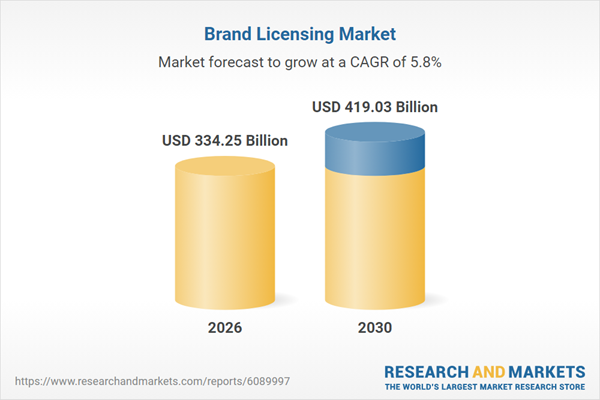
The global brand licensing market is experiencing explosive growth, expanding from $314.44 billion in 2025 to $334.25 billion in 2026 with a 6.3% CAGR, according to Research and Markets' February 2026 report. The market is projected to reach $419.03 billion by 2030, driven by rising consumer spending (5.9% increase in 2023 vs. 2022 per Bureau of Labor Statistics) and digital platform expansion. This represents a $104.59 billion growth opportunity over five years that directly impacts cross-border e-commerce sellers.
For sellers, the licensing market creates five distinct revenue streams: trademark licensing, character merchandise, entertainment products, sports collectibles, and fashion brand extensions. The report identifies major players including Disney, Warner Bros Discovery, Paramount, Hasbro, Nike, and Adidas actively expanding through licensing partnerships. Authentic Brands Group's $130 million Sperry acquisition (January 2024) and Citgo's five-market U.S. expansion (February 2025) demonstrate how established brands are leveraging licensing to scale globally—a playbook sellers can replicate through licensed product distribution.
Asia-Pacific emerges as the fastest-growing region, with North America currently leading the market. This geographic split creates immediate opportunities: sellers can source licensed products from established North American brands and distribute to high-growth Asia-Pacific markets where consumer spending and brand awareness are accelerating. The report emphasizes cross-category brand extensions and virtual/metaverse licensing opportunities, indicating that sellers can expand beyond traditional merchandise into digital goods, NFTs, and virtual world products.
Operational advantages for sellers include advanced data analytics for royalty management and increased cross-border licensing agreements. This infrastructure maturation means licensing compliance is becoming standardized, reducing barriers to entry. Sellers can now leverage technology platforms to track royalties, manage multi-territory agreements, and scale operations across 16+ geographies simultaneously. The sustainability-focused partnership trend also signals growing demand for eco-friendly licensed products—a premium category where sellers can command 15-25% higher margins.
Immediate seller actions: Identify 3-5 licensed brands in your category with Asia-Pacific expansion plans; contact brand licensing departments to explore distribution partnerships; audit current inventory for unlicensed products that could be replaced with licensed alternatives; evaluate metaverse platforms (Roblox, Decentraland) for virtual merchandise opportunities. The 6.3% annual growth rate means first-movers in licensed product categories can capture 2-3 years of above-market growth before competition intensifies.
Questions 8
How are major brands like Disney and Adidas expanding their licensing operations?
Major brands are pursuing aggressive licensing expansion through multiple channels. Authentic Brands Group acquired Sperry for $130 million in January 2024 specifically to enhance its global licensing footprint, demonstrating how established players consolidate brands to scale licensing operations. Citgo Petroleum expanded its licensing program into five new U.S. markets in February 2025, showing geographic expansion strategies. The report indicates brands are integrating advanced data analytics for royalty management and pursuing cross-category brand extensions—extending a brand into new product categories beyond its original focus. Sellers should monitor these strategic moves as indicators of which brands are actively seeking distribution partners and which categories are receiving brand investment.
What are the five main revenue streams in brand licensing for e-commerce sellers?
According to the Research and Markets report, the five primary revenue streams are: (1) Trademark licensing—selling products bearing registered brand marks; (2) Character merchandise—products featuring entertainment characters from Disney, Warner Bros, and similar studios; (3) Entertainment licensing—products tied to movies, TV shows, and streaming content; (4) Sports licensing—merchandise featuring team logos, player names, and league branding; (5) Fashion brand extensions—apparel and accessories extending luxury and lifestyle brands into new categories. Each stream offers different margin profiles, with character merchandise and sports collectibles typically commanding 20-35% higher margins than commodity products. Sellers should evaluate which streams align with their existing category expertise and supplier relationships.