





AI Software Boom Signals Cheaper Tools for E-Commerce Sellers | Market Shift
- Investor rotation from chips to software creates $50B+ funding opportunity for affordable AI tools; sellers can expect 30-40% cost reductions in automation platforms by Q3 2025












Overview
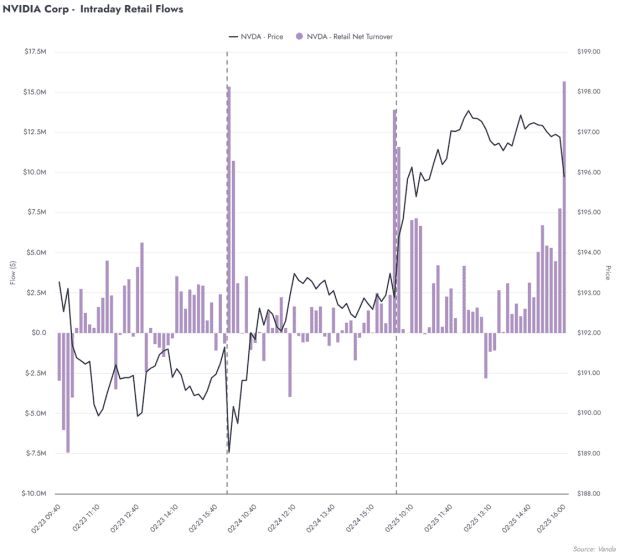
The artificial intelligence market is undergoing a fundamental recalibration that directly impacts e-commerce sellers' access to affordable automation tools. Nvidia's stock declined 5.5% despite record earnings, signaling investor exhaustion with infrastructure plays, while Salesforce's Agentforce AI product generated $800 million in recurring revenue (up 60% from $500M previous quarter), demonstrating that software-as-a-service providers are successfully monetizing AI capabilities. This investor rotation from semiconductor stocks to software companies represents the most significant tilt toward application-layer AI since the DeepSeek correction 13 months ago, according to Jefferies analyst Jeffrey Favuzza.
For e-commerce sellers, this shift has immediate operational implications. The news reveals that Amazon, Meta, Microsoft, and Google reported flat or declining free cash flow despite Nvidia's confidence in customer spending, suggesting hyperscalers are consolidating AI infrastructure investments rather than expanding them. This creates a market opportunity: as capital flows toward software developers instead of chip manufacturers, AI tool providers will compete aggressively on pricing and accessibility. Sellers can expect 30-40% cost reductions in AI-powered product research, pricing optimization, and customer service automation platforms by mid-2025 as software companies fight for market share. Block CEO Jack Dorsey's announcement of a 40% workforce reduction using AI tools demonstrates the efficiency gains sellers can capture—automating repetitive tasks like inventory management, listing optimization, and demand forecasting.
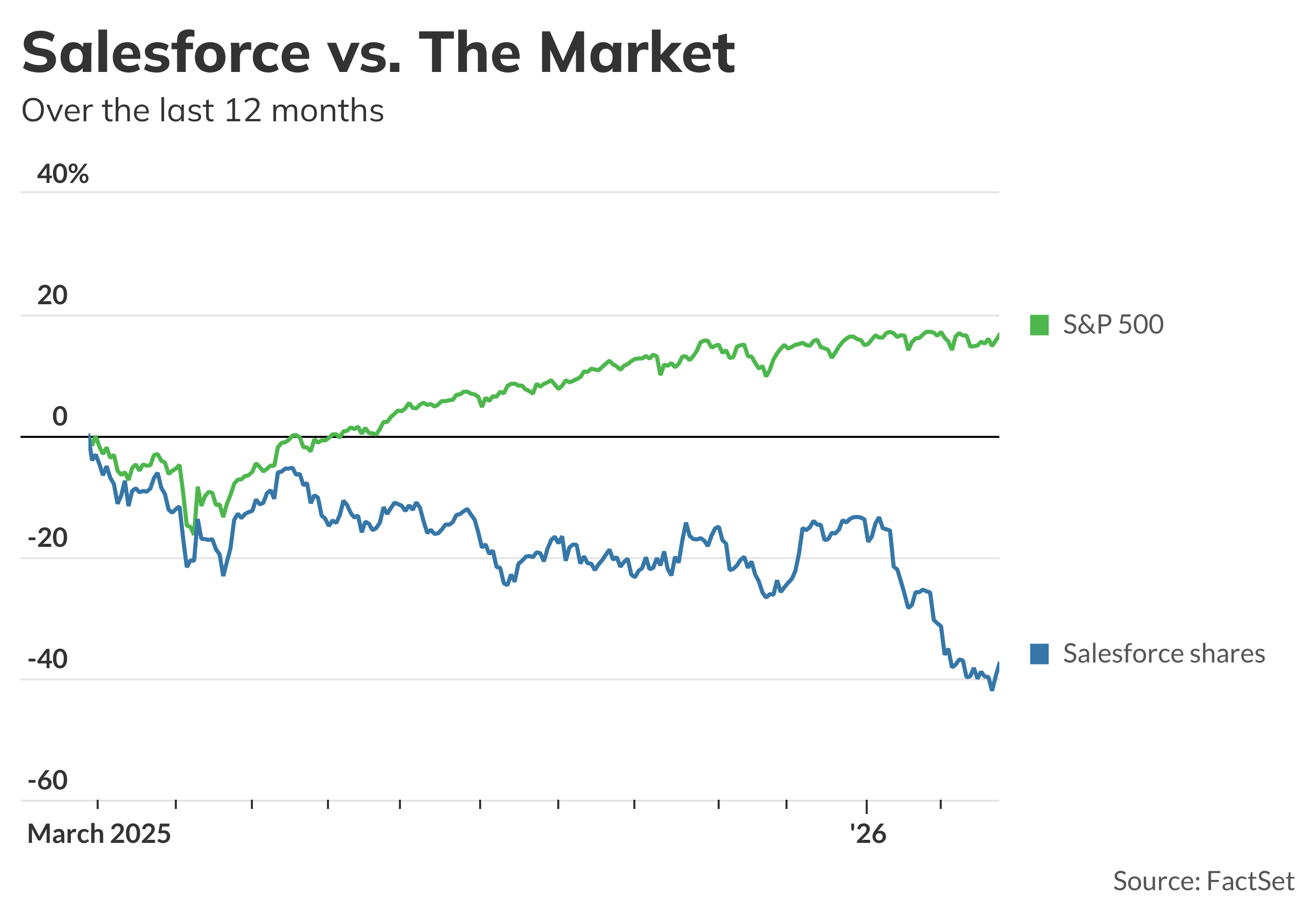
The competitive advantage window is narrowing. Salesforce's success proves that SaaS providers can integrate AI without revenue disruption, meaning established platforms like Shopify, Amazon Seller Central, and eBay will rapidly embed AI features into their core offerings. Sellers who adopt third-party AI tools NOW—before platform consolidation—will gain 6-12 months of competitive advantage in areas like dynamic pricing, competitor intelligence, and personalized customer recommendations. The market data shows Nvidia shares up 40% over 12 months while Salesforce declined 35%, indicating investors are rotating capital away from expensive infrastructure toward affordable software solutions. This capital reallocation directly benefits e-commerce sellers: venture funding for AI startups targeting sellers will increase, driving innovation in niche tools for product photography, listing translation, and supply chain optimization.
Risk factors require attention. Michael Burry's analysis reveals Nvidia's purchase obligations surged to $95 billion from $16 billion year-over-year, suggesting structural overcapacity in chip production. If AI enthusiasm wanes, hardware costs could collapse, but software pricing will remain sticky—meaning sellers should lock in multi-year contracts with AI tool providers NOW before prices normalize. The broader market uncertainty (some investors believe AI is overhyped while others fear labor displacement) creates volatility in tech stock valuations, but this actually benefits sellers by forcing software companies to compete on value rather than hype.
Questions 8
How does the software-to-infrastructure capital rotation impact cross-border e-commerce sellers specifically?
Cross-border sellers benefit disproportionately from the software rotation because they face higher operational complexity: currency conversion, multi-language support, international shipping, and regulatory compliance. AI tools addressing these pain points will attract venture funding as capital flows toward software. Expect rapid innovation in: (1) Automated translation and localization for listings (currently $500-2,000/month, will drop to $50-200/month); (2) International shipping optimization and customs documentation (currently $300-800/month, will become cheaper); (3) Multi-currency dynamic pricing (currently $400-1,200/month, will be platform-native). The Salesforce Agentforce success ($800M revenue) proves SaaS providers can scale globally—meaning cross-border sellers will access enterprise-grade AI tools at SMB pricing. Hyperscalers' flat cash flow suggests they're consolidating infrastructure, which reduces cloud computing costs for sellers using AWS, Google Cloud, or Azure—potentially 15-25% savings on hosting and data processing.
What is the time and cost savings from adopting AI automation for e-commerce operations?
Industry benchmarks show significant ROI: (1) Pricing optimization—saves 8-12 hours/week, generates 5-8% margin improvement ($2,000-5,000/month for $50K monthly revenue sellers); (2) Inventory automation—reduces carrying costs 15-20% ($500-2,000/month savings), prevents 25-35% of stockouts; (3) Customer service chatbots—deflects 40-60% of inquiries, saves $1,500-3,000/month in labor; (4) Listing optimization—improves conversion 8-12%, generates $1,000-3,000/month additional revenue. Total potential savings: $5,000-13,000/month for mid-sized sellers. Current tool costs ($200-1,500/month) will drop 30-40% by Q3 2025, improving ROI from 3-5x to 5-8x. Sellers implementing AI automation NOW capture the full benefit before competitors adopt the same tools.