
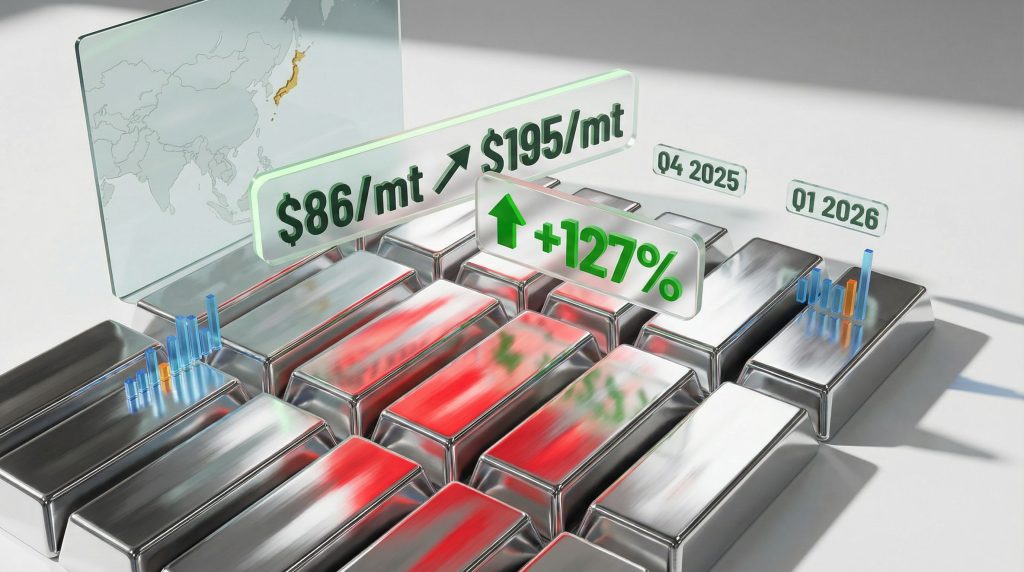
Japan Aluminium Premiums Surge 127% | Critical Cost Impact for Asian E-Commerce Sellers
- Q1 2026 premiums hit USD 195/tonne with Q2 projections of USD 220-250; 6-12 month supply constraints force sourcing strategy shifts for electronics, automotive, and packaging sellers
Overview
Japan's aluminium premium explosion represents a critical supply chain inflection point for cross-border e-commerce sellers sourcing from Asia. Q1 2026 premiums reached USD 195 per tonne—a staggering 127% increase from Q4 2025's USD 86 per tonne—with Q2 2026 projections of USD 220-250 per tonne (13-28% additional growth). This quarterly negotiation cycle between global producers and Japanese industrial buyers establishes regional pricing benchmarks that cascade throughout Asian manufacturing sectors, directly impacting landed costs for sellers in electronics, automotive accessories, packaging materials, and consumer goods categories.
The root cause: European smelter production cuts driven by electricity costs (13,000-16,000 kWh per metric tonne) create 6-12 month supply constraints across Asia. Low LME warehouse inventory combined with sustained energy cost pressures force producers to pass increases through premium negotiations within 3-6 month cycles. Transportation disruptions—ocean freight rate fluctuations, port congestion, vessel availability—operate on 2-4 month cycles, compounding premium volatility. For sellers manufacturing in Japan, South Korea, Taiwan, or Vietnam, this translates to immediate cost escalation: a typical electronics assembly requiring 50kg of aluminium components now costs USD 9.75 more per unit (Q1 vs Q4 2025), scaling to USD 975 additional cost per 100-unit shipment.
Immediate logistics implications demand urgent action. Sellers relying on Asian suppliers must lock in Q2 2026 supply agreements NOW before further premium increases materialize. The quarterly negotiation cycle creates predictable adjustment intervals—exploit this by securing 3-6 month forward contracts at current Q1 levels before Q2 negotiations conclude. Regional buyers throughout Asia reference Japanese premium outcomes when structuring supply agreements, making Japan's pricing transparency critical to negotiation timing. Supply security concerns now outweigh short-term cost considerations in industrial planning, meaning suppliers prioritize volume commitments over price haggling.
Strategic inventory repositioning is essential. For sellers with existing Asian manufacturing relationships, accelerate Q1 2026 production runs to build 60-90 day buffer inventory before Q2 premium increases take effect. Shift sourcing from aluminium-intensive categories (lightweight electronics cases, automotive trim, beverage packaging) toward alternative materials where feasible—plastic composites, steel, or magnesium alternatives—to reduce exposure. For sellers using 3PL warehouses in Singapore, Hong Kong, or Shanghai, negotiate fixed-rate storage contracts immediately; premium increases will drive up warehouse holding costs as suppliers pass through elevated input costs. Consider temporary inventory liquidation of slow-moving aluminium-dependent SKUs to free working capital before Q2 cost increases compress margins further.
Questions 8
How do ocean freight rate fluctuations interact with aluminium premium increases?
Transportation disruptions operate on 2-4 month cycles and directly affect premium calculations, according to the news. Ocean freight rate volatility compounds aluminium cost increases—when freight rates spike simultaneously with premium increases, total landed costs can increase 15-25% within a single quarter. The premium structure explicitly compensates producers for transportation coordination and working capital requirements, meaning freight volatility is already embedded in premium negotiations. Sellers should monitor Drewry Container Index and Shanghai Containerized Freight Index for freight rate trends and time shipments to avoid peak rate periods. Consider consolidating shipments to reduce per-unit freight costs and negotiate quarterly freight contracts with carriers to hedge against 2-4 month rate volatility cycles.
What inventory strategy should I implement before Q2 2026 premium increases?
Execute a three-part inventory strategy: (1) Accelerate Q1 2026 production runs to build 60-90 day buffer stock before Q2 premium increases take effect—this locks current USD 195/tonne pricing into finished goods inventory; (2) Liquidate slow-moving aluminium-dependent SKUs to free working capital before margin compression worsens; (3) Shift sourcing toward alternative materials for non-critical components to reduce aluminium exposure. For sellers using 3PL warehouses in Singapore, Hong Kong, or Shanghai, negotiate fixed-rate storage contracts immediately—premium increases will drive up warehouse holding costs as suppliers pass through elevated input costs. Prioritize high-margin, fast-turning SKUs for buffer inventory; avoid building excess stock of slow-moving items.