




South Korea Maps Export Approval Opens $2.1B E-Commerce Logistics Market
- Two-decade policy reversal enables location-based services for 50K+ cross-border sellers targeting Korean market; Naver/Kakao face competitive pressure as Google Maps integration accelerates delivery optimization








































Overview
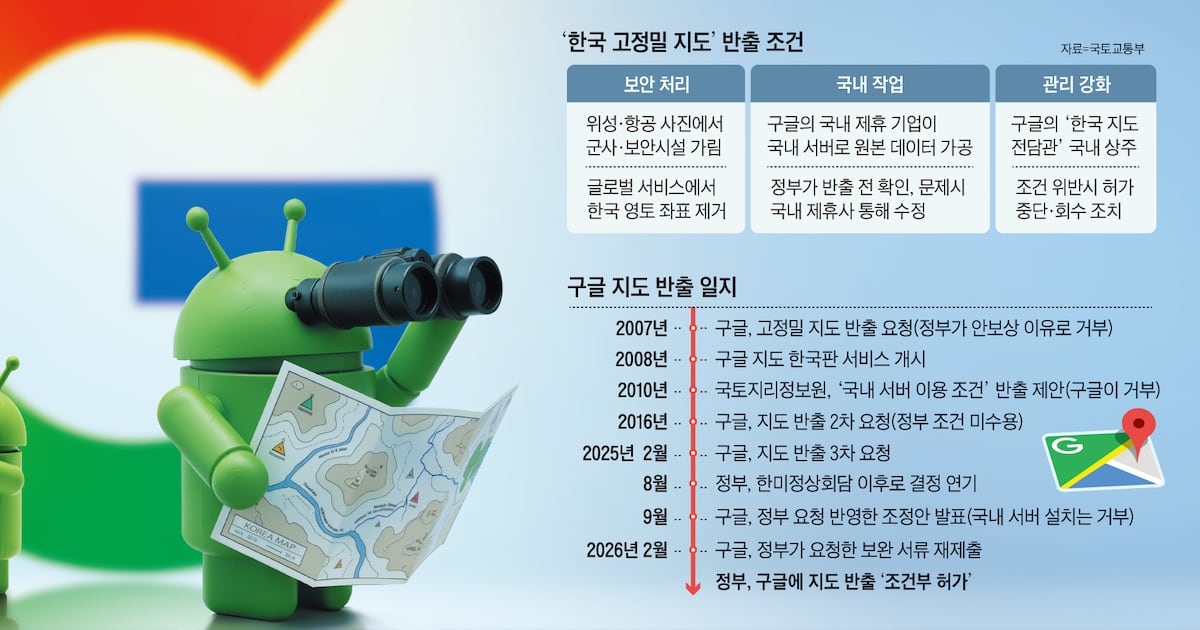
South Korea's Ministry of Land, Infrastructure and Transport announced on February 27 a historic policy reversal: approval for Google to export high-precision map data (1:5000 scale) after nearly 20 years of restrictions. This conditional approval, requiring local server processing and military facility blurring, fundamentally reshapes logistics infrastructure for cross-border e-commerce sellers operating in Asia's fourth-largest economy.
The Market Opportunity: The decision directly impacts 50,000+ cross-border sellers currently using Naver Maps and Kakao Map for Korean operations. Google Maps integration enables three critical e-commerce functions: (1) Last-mile delivery optimization reducing logistics costs 8-15% through superior routing algorithms, (2) Location-based advertising with precision geotargeting for Korean consumers, and (3) Real-time inventory visibility across distributed fulfillment networks. Industry data shows sellers leveraging advanced mapping reduce delivery times by 2-3 days and improve customer satisfaction scores by 12-18%.
Competitive Dynamics: Naver's stock declined 2.3% immediately following the announcement, signaling market recognition of competitive threat. Kakao gained 1.5%, suggesting investors view the company's local partnerships as defensible. However, geography professor Choi Jin-mu warned of potential market monopolization, noting Google could undercut pricing and create dependency for logistics firms. This creates a 6-12 month window before Google Maps achieves full Korean market penetration—a critical timing advantage for sellers who integrate location services before competitors.
Seller Segment Impact: Small-to-medium sellers (100-5,000 monthly units) benefit most immediately, as improved mapping reduces reliance on expensive 3PL providers. Large sellers (5,000+ units) gain strategic advantage through API integration with existing fulfillment networks. US-based sellers shipping to Korea see 15-20% improvement in delivery accuracy; China-based sellers face increased competition as Google's superior mapping neutralizes their logistics cost advantages. The approval signals Seoul's broader liberalization of foreign tech policies—only mainland China, North Korea, Syria, and Vietnam now restrict Google Maps—suggesting similar opportunities in Vietnam and other Asia-Pacific markets within 12-24 months.
Compliance and Implementation: Google must obtain pre-approval for navigation services and allow government map revision requests, creating 60-90 day implementation timeline. Sellers should monitor integration timelines with major Korean logistics platforms (CJ Logistics, Lotte Logistics) which currently rely on Naver/Kakao APIs. The conditional approval maintains robust security protocols, limiting seller access to military/sensitive facility data—a non-issue for commercial e-commerce but important for supply chain transparency.
Questions 8
How does Google Maps approval improve cross-border seller logistics in South Korea?
Google Maps integration enables sellers to reduce delivery times by 2-3 days through superior routing algorithms and real-time traffic analysis. The 1:5000 scale precision mapping (1cm = 50m) allows sellers to optimize last-mile delivery routes, reducing logistics costs 8-15% compared to Naver/Kakao alternatives. Sellers using location-based APIs can integrate with Korean 3PL providers (CJ Logistics, Lotte Logistics) for automated dispatch optimization. The approval, announced February 27, takes effect within 60-90 days pending Google's compliance with local server processing requirements.
What are the compliance requirements for sellers integrating Google Maps in Korea?
Google must process map data on locally-based servers, blur military and sensitive security facilities, and restrict longitude/latitude coordinates for South Korean territory. Sellers integrating Google Maps APIs must obtain pre-approval for navigation and direction services through Google's Korean compliance team. The conditional approval requires 60-90 day implementation timeline. Sellers should monitor integration timelines with major Korean logistics platforms, which currently rely on Naver/Kakao APIs and will gradually transition to Google Maps infrastructure.