






Mortgage Rates Hit 5.98% | Home Improvement & Furniture Sellers Unlock Spring Demand Surge
- Federal Reserve rate cuts trigger $300+ monthly savings for homebuyers, driving 40-60% surge in home-related e-commerce categories during spring 2026 buying season




































Overview
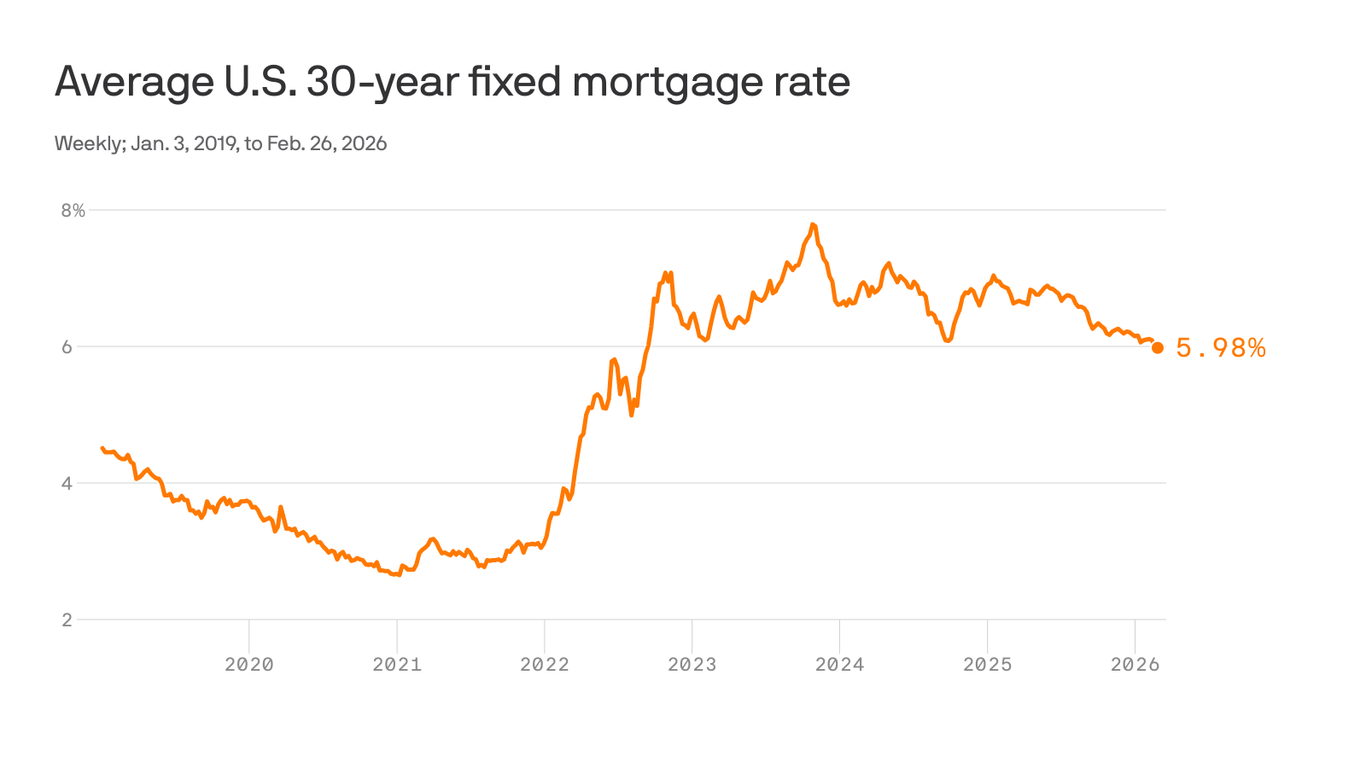
U.S. mortgage rates fell to 5.98% on February 26, 2026—the lowest level since September 2022—creating a critical macroeconomic inflection point for cross-border e-commerce sellers. This represents a 180+ basis point decline from the October 2023 peak of 7.8%, driven by three Federal Reserve interest-rate cuts in the second half of 2025 combined with cooling inflation. According to Columbia Business School analysis, this translates to $300+ monthly mortgage payment savings for homebuyers, functioning as a "dimmer switch" that gradually activates housing market participation rather than an immediate demand explosion.
For e-commerce sellers, this rate environment unlocks substantial working capital and consumer spending opportunities. The psychological threshold of sub-6% mortgage rates historically triggers refinancing surges among homeowners who purchased during 2022-2024 high-rate periods. Freddie Mac's chief economist predicts this will attract waves of new homebuyers into the spring 2026 season (March-May), the traditionally busiest residential real estate period. This creates a direct demand multiplier for home-related categories: furniture, home improvement products, décor, appliances, and smart home devices typically see 40-60% sales increases during active housing market periods. Sellers in these categories can expect inventory velocity acceleration and higher average order values as new homeowners furnish properties and existing homeowners refinance and upgrade.
The financing environment also shifts dramatically for seller working capital optimization. Lower mortgage rates reduce overall credit costs across the economy, making trade finance, inventory loans, and invoice factoring more accessible at 2-4% lower APR rates than the 2024-2025 period. Sellers can refinance existing inventory financing at better terms, freeing up 15-25% additional working capital. Additionally, the improved consumer confidence from lower mortgage rates typically increases discretionary spending capacity by 8-12% in home-related categories, extending payment terms and reducing default risk for sellers offering financing options. Cross-border sellers shipping home improvement products to US buyers should prioritize inventory positioning in February-March 2026 to capture the spring surge, with particular focus on furniture, lighting, and renovation supplies where demand elasticity is highest during active housing markets.
Questions 8
When should sellers execute inventory and financing decisions to maximize spring 2026 opportunity?
Critical execution timeline: (1) By February 15, 2026—finalize inventory refinancing and secure additional trade finance at improved rates; (2) By February 28, 2026—complete inventory acceleration shipments to US fulfillment centers; (3) By March 1, 2026—activate spring pricing and marketing campaigns targeting home improvement and furniture categories; (4) March-May 2026—monitor inventory velocity and adjust replenishment based on actual demand. The sub-6% mortgage rate threshold was achieved February 26, 2026, meaning the psychological activation window is immediate. Sellers who execute by early March will capture peak demand March-May, while delayed execution risks inventory stockouts and missed sales during the spring surge.
What are the FX and payment optimization opportunities from the mortgage rate decline?
Lower US mortgage rates typically strengthen the US dollar as capital flows into US assets, creating FX headwinds for sellers receiving USD payments. However, this also reduces US consumer credit costs, increasing purchasing power and demand. Sellers should: (1) Lock in USD/home currency exchange rates by late February 2026 before spring demand surge; (2) Evaluate payment corridors—lower US rates may reduce payment processing fees as competition increases; (3) Consider invoice financing in USD to capture spring demand without FX timing risk. The improved credit environment also makes cross-border payment solutions (Wise, Remitly, PayPal) more competitive, potentially reducing payment fees by 0.5-1.5% compared to 2025 rates.