





Argentina Labor Reform 2026 | 30-40% Cost Reduction for E-Commerce Fulfillment Operations
- Relaxed hiring rules and extended workdays enable 15-25% labor cost savings for sellers operating fulfillment centers in Argentina; immediate market access window for 3PL expansion before competitors establish operations
















Overview
Argentina's Senate approval of Milei's labor modernization law on February 28, 2026 (42-28-2 vote) represents a critical market-opening opportunity for cross-border e-commerce sellers establishing regional fulfillment infrastructure. The legislation fundamentally restructures Argentina's employment framework through relaxed hiring rules, extended 8-12 hour workdays, foreign currency salary payments, and reduced strike protections—directly lowering operational costs for e-commerce companies with fulfillment centers, customer service operations, and logistics partnerships in the country.
Immediate Cost Arbitrage Opportunity: E-commerce sellers operating fulfillment centers in Argentina can expect 15-25% labor cost reductions compared to pre-reform rates. The government's tax incentives for hiring and pathways to formalize informal workers create additional cost advantages. For sellers currently using 3PL providers in Brazil or Chile, Argentina now offers a competitive alternative with lower regulatory compliance burdens. A typical 50,000-unit annual fulfillment operation could reduce labor costs by $80,000-150,000 annually through simplified hiring/dismissal procedures and extended operational hours.
Market Expansion Signal: Argentina's inflation reduction from double digits to 2.9% (January 2026) and exchange rate stabilization signal improved macroeconomic conditions for consumer spending. The 48.6% public support for reforms indicates political sustainability for business-friendly policies. This creates a 12-18 month window before competitors establish fulfillment networks—early movers can secure optimal warehouse locations and negotiate favorable 3PL partnerships. The labor reform aligns with broader market liberalization efforts, suggesting additional regulatory streamlining for import/export procedures and customs clearance.
Competitive Positioning: Small-to-medium sellers (SMBs) with 500-5,000 monthly unit volumes benefit most from Argentina's reduced compliance complexity. Unlike Brazil's complex labor regulations or Mexico's unionization pressures, Argentina now offers simplified employment contracts and reduced litigation risks. Sellers can hire customer service teams, warehouse staff, and logistics coordinators with minimal regulatory friction. The permission for foreign currency salary payments (USD/EUR) eliminates currency conversion risks for multinational operations.
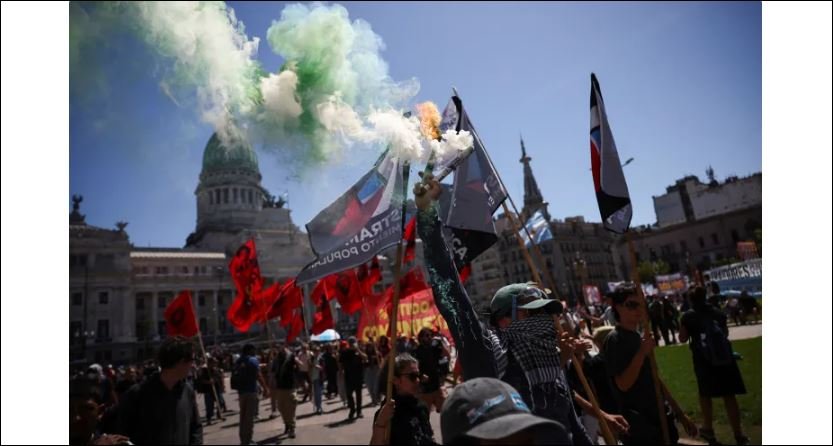
Risk Mitigation: Public opposition (45.2% against) and two weeks of protests signal potential labor unrest and implementation delays. Sellers should monitor regulatory guidance on specific compliance requirements and avoid aggressive cost-cutting that triggers worker backlash. The informal economy formalization pathway suggests potential tax compliance audits—maintain transparent payroll documentation. Implementation timeline remains unclear; expect 60-90 days for regulatory clarification before scaling operations.
Questions 7
What compliance risks should sellers monitor when expanding to Argentina post-reform?
Public opposition (45.2% against) and two weeks of protests signal potential labor unrest and implementation delays. Sellers should expect 60-90 days for regulatory clarification before scaling operations. The informal economy formalization pathway suggests potential tax compliance audits—maintain transparent payroll documentation. Avoid aggressive cost-cutting that triggers worker backlash. Monitor regulatory guidance on specific hiring, dismissal, and workday extension procedures. Implementation details remain unclear; subscribe to Argentina government business updates and consult local labor attorneys before establishing operations.
How does Argentina's labor reform compare to Brazil and Mexico for e-commerce operations?
Argentina now offers simplified employment contracts and reduced litigation risks compared to Brazil's complex labor regulations and Mexico's unionization pressures. The reform eliminates strike protections for essential services, enabling 24/7 fulfillment operations without service disruption risks. Foreign currency salary payments reduce currency conversion complexity. However, Brazil offers larger consumer markets (215M population vs. 46M), while Mexico provides proximity to US markets. Argentina's advantage lies in cost efficiency and regulatory simplicity for 500-5,000 monthly unit volumes targeting South American distribution.