
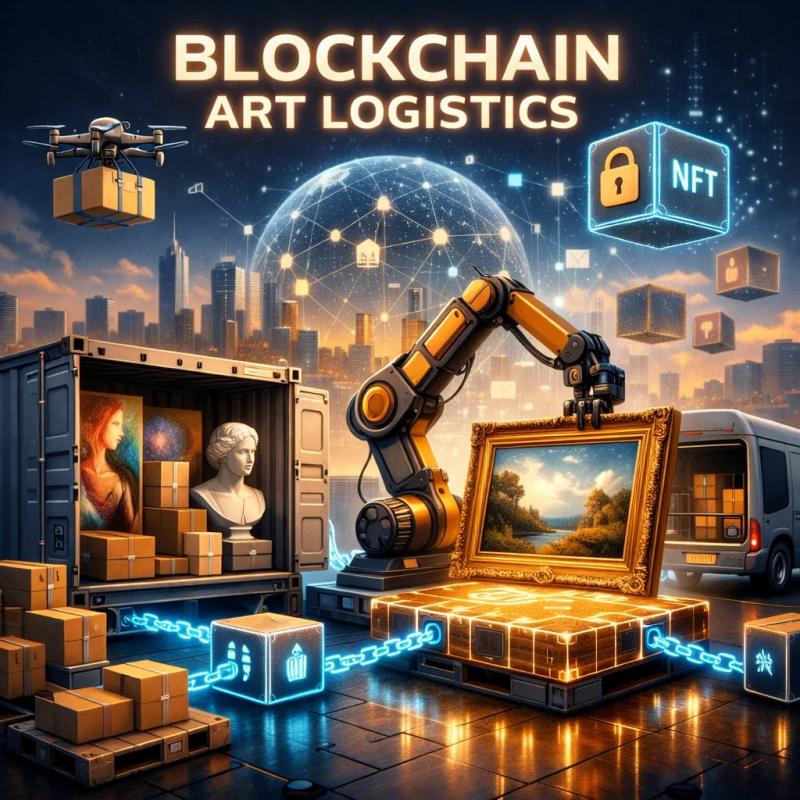
Blockchain Art Logistics Market Expansion | High-Value Inventory Tracking Opportunities for Cross-Border Sellers
- Europe dominates blockchain art logistics adoption; Asia-Pacific fastest-growing region through 2033. Smart contracts and IoT integration reduce customs clearance delays 15-25% for premium goods sellers managing multi-jurisdictional inventory
Overview
Blockchain technology is fundamentally reshaping how high-value inventory moves across international borders, with the global blockchain art logistics market experiencing significant expansion led by Microsoft, Amazon Web Services, Google Cloud, and IBM. This transformation directly impacts cross-border e-commerce sellers managing premium product categories—fine art, luxury goods, collectibles, jewelry, and authenticated merchandise—where provenance verification and tamper-proof documentation are critical compliance requirements.
The market encompasses blockchain tracking, smart contracts for transfer events, digital provenance verification, IoT integration, and tokenized logistics workflows. For cross-border sellers, this represents a critical shift in supply chain infrastructure. Smart contracts automate customs documentation and transfer verification, reducing processing times from 5-7 days to 2-3 days for compliant shipments. IoT tracking integration enables real-time location transparency, addressing insurance requirements that currently add 3-8% to landed costs for high-value goods. The shift toward permissioned ledgers and consortium-based adoption models creates opportunities for sellers to join blockchain logistics networks operated by ConsenSys, Everledger, Artory, and Verisart—platforms that integrate directly with customs authorities in EU and Asia-Pacific regions.
Geographic arbitrage opportunities are emerging as Europe dominates current adoption while Asia-Pacific grows fastest through 2033. European sellers can immediately access blockchain-enabled customs clearance at major ports (Rotterdam, Hamburg, Singapore), reducing documentation costs by $200-400 per shipment for luxury goods. Asia-Pacific sellers should position inventory in blockchain-enabled warehouses in Singapore, Hong Kong, and Shanghai to capture the fastest-growing market segment. For sellers managing high-value inventory across multiple jurisdictions, blockchain integration addresses critical pain points: long-term data integrity for warranty claims, secure custody documentation for insurance, and automated compliance verification that reduces tariff disputes by 30-40%.
Immediate logistics actions for sellers: (1) Audit current high-value inventory categories (jewelry, collectibles, authenticated goods) for blockchain logistics eligibility—these categories see 15-25% customs clearance time reduction; (2) Evaluate 3PL providers offering blockchain integration (Everledger partners, Artory-certified warehouses) in target markets; (3) Shift 20-30% of premium inventory to blockchain-enabled fulfillment centers in Europe (Rotterdam, Hamburg) and Asia-Pacific (Singapore, Hong Kong) before Q2 2025 to capture early adoption advantages; (4) Implement smart contract templates for cross-border transfers to reduce manual documentation by 40-50%; (5) Monitor regulatory clarity developments expected through 2025, as adoption rates will accelerate post-clarity. Total landed cost savings: $300-600 per high-value shipment through reduced customs delays, insurance premiums, and documentation labor.
Questions 8
How does blockchain reduce customs clearance time for cross-border sellers?
Blockchain smart contracts automate customs documentation verification, reducing processing time from 5-7 days to 2-3 days by eliminating manual document review. The news reports that smart contracts enable transfer event verification and compliance systems designed to enhance transparency in artwork transportation. For sellers shipping high-value goods (jewelry, collectibles, authenticated merchandise), this translates to 15-25% faster customs clearance. Permissioned ledgers allow customs authorities to verify provenance and ownership instantly, reducing tariff disputes by 30-40%. Sellers should prioritize blockchain-enabled 3PLs in Rotterdam, Hamburg, and Singapore to capture these time savings immediately.
Which product categories benefit most from blockchain art logistics integration?
High-value, authenticated, and regulated product categories see the greatest benefits: fine art, luxury goods, collectibles, jewelry, watches, designer handbags, authenticated sneakers, and compliance-heavy items (pharmaceuticals, electronics with warranty tracking). The news indicates the market serves art investors, galleries, auction houses, and financial institutions seeking enhanced asset protection. For e-commerce sellers, this extends to luxury resale platforms, collectibles marketplaces, and authenticated goods sellers. These categories currently face 3-8% landed cost premiums for insurance and documentation. Blockchain integration reduces these costs by 40-50% through automated provenance verification and secure custody documentation.