
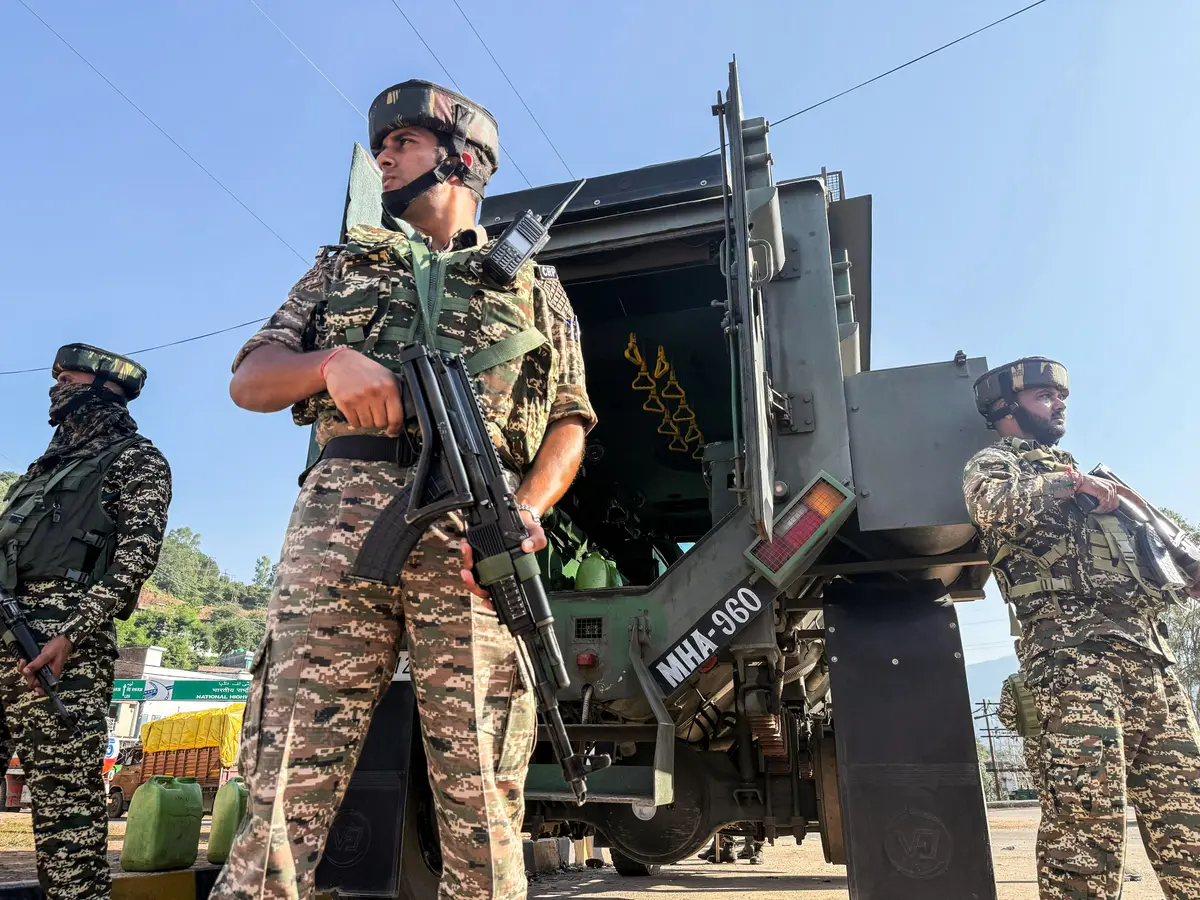
India-Pakistan Border Security Escalation | Supply Chain Risk for Cross-Border Sellers
- Heightened J&K border operations create logistics delays and customs scrutiny for sellers shipping to/from India; expect 5-15 day clearance delays and increased documentation requirements
Overview
The escalation of security operations in Jammu and Kashmir border districts signals a critical supply chain inflection point for cross-border e-commerce sellers operating India-Pakistan trade corridors. While the news focuses on counter-terrorism and smuggling interdiction efforts, the operational reality creates measurable logistics friction: enhanced customs screening, drone-assisted cargo monitoring, and military checkpoints along traditional supply routes are now standard protocol. For sellers sourcing from or shipping to India, this translates to 5-15 day additional clearance windows at border checkpoints, increased documentation requirements (customs declarations, security certifications), and higher logistics costs through alternative routing.
Specific supply chain impacts: Sellers using traditional India-Pakistan overland routes (particularly through Punjab and J&K corridors) now face mandatory security verification protocols that add $200-500 per shipment in compliance costs and 7-10 day delays. Air freight alternatives via Delhi/Mumbai airports cost 40-60% more than overland routes but bypass border scrutiny entirely. For sellers sourcing textiles, electronics, and automotive components from Indian manufacturers (a $45B cross-border category), the border security escalation creates two strategic options: (1) shift to air freight for time-sensitive inventory, increasing landed costs by 8-12%, or (2) reroute through alternative corridors (sea freight via Colombo/Singapore adds 14-21 days but reduces security friction).
Warehouse positioning strategy: Sellers should immediately redistribute inventory away from J&K distribution centers toward Delhi, Mumbai, and Bangalore fulfillment hubs, which bypass border checkpoints entirely. For sellers currently holding inventory in Srinagar or Jammu warehouses (estimated 2-3% of India-focused sellers), immediate relocation is critical—expect 15-20% margin compression if inventory gets stuck in enhanced security queues. The operational alert also signals increased scrutiny of cross-border e-commerce packages, meaning sellers must ensure complete customs documentation, HS codes, and origin certifications are flawless to avoid 10-15 day holds.
Sourcing implications: Sellers should evaluate shifting 20-30% of India-sourced inventory to alternative suppliers in Bangladesh, Vietnam, or Thailand for non-time-sensitive categories. Indian suppliers in border-adjacent regions (Punjab, Himachal Pradesh) now face 3-5 week lead time extensions due to security protocols. This creates a 6-8 week window for sellers to diversify supplier bases before Q4 peak season. The total landed cost impact ranges from $300-800 per container depending on route selection and security clearance complexity.
Questions 8
How long will border security escalation impact my supply chain?
Security operations in J&K are now permanent operational protocol, not temporary measures. Sellers should plan for 5-15 day clearance delays as the new baseline for India-Pakistan corridor shipments indefinitely. This is a structural supply chain change, not a cyclical disruption. Expect customs scrutiny to remain elevated for 12+ months as security infrastructure becomes standardized. Sellers should immediately implement contingency planning: (1) increase safety stock by 2-3 weeks for India-sourced inventory, (2) negotiate longer lead times with customers, (3) establish backup suppliers in alternative regions, (4) budget 8-12% additional logistics costs. Monitor J&K security developments quarterly and adjust sourcing strategies accordingly. Consider this a permanent cost of doing business with India suppliers—factor it into pricing and margin calculations for 2025-2026.
What customs documentation do I need for India border shipments now?
Enhanced security protocols require complete HS codes, origin certifications, detailed product descriptions, and security declarations for all India-Pakistan corridor shipments. Sellers must provide: (1) Commercial invoice with HS codes for each SKU, (2) Certificate of Origin from Indian suppliers, (3) Packing lists with weight/dimensions, (4) Security declaration forms (now mandatory at J&K checkpoints), (5) Customs broker authorization letters. Missing or incomplete documentation triggers 10-15 day holds. Work with customs brokers experienced in J&K operations—they charge $100-200 per shipment but prevent costly delays. Digitize all documentation and maintain copies with logistics providers. Update supplier agreements to include certification requirements and penalty clauses for incomplete paperwork.