






Bitcoin Volatility & Institutional Adoption | Cross-Border Seller Payment Strategy 2026
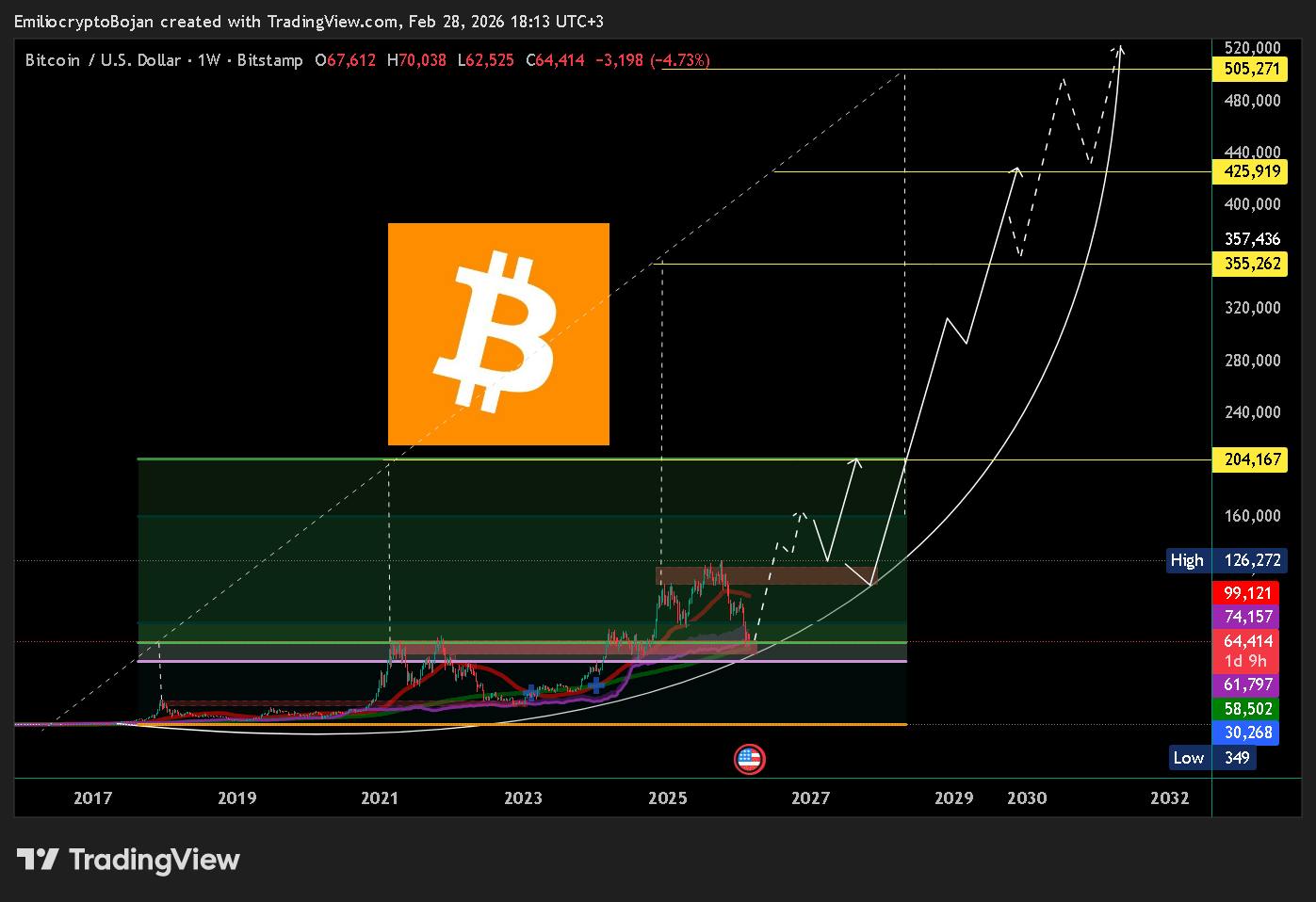
- Bitcoin trading at $65,425 (Feb 2026) with $500K target by 2030; institutional ETF adoption reshapes payment volatility risk for international sellers accepting crypto payments





























Overview
Bitcoin's institutional adoption trajectory directly impacts cross-border e-commerce payment infrastructure and working capital management for sellers accepting cryptocurrency. Standard Chartered's Geoff Kendrick projects Bitcoin reaching $500,000 by 2030 (published February 28, 2026), while current trading sits at $65,425—down from a 52-week high of $126,079.89. This volatility creates both risk and opportunity for sellers managing multi-currency payment flows. Bitcoin ETF holdings have declined approximately 25% from peaks, signaling institutional investor caution, yet analysts predict institutional involvement through spot ETFs will stabilize long-term price movements compared to previous cycles.
For cross-border sellers, this volatility directly affects three critical financial operations: First, payment settlement timing and FX risk management—sellers accepting Bitcoin or stablecoin payments face 15-30% price swings within weeks, requiring immediate conversion to fiat currency or hedging strategies. A seller receiving $100,000 in Bitcoin at $65,425 could see that value fluctuate $15,000-25,000 within 30 days without proper hedging. Second, working capital acceleration opportunities—platforms like Shopify, Stripe, and emerging crypto payment processors (Coinbase Commerce, BitPay) now offer instant fiat conversion, reducing cash conversion cycles from 3-5 days to same-day settlement. Sellers can unlock $50,000-500,000 in working capital immediately by switching from traditional ACH (5-7 day settlement) to crypto-enabled payment gateways with instant conversion. Third, financing access expansion—institutional adoption signals that crypto-collateralized lending (BlockFi, Celsius-style products) will mature, enabling sellers to pledge Bitcoin holdings as collateral for inventory financing at 6-12% APR versus traditional 18-24% merchant cash advances.
Institutional investor confidence (Ark Invest projects $710,000 by 2030 with $300K-$1.5M range) indicates payment processor consolidation around crypto rails. Sellers should evaluate whether accepting Bitcoin/stablecoins reduces payment processing fees by 40-60% compared to credit card networks (2.9% + $0.30 per transaction). For a seller processing $500,000 monthly in cross-border transactions, crypto payments could save $14,500-29,000 annually while improving cash flow by 2-3 days. However, the Crypto Fear & Greed Index at 14/100 (extreme fear) suggests near-term volatility will persist—sellers must implement hedging strategies or instant conversion protocols before expanding crypto payment acceptance.
Questions 8
What payment processing fee savings can I achieve with cryptocurrency?
Cryptocurrency payment processors charge 0.5-1.5% versus credit card networks at 2.9% + $0.30 per transaction. For a seller processing $500,000 monthly in cross-border transactions, crypto payments save $14,500-29,000 annually. However, institutional adoption (Bitcoin ETF inflows) is still stabilizing—current market conditions show 25% ETF holdings decline, indicating caution. Evaluate crypto payment adoption for 10-15% of transaction volume initially, focusing on high-value B2B transactions ($5,000+) where fee savings justify integration complexity. Stripe and Shopify now offer one-click crypto integration with instant USD conversion, reducing implementation time to 2-3 hours.
How can I use Bitcoin holdings as collateral for inventory financing?
Institutional adoption signals maturation of crypto-collateralized lending products. Platforms like BlockFi, Celsius, and emerging DeFi protocols offer 6-12% APR financing against Bitcoin holdings versus 18-24% merchant cash advances. A seller holding $100,000 in Bitcoin can borrow $60,000-80,000 at 8% APR ($480-640/month) versus $1,500-2,000/month through traditional merchant cash advances. However, lending platforms currently require 6-12 month lock-in periods and face regulatory scrutiny—verify platform insurance coverage (Celsius bankruptcy in 2022 cost users $8B). Start with $10,000-25,000 test positions to evaluate platform stability before scaling.