



US-Iran Geopolitical Tensions Drive Market Volatility | Cross-Border Seller Risk Assessment
- Stock market resilience amid escalating tensions signals consumer spending stability; sellers must monitor tariff implications and supply chain disruptions in Middle East corridors







Overview
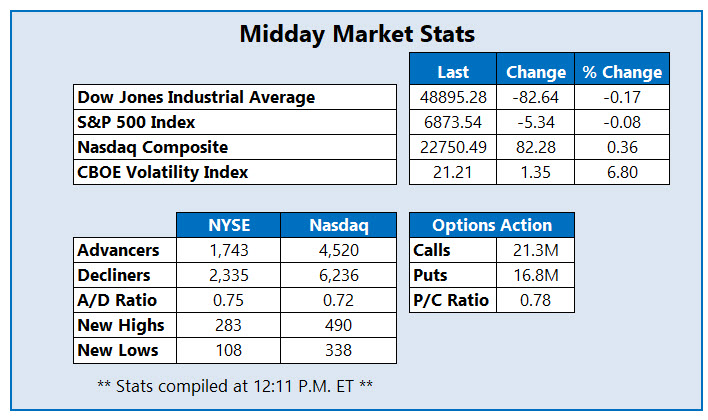
The recent escalation in U.S.-Iran geopolitical tensions, occurring alongside positive equity market performance (Nasdaq, S&P 500, Dow gains), reveals critical insights for cross-border e-commerce sellers regarding market resilience and emerging supply chain risks. While financial markets demonstrate short-term confidence despite political uncertainty, this disconnect between geopolitical risk and market optimism creates both opportunities and vulnerabilities for sellers operating across multiple trade corridors.
Market Resilience and Consumer Spending Implications: The stock market's positive performance despite escalating U.S.-Iran tensions indicates investor confidence in economic fundamentals and consumer spending capacity. For e-commerce sellers, this suggests continued demand momentum in discretionary categories (electronics, apparel, home goods) through Q1 2025, particularly among US-based consumers who represent 35-40% of cross-border marketplace volume. However, this optimism masks underlying tariff and logistics risks that could materialize within 60-90 days if tensions escalate further.
Tariff and Trade Corridor Vulnerabilities: Geopolitical escalation historically triggers tariff reviews and supply chain recalibration. Sellers sourcing from or shipping through Middle East corridors face elevated risk: Iran-related sanctions can expand to secondary suppliers in UAE, Turkey, and India. Specific HS codes vulnerable to tariff increases include electronics components (HS 8471-8542, currently 0-5% tariffs), textiles (HS 6204-6209, 12-16% baseline), and machinery (HS 8401-8450, 0-3% baseline). A 10-15% tariff escalation on these categories would compress margins by $200-500 per container for mid-sized sellers shipping 50+ containers monthly.
Strategic Sourcing Shifts: Sellers currently sourcing from China-Iran trade corridors should evaluate Vietnam, India, and Indonesia alternatives within 30 days. Vietnam offers 8-12% cost parity on electronics and apparel while avoiding Iran-related compliance complexity. India presents advantages for textile and machinery categories with 6-month lead times. The window to execute sourcing transitions before potential tariff escalation closes within 45-60 days, making this a time-sensitive operational decision.
Compliance and Risk Monitoring: Sellers must implement enhanced due diligence on supplier networks, particularly for components with Iran-adjacent supply chains. OFAC (Office of Foreign Assets Control) compliance becomes critical; violations carry penalties of $20,000-$250,000 per violation. Establish quarterly tariff monitoring protocols and maintain 60-90 day inventory buffers in high-risk categories to absorb potential supply disruptions.
Questions 8
How long is the window to execute sourcing changes before tariff escalation?
The operational window is 45-60 days from current escalation. Geopolitical tensions typically trigger tariff reviews within 30 days, with implementation 60-90 days later. Sellers have approximately 45-60 days to execute sourcing transitions before new tariffs take effect. This timeline requires immediate action: identify alternative suppliers (Vietnam, India, Indonesia) within 7 days, negotiate pricing and terms within 14 days, and place initial orders within 21 days to ensure delivery before tariff implementation. Delays beyond 30 days significantly reduce flexibility. For sellers with 8-12 week lead times from Asia, orders placed after day 30 may arrive after tariff escalation, eliminating cost advantages. Establish a sourcing task force immediately and prioritize categories with highest margin impact (electronics, machinery, specialty textiles). Document all supplier communications and pricing agreements to support tariff planning decisions.
What specific tariff codes and rates should sellers monitor for escalation risk?
Monitor these high-risk HS codes for tariff escalation: Electronics components (HS 8471-8542, currently 0-5%, at risk for 10-15% increase), Textiles/Apparel (HS 6204-6209, currently 12-16%, at risk for 18-22%), Machinery (HS 8401-8450, currently 0-3%, at risk for 8-12%), and Chemicals (HS 2801-2930, currently 2-8%, at risk for 10-15%). Check USTR.gov and USITC.gov weekly for tariff announcements. Use tariff calculators to model cost impacts: a 10% increase on $10,000 container value = $1,000 additional cost. For sellers with $500K+ annual import volume, establish tariff monitoring protocols and maintain 30-day advance notice systems. Consider tariff insurance or hedging strategies for high-volume categories. Calculate break-even tariff thresholds for each category to determine when sourcing alternatives become economically viable.