




Wi-Fi 8 FastConnect 8800 Chip | E-Commerce Sellers Gain 11.6 Gbps Connectivity Advantage
- Qualcomm's 2026 Wi-Fi 8 rollout delivers 2x speed, 3x range, 30% power savings for warehouse automation and AI-driven inventory systems












Overview
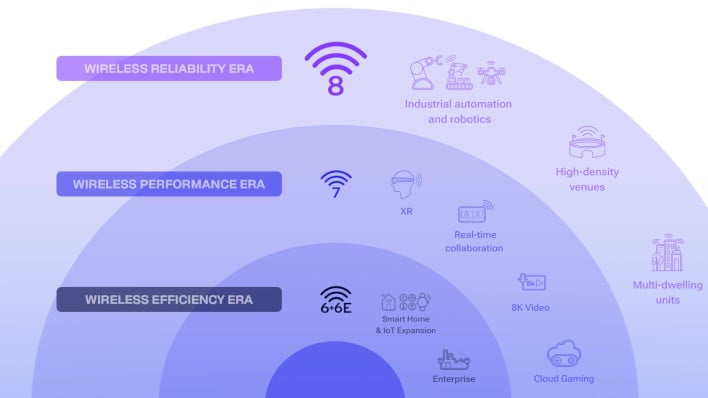
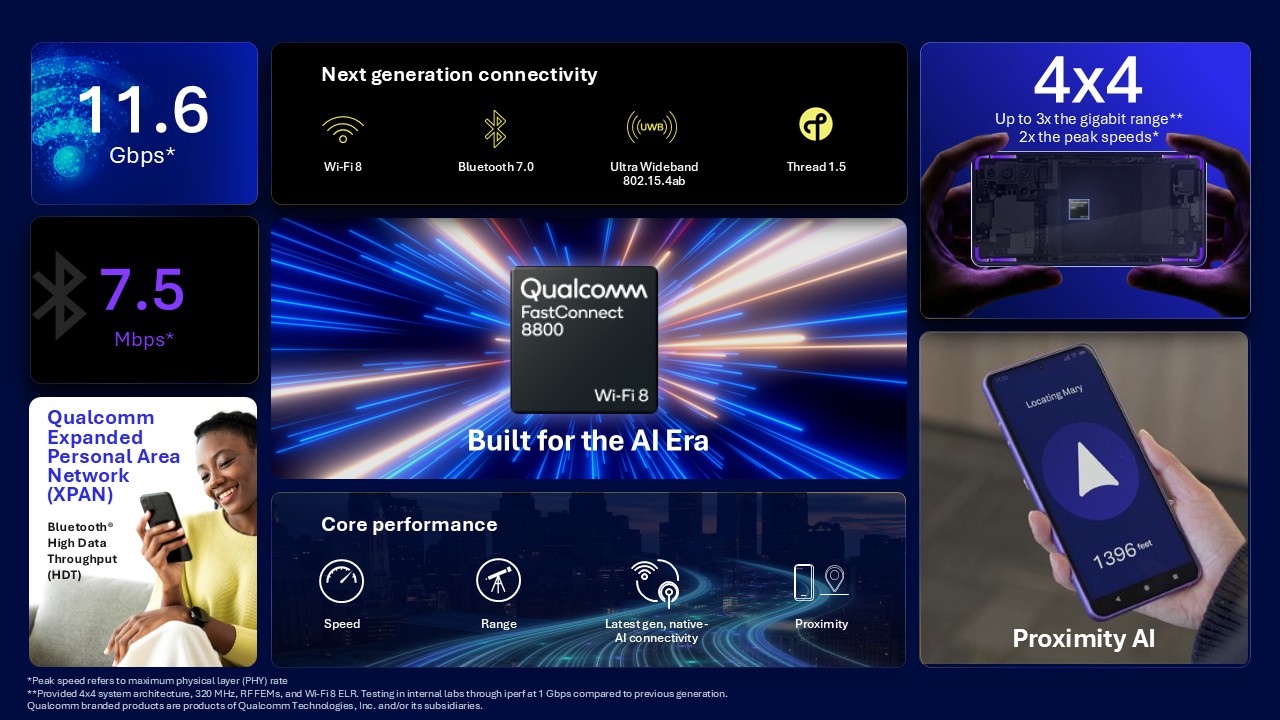
Qualcomm's FastConnect 8800 Wi-Fi 8 chip represents a critical infrastructure upgrade for e-commerce sellers managing fulfillment operations, inventory systems, and AI-powered logistics networks. Unveiled at Mobile World Congress 2026, the chip delivers 11.6 Gbps peak speeds—double previous Wi-Fi 7 performance—while enabling sustained 1 Gbps connectivity at signal strengths 20 dB weaker than current generation equipment. The 4x4 Wi-Fi radio architecture (versus 2x2 in predecessors) provides up to 3x longer gigabit range, directly addressing connectivity challenges in large warehouse environments where signal degradation impacts real-time inventory tracking and payment processing.
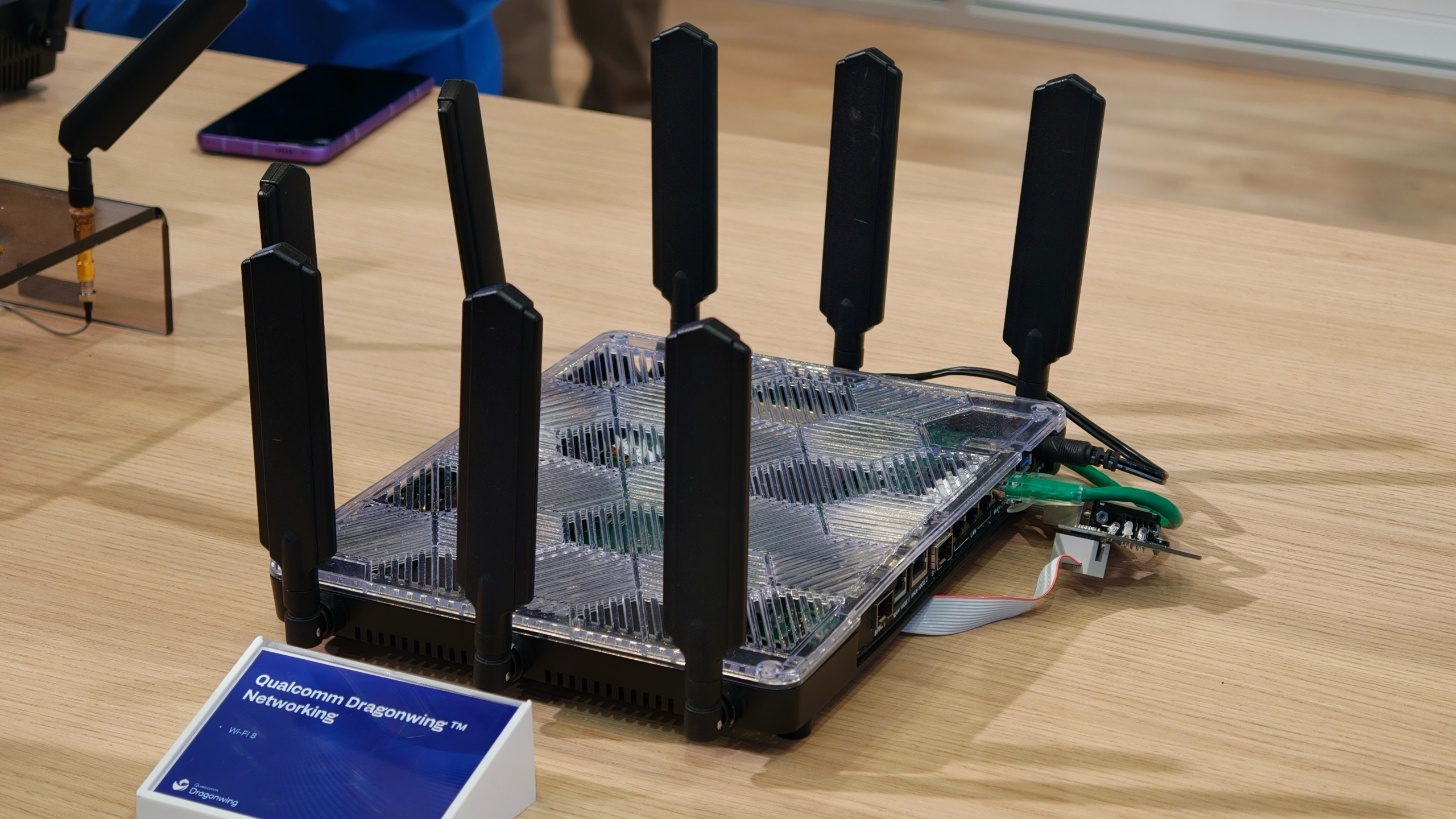
Immediate Operational Impact for Sellers: The FastConnect 8800 integrates Bluetooth 7, Ultra Wide Band 802.15.4ab, and Thread 1.5 standards into a single 6nm chipset, reducing hardware complexity and costs for warehouse automation devices. Qualcomm's complementary Dragonwing NPro A8 Elite platform delivers 40x throughput improvements and 2.5x latency reduction during peak usage—critical metrics for sellers running AI-powered demand forecasting, dynamic pricing engines, and real-time customer communication systems. The 30% daily power consumption reduction directly lowers operational costs for sellers managing large-scale logistics networks, with potential savings of $15,000-40,000 annually for mid-sized fulfillment centers processing 10,000+ units monthly.
Timeline and Adoption Strategy: Commercial products featuring FastConnect 8800 launch in late 2026, with the 802.11bn standard finalization expected by 2028. The chip maintains backward compatibility with existing Wi-Fi standards, enabling phased infrastructure upgrades without complete system replacements. However, widespread adoption requires compatible routers and infrastructure investments across fulfillment centers, retail locations, and logistics hubs—representing a multi-year transition period. Sellers should begin evaluating Wi-Fi 8-ready equipment vendors (Qualcomm partners include device manufacturers and IoT providers) by Q3 2026 to position fulfillment operations ahead of competitors still relying on Wi-Fi 7 infrastructure. The 6nm manufacturing process suggests competitive pricing compared to previous generations, potentially accelerating adoption across supply chain technology providers. Looking forward, Qualcomm's 6G commitment (deployment beginning 2029) signals continued infrastructure evolution, with 6G described as "AI-native infrastructure" designed for wide-area sensing and high-performance computing—capabilities that will further enhance real-time supply chain visibility and autonomous logistics operations.
Questions 8
How does 6G infrastructure (launching 2029) impact long-term e-commerce seller strategy?
Qualcomm's 6G commitment (deployment beginning 2029) signals continued infrastructure evolution toward AI-native networks designed for wide-area sensing and high-performance computing. Sellers should view Wi-Fi 8 adoption as a 2-3 year intermediate step before 6G capabilities enable even more advanced supply chain visibility and autonomous logistics operations. 6G networks will support agentic devices for both consumer and enterprise applications, enabling fully autonomous fulfillment centers and real-time global inventory optimization. Sellers investing in Wi-Fi 8 infrastructure now position themselves to leverage 6G capabilities when available, avoiding technology obsolescence. The 6G roadmap (standards finalization by 2028, commercial deployment 2029) provides a 3-year planning horizon for sellers to evaluate long-term connectivity strategies. However, many 6G capabilities remain in development stages, so sellers should focus on Wi-Fi 8 implementation for immediate operational improvements while monitoring 6G progress for future infrastructure planning.
What is the competitive advantage of early Wi-Fi 8 adoption for cross-border sellers?
Early adopters gain 2-3 year competitive advantages in supply chain visibility and operational efficiency before widespread industry adoption. The 3x longer range and sustained 1 Gbps speeds at weak signal strengths enable sellers to optimize fulfillment center layouts without extensive network infrastructure, reducing setup costs for new locations. The 30% power consumption reduction lowers operational costs in energy-intensive markets (Southeast Asia, India), improving margins in price-sensitive categories. Sellers can deploy advanced warehouse automation (autonomous picking, real-time tracking) earlier than competitors still relying on Wi-Fi 7, improving fulfillment speed and accuracy. The integrated Bluetooth 7 and UWB capabilities enable seamless device connectivity for barcode scanning, package tracking, and worker communication systems. However, the multi-year transition period means competitive advantages persist only for sellers implementing infrastructure upgrades by late 2027.