


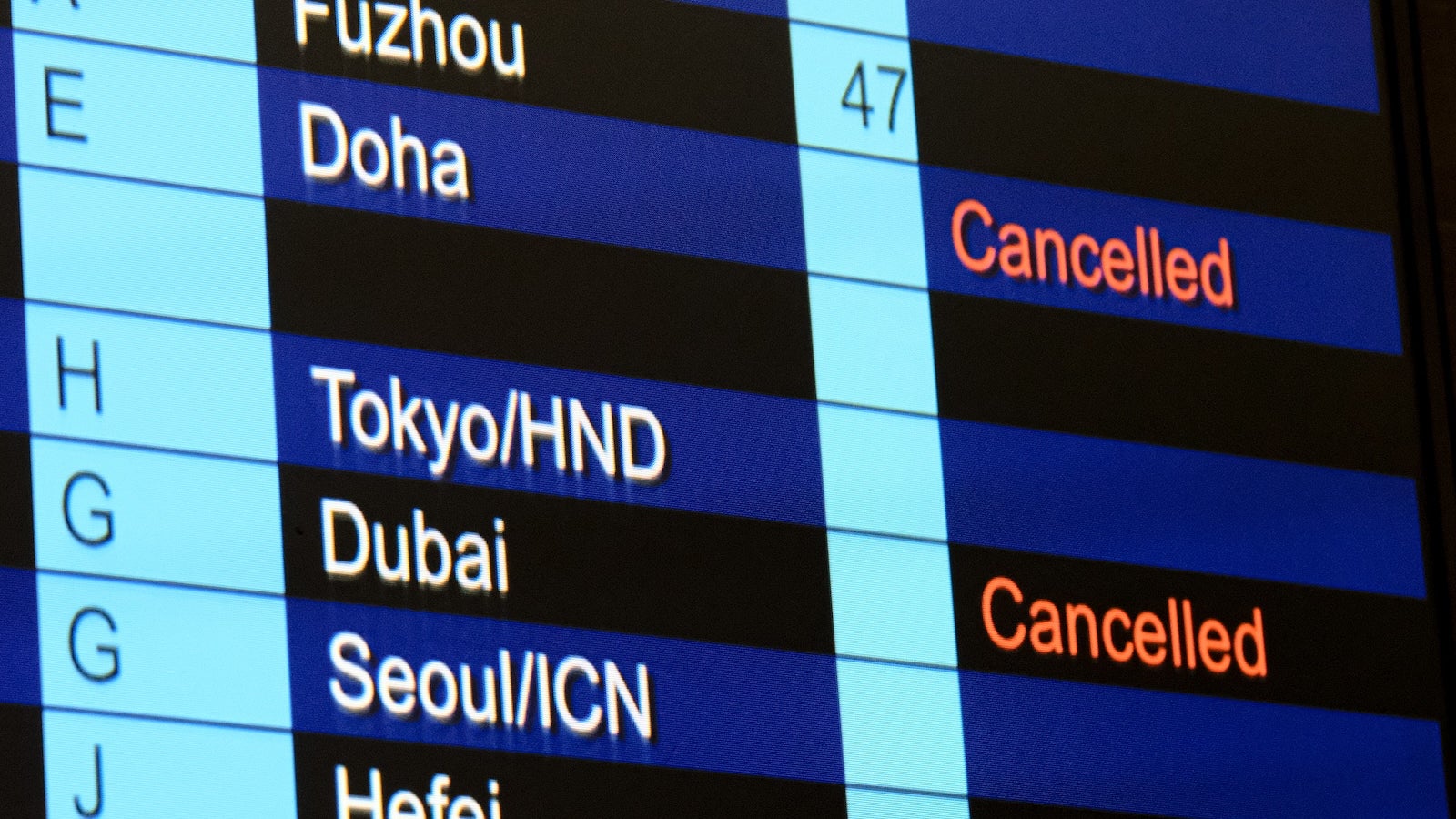


Middle East Airspace Crisis Forces 4-Hour Route Delays | Cross-Border Sellers Face 15-25% Shipping Cost Surge
- Airspace closures across 7 Middle East nations plus Russia create critical logistics bottleneck; Azerbaijan corridor absorbs 110+ daily flights; sellers relying on air freight face extended delivery windows and margin compression through Q2 2026




Overview
Middle East airspace closures spanning Iran, Iraq, Kuwait, Israel, Bahrain, Qatar, and UAE—combined with ongoing Russian airspace restrictions since 2022—are creating unprecedented logistics disruptions for cross-border e-commerce sellers. As of March 2, 2026, these geopolitical constraints force international airlines to reroute through the Caucasus corridor (Armenia, Georgia, Azerbaijan), a 100-mile-wide passage absorbing 110+ additional daily flights. Airlines including Finnair and British Airways now face 4+ additional hours on Asia-Europe routes, directly translating to higher air freight costs and extended delivery times for time-sensitive product categories.
For cross-border sellers, this creates a critical cost-margin compression crisis. Air freight premiums are rising 15-25% as carriers absorb fuel surcharges and extended flight times. Sellers shipping high-value, time-sensitive categories—electronics, fashion accessories, beauty products, and perishables—face immediate margin pressure. Amazon FBA sellers relying on expedited air shipments from Asia to US/EU fulfillment centers will see per-unit logistics costs increase $0.50-$2.00 depending on weight and destination. The Caucasus corridor's congestion creates weather vulnerability; any additional disruptions could trigger secondary bottlenecks, further delaying inventory replenishment during peak selling seasons.
Strategic sourcing shifts are accelerating as sellers seek alternatives. Air India's inability to use Pakistani airspace for nearly a year forces westward detours through Oman and Saudi Arabia with fuel stops in Rome and Vienna—adding 8-12 hours to India-to-Europe shipments. This incentivizes sellers to shift sourcing from India/Pakistan suppliers to Vietnam, Thailand, and Indonesia, where alternative routing through Southeast Asian corridors remains viable. Emirates and Etihad Airways—critical hubs for Middle East e-commerce operations—suspended most flights but began limited resumptions for cargo transport, creating temporary capacity constraints. Analyst Eddy Pieniazek from Ishka Advisory predicts disruptions will be "short-lived" with gradual operational resumption, but the situation remains fluid through at least Q2 2026.
Immediate seller actions focus on supply chain resilience and cost management. Sellers should diversify shipping methods: shift 30-40% of inventory to sea freight (slower but 60-70% cheaper), negotiate fixed-rate contracts with 3PL providers before further rate increases, and accelerate inventory positioning to US/EU fulfillment centers while air freight remains partially viable. Monitor Azerbaijan airspace capacity daily—if congestion exceeds 150+ flights, expect secondary rate spikes. For sellers in time-sensitive categories (fashion, electronics, seasonal goods), consider temporary price increases of 8-12% to offset logistics costs, or reduce order fulfillment speed expectations in customer listings to manage delivery time expectations.
Questions 8
How does this airspace crisis affect sellers shipping to Middle East markets like UAE and Saudi Arabia?
Sellers targeting Middle East markets face severe disruptions. Emirates and Etihad Airways—critical hubs for Middle East e-commerce operations—suspended most flights but began limited resumptions for cargo transport, creating temporary capacity constraints and rate spikes. Inbound shipments to UAE and Saudi Arabia now face 2-3 week delays as carriers reroute through alternative corridors. Sellers should temporarily reduce inventory commitments to Middle East markets and adjust customer delivery expectations to 3-4 weeks. Consider repositioning inventory to regional hubs in Turkey or Egypt, which remain accessible via alternative routing. For sellers with significant Middle East revenue, evaluate local 3PL partnerships in Dubai or Riyadh to maintain fulfillment capability without relying on international air freight. Monitor IATA announcements for airspace reopening timelines—Middle East market recovery is critical for Q2-Q3 seasonal demand.
What alternative shipping methods should sellers consider besides air freight?
Sea freight is the primary alternative: 60-70% cheaper than air freight but requires 3-4 week transit times instead of 5-7 days. For non-time-sensitive categories (home goods, office supplies, bulk items), sea freight becomes economically attractive despite longer delivery windows. Rail freight through Central Asia (via Kazakhstan/Uzbekistan) offers a middle ground: 40-50% cheaper than air, 2-3 week transit times, and avoids Middle East/Russian airspace entirely. However, rail capacity is limited and requires specialized logistics partners. Ground shipping through Turkey and Eastern Europe provides another alternative for Europe-bound inventory, though it adds 1-2 weeks to transit. Evaluate your product mix: shift 30-40% of inventory to sea/rail/ground methods, reserving air freight for high-value, time-sensitive SKUs only. This diversification reduces logistics cost volatility and builds supply chain resilience.