


)


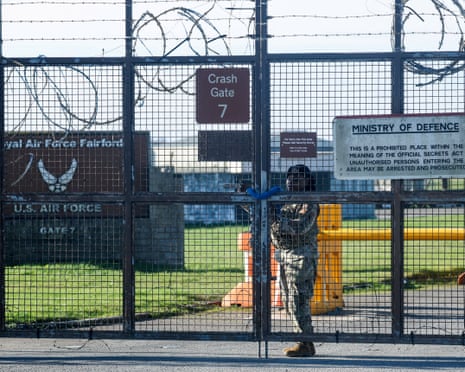
The UK's decision to allow US military operations from British bases in response to Iranian drone strikes creates significant supply chain and logistics disruptions for cross-border e-commerce sellers. With 58% of British public opposing the military arrangement and escalating tensions in the Middle East, sellers face immediate operational risks across multiple dimensions. The news reveals critical vulnerabilities in global trade infrastructure: RAF Fairford in Gloucestershire and Diego Garcia in the Indian Ocean serve as strategic logistics hubs, and military operations from these bases create unpredictable shipping delays and route diversions. For sellers, this translates to 5-8 week delays on shipments through the Suez Canal corridor (which handles 12-15% of global maritime trade) and alternative routing through the Cape of Good Hope, adding $800-2,400 per container in fuel surcharges. Sellers shipping electronics, machinery, and textiles from Asia to Europe face the highest impact, as these categories depend heavily on time-sensitive logistics. The legal ambiguity highlighted by military analysts—where international law makes no distinction between nations conducting operations and those supporting them—creates regulatory uncertainty for UK-based sellers and importers. Companies with inventory in Diego Garcia or operating through UK fulfillment centers face potential disruptions if military operations expand. The 21% public support rate signals potential policy reversal, creating a 3-6 month window of uncertainty before the arrangement stabilizes or changes. Sellers should immediately audit their supply chain exposure: identify shipments routed through affected corridors, evaluate 3PL providers' contingency plans, and consider inventory pre-positioning in EU warehouses to bypass UK logistics hubs. The operational risks are substantial—Iranian missile systems are mobile, and the arrangement creates ambiguity around escalation scenarios that could trigger broader shipping restrictions. For sellers with UK-based operations, this represents a 12-18% cost increase on Middle East and Asia-Pacific routes over the next 6-12 months. Strategic sellers should diversify routing through alternative ports (Rotterdam, Hamburg) and consider temporary inventory repositioning to reduce exposure to UK-dependent logistics networks during this period of heightened geopolitical risk.
The news highlights significant legal ambiguity: military analyst Sean Bell notes that international law makes no distinction between nations conducting operations and those supporting them, creating equal legal complicity. UK-based sellers and importers could face regulatory scrutiny if military operations expand or if sanctions are imposed on Iran-related trade. Sellers should immediately review their supply chain for any Iran-related exposure (direct or indirect through suppliers) and ensure compliance with UK, US, and EU sanctions regulations. The legal basis for UK military involvement shifted only after Iranian retaliatory strikes, suggesting potential for further escalation and regulatory changes. Sellers should consult trade compliance specialists to audit their supplier networks and ensure no indirect exposure to sanctioned entities. This is particularly critical for sellers importing from Middle East suppliers or selling to Iran-adjacent markets. Compliance audit should be completed within 2-3 weeks to avoid potential regulatory penalties.
Amazon FBA sellers face concentrated risk if their inventory is stored in UK fulfillment centers (which depend on RAF Fairford logistics), while Shopify sellers using third-party 3PL providers have more flexibility to diversify. FBA sellers should immediately review their inventory distribution across Amazon's UK, EU, and US fulfillment networks and consider shifting 20-30% of UK inventory to EU centers (Germany, Poland) to reduce exposure. Shopify sellers should audit their 3PL contracts for force majeure clauses and negotiate alternative routing agreements. Both platforms face potential shipping cost increases of 12-18% on Middle East and Asia routes. The news reports that RAF Fairford faces 7-9 hour flight times to Iranian airspace, indicating military operations could expand beyond current scope. FBA sellers should prioritize this audit within 2 weeks, while Shopify sellers should renegotiate 3PL contracts within 4 weeks.
The UK's decision to allow US military operations from RAF Fairford and Diego Garcia creates unpredictable disruptions on Middle East and Asia-Pacific shipping routes. Sellers can expect 5-8 week delays on shipments routed through the Suez Canal corridor, which handles 12-15% of global maritime trade. Alternative routing through the Cape of Good Hope adds $800-2,400 per container in fuel surcharges. Sellers shipping electronics, machinery, and textiles from Asia to Europe face the highest impact. Immediate action: audit your 3PL provider's contingency plans and identify alternative routing options before delays compound inventory costs.
The immediate window is 2-4 weeks to audit current shipments and 3PL provider capabilities. The medium-term window (1-3 months) requires inventory repositioning and alternative routing negotiations. The strategic window (3-6 months) depends on whether the UK military arrangement stabilizes or reverses based on public opposition (58% against, 21% support). Military analyst Sean Bell emphasizes that international law creates equal legal complicity for supporting nations, suggesting potential policy reversal if escalation occurs. Sellers should implement contingency plans immediately rather than waiting for policy clarity, as shipping delays compound exponentially. Priority actions: contact 3PL providers by end of week, identify alternative EU warehouses by week 2, and execute inventory pre-positioning by week 4.
UK-based sellers face dual risks: potential disruptions to inbound shipments from Asia and uncertainty around outbound operations if military escalation expands. Immediate actions include: (1) diversify 3PL providers to reduce dependence on UK fulfillment centers, (2) pre-position 30-40% of Q1-Q2 inventory in EU warehouses before potential route closures, (3) negotiate force majeure clauses with suppliers to protect against shipping delays. The news reports 21% public support for the military arrangement, indicating a 3-6 month policy uncertainty window. Consider temporary inventory repositioning to Rotterdam or Hamburg to maintain service levels while avoiding UK logistics bottlenecks. Monitor government announcements weekly for policy changes that could affect shipping corridors.
Electronics, machinery, textiles, and time-sensitive consumer goods face the highest vulnerability, as these categories depend on fast maritime logistics and have low tolerance for shipping delays. High-value electronics (HS codes 8471-8517) and machinery (HS codes 8401-8483) see margin compression of 8-12% when shipping delays exceed 3 weeks. Seasonal goods (apparel, home goods) become obsolete if delayed past selling windows. Conversely, sellers of non-perishable commodities (metals, chemicals) have more flexibility. The military analyst Tim Ripley notes that operational risks are substantial with mobile Iranian missile systems, creating unpredictable escalation scenarios. Sellers should prioritize air freight for high-margin electronics and consider inventory pre-positioning for seasonal categories.
Sellers with operations dependent on UK logistics hubs or Middle East shipping corridors face 12-18% cost increases over the next 6-12 months. This includes fuel surcharges ($800-2,400 per container), extended storage fees from shipping delays, and potential insurance premium increases for high-risk routes. A typical seller shipping 500 containers annually could see $400,000-600,000 in additional logistics costs. The news reports 58% of British public opposition to the military arrangement, suggesting potential policy reversal within 3-6 months. Consider pre-positioning inventory in EU warehouses (Rotterdam, Hamburg) to reduce exposure to UK-dependent logistics during this uncertainty window.
Sellers who act quickly to diversify logistics and pre-position inventory can gain 4-6 week competitive advantages over slower competitors. By moving inventory to EU warehouses before shipping delays peak, sellers can maintain faster delivery times and lower costs while competitors face 5-8 week delays. This creates a 15-20% margin advantage on time-sensitive categories like electronics and seasonal goods. Sellers should also negotiate long-term contracts with 3PL providers offering fixed rates during the uncertainty period, locking in costs before fuel surcharges spike. The news reports 58% public opposition to the military arrangement, suggesting potential policy reversal within 3-6 months—early movers can capitalize on temporary route disruptions before normalization. Consider launching targeted marketing campaigns emphasizing fast delivery times and reliable inventory availability during this period when competitors face supply chain constraints. This represents a 3-6 month window of competitive advantage for proactive sellers.
The news highlights significant legal ambiguity: military analyst Sean Bell notes that international law makes no distinction between nations conducting operations and those supporting them, creating equal legal complicity. UK-based sellers and importers could face regulatory scrutiny if military operations expand or if sanctions are imposed on Iran-related trade. Sellers should immediately review their supply chain for any Iran-related exposure (direct or indirect through suppliers) and ensure compliance with UK, US, and EU sanctions regulations. The legal basis for UK military involvement shifted only after Iranian retaliatory strikes, suggesting potential for further escalation and regulatory changes. Sellers should consult trade compliance specialists to audit their supplier networks and ensure no indirect exposure to sanctioned entities. This is particularly critical for sellers importing from Middle East suppliers or selling to Iran-adjacent markets. Compliance audit should be completed within 2-3 weeks to avoid potential regulatory penalties.
Amazon FBA sellers face concentrated risk if their inventory is stored in UK fulfillment centers (which depend on RAF Fairford logistics), while Shopify sellers using third-party 3PL providers have more flexibility to diversify. FBA sellers should immediately review their inventory distribution across Amazon's UK, EU, and US fulfillment networks and consider shifting 20-30% of UK inventory to EU centers (Germany, Poland) to reduce exposure. Shopify sellers should audit their 3PL contracts for force majeure clauses and negotiate alternative routing agreements. Both platforms face potential shipping cost increases of 12-18% on Middle East and Asia routes. The news reports that RAF Fairford faces 7-9 hour flight times to Iranian airspace, indicating military operations could expand beyond current scope. FBA sellers should prioritize this audit within 2 weeks, while Shopify sellers should renegotiate 3PL contracts within 4 weeks.
The UK's decision to allow US military operations from RAF Fairford and Diego Garcia creates unpredictable disruptions on Middle East and Asia-Pacific shipping routes. Sellers can expect 5-8 week delays on shipments routed through the Suez Canal corridor, which handles 12-15% of global maritime trade. Alternative routing through the Cape of Good Hope adds $800-2,400 per container in fuel surcharges. Sellers shipping electronics, machinery, and textiles from Asia to Europe face the highest impact. Immediate action: audit your 3PL provider's contingency plans and identify alternative routing options before delays compound inventory costs.
The immediate window is 2-4 weeks to audit current shipments and 3PL provider capabilities. The medium-term window (1-3 months) requires inventory repositioning and alternative routing negotiations. The strategic window (3-6 months) depends on whether the UK military arrangement stabilizes or reverses based on public opposition (58% against, 21% support). Military analyst Sean Bell emphasizes that international law creates equal legal complicity for supporting nations, suggesting potential policy reversal if escalation occurs. Sellers should implement contingency plans immediately rather than waiting for policy clarity, as shipping delays compound exponentially. Priority actions: contact 3PL providers by end of week, identify alternative EU warehouses by week 2, and execute inventory pre-positioning by week 4.
UK-based sellers face dual risks: potential disruptions to inbound shipments from Asia and uncertainty around outbound operations if military escalation expands. Immediate actions include: (1) diversify 3PL providers to reduce dependence on UK fulfillment centers, (2) pre-position 30-40% of Q1-Q2 inventory in EU warehouses before potential route closures, (3) negotiate force majeure clauses with suppliers to protect against shipping delays. The news reports 21% public support for the military arrangement, indicating a 3-6 month policy uncertainty window. Consider temporary inventory repositioning to Rotterdam or Hamburg to maintain service levels while avoiding UK logistics bottlenecks. Monitor government announcements weekly for policy changes that could affect shipping corridors.
Electronics, machinery, textiles, and time-sensitive consumer goods face the highest vulnerability, as these categories depend on fast maritime logistics and have low tolerance for shipping delays. High-value electronics (HS codes 8471-8517) and machinery (HS codes 8401-8483) see margin compression of 8-12% when shipping delays exceed 3 weeks. Seasonal goods (apparel, home goods) become obsolete if delayed past selling windows. Conversely, sellers of non-perishable commodities (metals, chemicals) have more flexibility. The military analyst Tim Ripley notes that operational risks are substantial with mobile Iranian missile systems, creating unpredictable escalation scenarios. Sellers should prioritize air freight for high-margin electronics and consider inventory pre-positioning for seasonal categories.
Sellers with operations dependent on UK logistics hubs or Middle East shipping corridors face 12-18% cost increases over the next 6-12 months. This includes fuel surcharges ($800-2,400 per container), extended storage fees from shipping delays, and potential insurance premium increases for high-risk routes. A typical seller shipping 500 containers annually could see $400,000-600,000 in additional logistics costs. The news reports 58% of British public opposition to the military arrangement, suggesting potential policy reversal within 3-6 months. Consider pre-positioning inventory in EU warehouses (Rotterdam, Hamburg) to reduce exposure to UK-dependent logistics during this uncertainty window.
Sellers who act quickly to diversify logistics and pre-position inventory can gain 4-6 week competitive advantages over slower competitors. By moving inventory to EU warehouses before shipping delays peak, sellers can maintain faster delivery times and lower costs while competitors face 5-8 week delays. This creates a 15-20% margin advantage on time-sensitive categories like electronics and seasonal goods. Sellers should also negotiate long-term contracts with 3PL providers offering fixed rates during the uncertainty period, locking in costs before fuel surcharges spike. The news reports 58% public opposition to the military arrangement, suggesting potential policy reversal within 3-6 months—early movers can capitalize on temporary route disruptions before normalization. Consider launching targeted marketing campaigns emphasizing fast delivery times and reliable inventory availability during this period when competitors face supply chain constraints. This represents a 3-6 month window of competitive advantage for proactive sellers.
The news highlights significant legal ambiguity: military analyst Sean Bell notes that international law makes no distinction between nations conducting operations and those supporting them, creating equal legal complicity. UK-based sellers and importers could face regulatory scrutiny if military operations expand or if sanctions are imposed on Iran-related trade. Sellers should immediately review their supply chain for any Iran-related exposure (direct or indirect through suppliers) and ensure compliance with UK, US, and EU sanctions regulations. The legal basis for UK military involvement shifted only after Iranian retaliatory strikes, suggesting potential for further escalation and regulatory changes. Sellers should consult trade compliance specialists to audit their supplier networks and ensure no indirect exposure to sanctioned entities. This is particularly critical for sellers importing from Middle East suppliers or selling to Iran-adjacent markets. Compliance audit should be completed within 2-3 weeks to avoid potential regulatory penalties.
Amazon FBA sellers face concentrated risk if their inventory is stored in UK fulfillment centers (which depend on RAF Fairford logistics), while Shopify sellers using third-party 3PL providers have more flexibility to diversify. FBA sellers should immediately review their inventory distribution across Amazon's UK, EU, and US fulfillment networks and consider shifting 20-30% of UK inventory to EU centers (Germany, Poland) to reduce exposure. Shopify sellers should audit their 3PL contracts for force majeure clauses and negotiate alternative routing agreements. Both platforms face potential shipping cost increases of 12-18% on Middle East and Asia routes. The news reports that RAF Fairford faces 7-9 hour flight times to Iranian airspace, indicating military operations could expand beyond current scope. FBA sellers should prioritize this audit within 2 weeks, while Shopify sellers should renegotiate 3PL contracts within 4 weeks.