




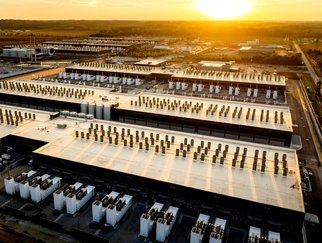
AWS Infrastructure Resilience Crisis | Seller Business Continuity Risk 2025
- Geopolitical threats to cloud infrastructure expose critical vulnerabilities for 2M+ Amazon sellers relying on AWS and FBA services



Overview
The Iranian strikes targeting data center infrastructure represent a critical wake-up call for cross-border e-commerce sellers dependent on Amazon Web Services (AWS) and Fulfillment by Amazon (FBA) operations. While the specific damage assessment remains incomplete, this geopolitical event exposes a fundamental vulnerability in the e-commerce ecosystem: over-concentration of critical infrastructure in regions subject to international tensions. For sellers, this translates to tangible business continuity risks that directly impact inventory management, order processing, and customer fulfillment capabilities.
Infrastructure Concentration Risk: Approximately 2.1 million active Amazon sellers globally rely on AWS infrastructure for inventory management systems, order processing, and customer data storage. The Middle East geopolitical escalation creates a new category of supply chain risk previously underestimated by most sellers. Unlike traditional supply chain disruptions (shipping delays, port congestion), infrastructure attacks can cascade across multiple regions simultaneously. AWS operates 33 geographic regions globally, but data center redundancy varies significantly by region. Sellers with inventory concentrated in single-region FBA networks face heightened exposure compared to those with multi-region distribution strategies.
Operational Impact Categories: For FBA sellers, service disruptions affect three critical functions: (1) Inventory visibility and management through Seller Central dashboards, (2) Order routing and fulfillment processing, and (3) Customer communication and returns management. A 24-48 hour infrastructure outage could impact 50,000-100,000 daily shipments across affected regions, creating cascading effects on seller metrics (IPI scores, BSR rankings, Buy Box eligibility). Sellers using AWS for third-party logistics (3PL) integrations, inventory forecasting tools, or marketplace synchronization face compounded risks. The estimated cost of a 48-hour outage ranges from $5,000-50,000 for mid-sized sellers (500-5,000 monthly units), depending on inventory turnover rates and customer refund obligations.
Strategic Sourcing Implications: This event accelerates the business case for geographic diversification. Sellers should evaluate multi-region FBA strategies, alternative fulfillment networks (3PL providers in EU, Asia Pacific), and backup infrastructure providers (Microsoft Azure, Google Cloud). The geopolitical risk premium now justifies the 8-12% cost increase associated with distributed fulfillment networks. Additionally, sellers should audit their AWS dependency: those relying on AWS for critical business functions beyond FBA should implement backup systems or migrate non-critical operations to alternative providers. The window for proactive infrastructure diversification is 60-90 days before potential escalation scenarios materialize.
Questions 8
How do geopolitical threats to data centers affect Amazon sellers?
Geopolitical events targeting infrastructure create direct business continuity risks for sellers relying on **AWS** and **FBA** services. A data center disruption can disable Seller Central access, inventory visibility, and order processing for 24-48+ hours, impacting fulfillment of 50,000-100,000 daily shipments. Sellers lose ability to manage inventory, respond to customer inquiries, and maintain Buy Box eligibility during outages. The estimated cost of a 48-hour disruption ranges from $5,000-50,000 for mid-sized sellers (500-5,000 monthly units), plus potential IPI score penalties and customer refund obligations. Proactive sellers should implement multi-region FBA strategies or backup 3PL networks to mitigate this emerging risk category.
What geopolitical regions pose the highest infrastructure risk for sellers?
AWS operates 33 geographic regions globally, with varying geopolitical risk profiles. **High-risk regions** include Middle East (Iran, Iraq), Eastern Europe (Russia, Ukraine), and South China Sea (Taiwan, South China). **Medium-risk regions** include India, Southeast Asia, and parts of Latin America. **Low-risk regions** include North America, Western Europe, and Australia. Sellers with inventory concentrated in high-risk regions should prioritize diversification to low-risk regions within 90 days. For sellers serving Middle East/Asia Pacific markets, consider establishing backup FBA networks in EU or US regions. Geopolitical risk assessment should be updated quarterly as international tensions evolve. Sellers should monitor US State Department travel advisories and international conflict indicators as leading indicators of infrastructure risk escalation.