





Sports Performance Dynamics Reveal Hidden Strategic Insights
- Unexpected Game Outcomes Highlight Deeper Competitive Landscape Shifts







































!role~Preview!mt~photo!fmt~JPEG%20Baseline)

















Overview
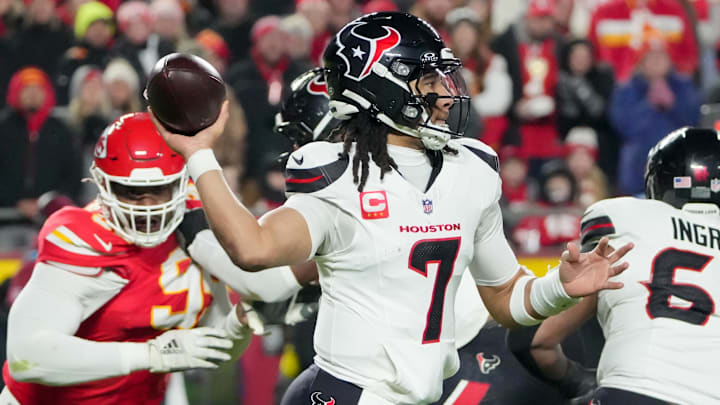
In the intricate world of competitive performance, the recent Kansas City Chiefs game against the Houston Texans offers more than just a sports narrative—it illuminates critical strategic dynamics that extend far beyond the playing field.
Performance Volatility as a Strategic Indicator emerges as the key insight from this development. The Chiefs' unexpected loss isn't merely a game statistic, but a potential harbinger of deeper systemic challenges. Such unpredictable outcomes signal the razor-thin margins between success and disruption in high-stakes competitive environments.
Adaptive Resilience becomes the critical framework for understanding these dynamics. Top-tier performers—whether in sports, business, or technology—must develop robust mechanisms to absorb unexpected setbacks. The Chiefs' situation mirrors broader organizational challenges: how quickly can a high-performing entity recalibrate after an unanticipated defeat? This resilience isn't about avoiding losses, but about the speed and intelligence of response.
The strategic implications are profound. In an era of increasing complexity, traditional linear performance models are becoming obsolete. Success now demands a more nuanced approach that embraces uncertainty, values rapid adaptation, and sees setbacks as recalibration opportunities rather than terminal failures.
For leaders and strategists across domains, this narrative offers a critical lesson: competitive advantage is no longer about maintaining a perfect record, but about developing the organizational agility to transform challenges into strategic inflection points. The most successful entities will be those that can rapidly synthesize unexpected data, adjust their approach, and maintain forward momentum even in the face of surprising disruptions.
Questions 3
Can performance volatility be transformed into a strategic advantage?
Yes, by developing robust feedback loops, maintaining flexibility in strategic planning, and cultivating an organizational mindset that sees disruption as a source of innovation and competitive differentiation.
What makes an organization truly resilient in competitive environments?
True resilience comes from developing rapid response mechanisms, maintaining a learning-oriented culture, and viewing challenges as opportunities for strategic refinement rather than insurmountable obstacles.