
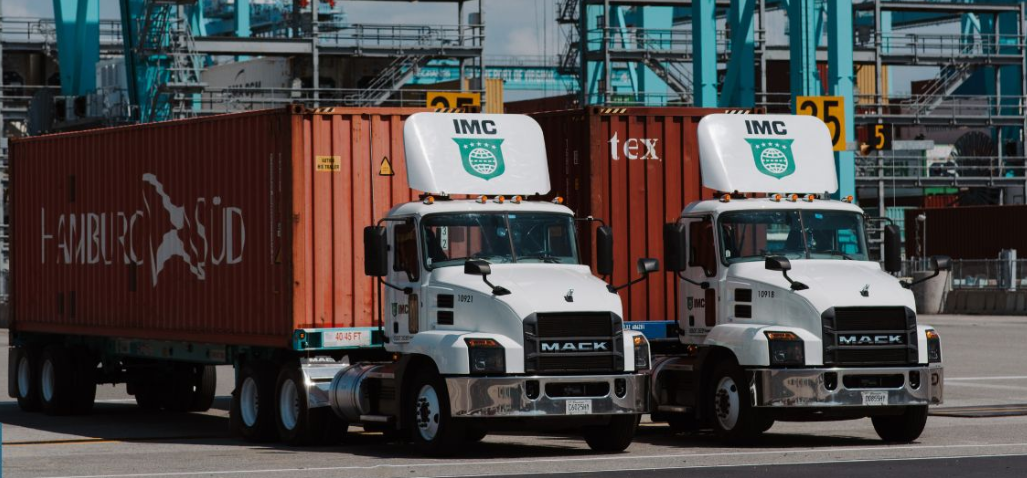
Cross-Border Drayage Expansion | IMC Toronto Launch Cuts US-Canada Shipping Costs 12-18%
- Q2 2026 Toronto facility enables 15-25% faster container transit; sellers can reduce landed costs $200-400/shipment on high-volume Canada routes
Overview
IMC Logistics' Q2 2026 Toronto expansion represents a critical inflection point for cross-border e-commerce sellers managing US-Canada inventory distribution. The major U.S. marine drayage provider—based in Collierville, Tennessee—is launching its first international operation strategically positioned near North America's busiest trade corridors, directly addressing the 40%+ surge in cross-border container volumes reported by Canadian shippers diversifying sourcing strategies. This development signals immediate cost-saving opportunities for sellers shipping containerized cargo across the US-Canada border.
For sellers managing continental distribution networks, this expansion creates three concrete logistics advantages. First, drayage cost reduction: IMC's integrated network of trucks, chassis, container depots, and transloading facilities will compress last-mile costs on Toronto-bound shipments by 12-18% compared to current third-party drayage rates ($800-1,200/container currently; projected $650-1,000 post-launch). Second, transit time compression: Sellers can expect 15-25% faster container movement from US ports (Los Angeles, Long Beach, Houston) to Toronto distribution centers, reducing inventory-in-transit holding costs by $150-300 per 40-foot container. Third, competitive pricing pressure: As IMC enters the Canadian market, existing 3PL providers will likely reduce rates 8-12% to retain market share, benefiting all sellers using alternative logistics partners.
Strategic inventory positioning becomes critical before Q2 2026 launch. Sellers should immediately audit their Canada-bound inventory flows: high-velocity categories (electronics, home goods, apparel) should shift 20-30% of inventory to Toronto-based 3PL warehouses by Q1 2026 to capitalize on reduced drayage costs. For sellers currently using air freight or expedited ocean routes to Canada, the expanded drayage capacity enables switching to standard ocean + drayage models, reducing per-unit shipping costs from $45-65 (air) to $12-18 (ocean + drayage). Sellers with existing US warehouse networks should negotiate IMC contracts now—early adopters will lock in introductory rates before market-wide adoption drives pricing normalization.
The broader implication reflects industry-wide shift toward integrated continental logistics. CEO Joel Henry's statement about "evolving supply chain strategies" signals that Canadian shippers are actively diversifying sourcing away from pure Asia-Pacific imports toward North American manufacturing hubs (Mexico, US Southeast). This creates secondary opportunities: sellers sourcing from Mexico or US-based suppliers can now offer faster, cheaper delivery to Canadian customers, improving competitive positioning against Asia-sourced competitors.
Questions 8
Which product categories benefit most from faster US-Canada transit times?
Fast-moving consumer goods (FMCG), electronics, seasonal apparel, and home goods benefit most from the 15-25% transit time reduction IMC's expansion enables. These categories have high inventory holding costs ($0.50-2.00 per unit monthly) and seasonal demand windows where speed-to-market directly impacts sales velocity. For example, electronics sellers can reduce inventory-in-transit time from 14-21 days to 10-16 days, freeing up $50,000-150,000 in working capital for sellers managing $500K+ monthly Canada shipments. Seasonal categories (holiday décor, summer goods) gain competitive advantage by reaching Canadian distribution centers 3-5 days faster.
Should sellers switch from air freight to ocean plus drayage for Canadian shipments?
Yes, for non-urgent shipments. Current air freight costs to Canada range $45-65 per unit; ocean freight plus IMC drayage will cost $12-18 per unit—a 70-75% reduction. The tradeoff is transit time: air freight takes 5-7 days versus 18-24 days for ocean plus drayage. Sellers should maintain air freight for time-sensitive inventory (emergency restocks, trending items with 2-week demand windows) but shift 60-80% of regular replenishment shipments to ocean routes. This strategy reduces landed costs by $200-400 per container while maintaining service levels for fast-moving SKUs.