
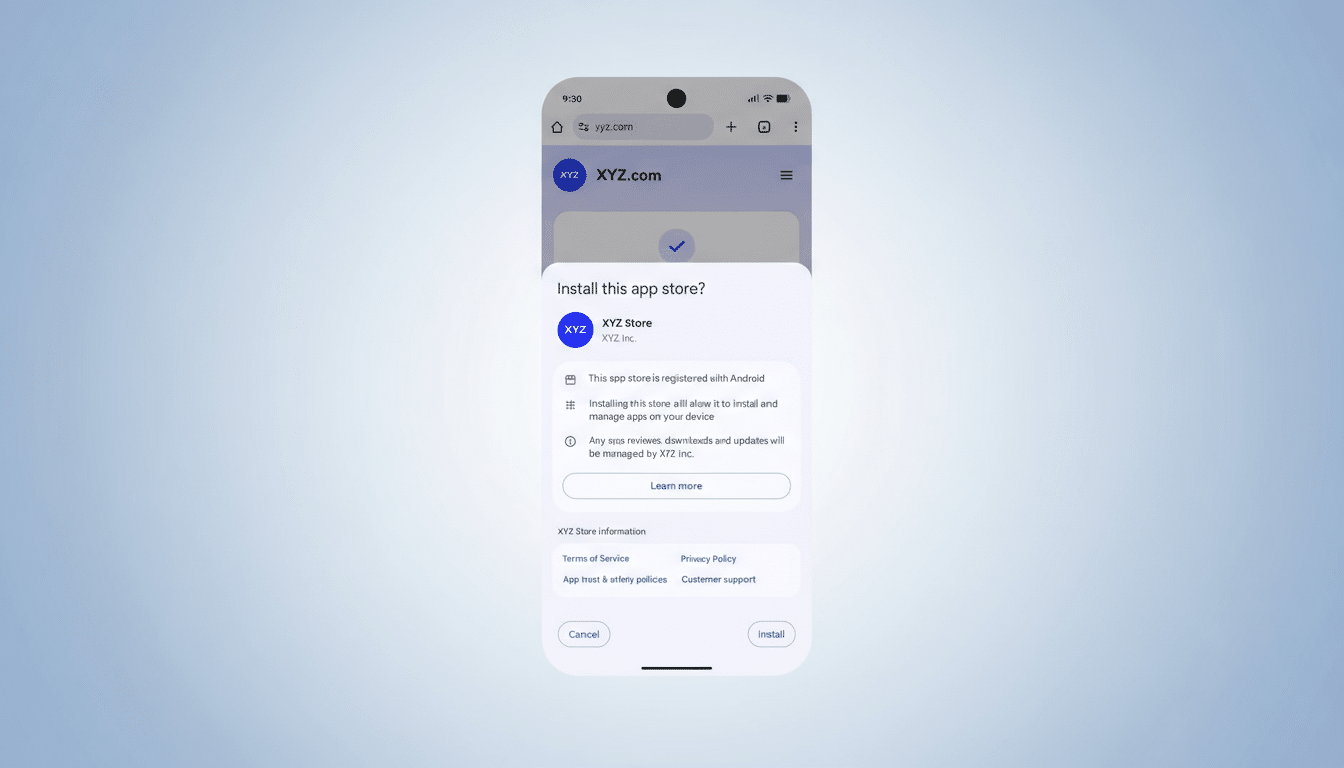
Google App Store Fee Cuts 2025 | 10-20% Savings for Digital Sellers
- Reduces platform fees from 30% to 15-20% for app sales; opens alternative distribution channels for game publishers and subscription services by June 2025
Overview
Google's Registered App Stores program and fee restructuring represent a fundamental shift in mobile app commerce economics, directly impacting digital product sellers and subscription-based businesses. The company is reducing combined fees from 30% to a 15-20% service fee plus optional 5% payment processing fee, effective June 30, 2025 in the US, UK, and Europe, with global rollout by September 30, 2027. This unbundling clarifies cost structures and creates immediate margin expansion opportunities for game publishers, subscription services, and in-app purchase sellers—categories historically squeezed by high platform fees.
The competitive landscape is fundamentally reshaping. Alternative app stores like Samsung Galaxy Store and Amazon Appstore gain legitimacy through Google's Registered App Stores program, reducing onboarding friction and creating multi-channel distribution opportunities. For sellers, this means reduced dependency on Google Play's 30% fee monopoly. Game publishers can now distribute through registered alternatives with transparent fee structures, potentially recovering 5-10 percentage points in margins. Subscription-based services see the most dramatic benefit: service fees drop to 10% with optional 5% billing fees, compared to the previous 30% combined rate. This 50% fee reduction translates to $500-2,000 monthly savings for mid-sized subscription apps with $10K-40K monthly revenue.
Compliance and registration standards create both barriers and opportunities. Google's registration requirements include malware screening, transparent update rights, and responsible permission usage—standards that favor established sellers with robust security infrastructure. Small indie developers may struggle with compliance complexity, creating a competitive advantage for larger publishers and established brands. The phased rollout (non-US markets first, US pending court approval) creates a 6-12 month window for sellers to test alternative distribution channels before domestic competition intensifies. EU sellers gain immediate access through the Digital Markets Act alignment, positioning European-based app publishers to capture market share before US competitors adapt.
Strategic sourcing implications extend beyond app distribution. The policy signals regulatory pressure on platform monopolies globally, suggesting similar fee reductions may follow on other platforms (Apple, Amazon). Sellers should monitor comparable announcements and prepare multi-platform strategies. The timing window (June 2025 implementation) creates urgency for subscription services to optimize billing infrastructure and test alternative payment processors before the transition. Game publishers should audit their distribution strategy: maintaining Google Play presence while registering with Samsung and Amazon creates redundancy and reduces platform risk.
Questions 8
What product categories see the biggest opportunity from app store fee reductions?
Game publishers and subscription-based services see the largest opportunities from fee reductions. Mobile gaming generates $100B+ annually with 30% platform fees consuming $30B in revenue—the 15-20% fee reduction recovers $10-15B industry-wide. Subscription apps (fitness, productivity, entertainment) benefit from 50% fee reductions (30% to 10-15%), making subscription models more viable for mid-market publishers. In-app purchase sellers (cosmetics, virtual goods, premium features) recover 5-10 percentage points in margins, improving profitability for $1M-10M annual revenue apps. Utility and productivity apps with lower margins benefit less from fee reductions but gain distribution advantages through alternative app stores. E-commerce apps selling digital goods (ebooks, music, courses) see improved unit economics. The fee reduction particularly benefits sellers in the $100K-1M monthly revenue range—large enough to absorb compliance costs but small enough that 5-10 percentage point margin improvements significantly impact profitability. Sellers should prioritize subscription and gaming categories for multi-platform distribution strategies.
How does Google's policy align with the EU Digital Markets Act?
Google's Registered App Stores program directly responds to EU Digital Markets Act pressure for greater openness in app distribution and payment processing. The DMA requires gatekeepers like Google to allow alternative app stores and payment methods, which Google's program formally addresses. The unbundled fee structure—separating platform services (15-20%) from payment processing (5%)—clarifies what developers pay for each function, aligning with DMA transparency requirements. The program debuts in a major Android release outside the US first, likely targeting EU markets to demonstrate DMA compliance. This regulatory alignment signals that similar fee reductions and distribution openness may follow on other platforms globally. Sellers should expect comparable changes from Apple and Amazon as regulatory pressure intensifies across jurisdictions.