




Bitcoin Breaks $72K: Cross-Border Payment Volatility & FX Hedging Opportunities for Sellers
- Crypto rally signals stabilizing geopolitical risk; sellers face 5-8% currency fluctuation exposure in key trading corridors






































Overview
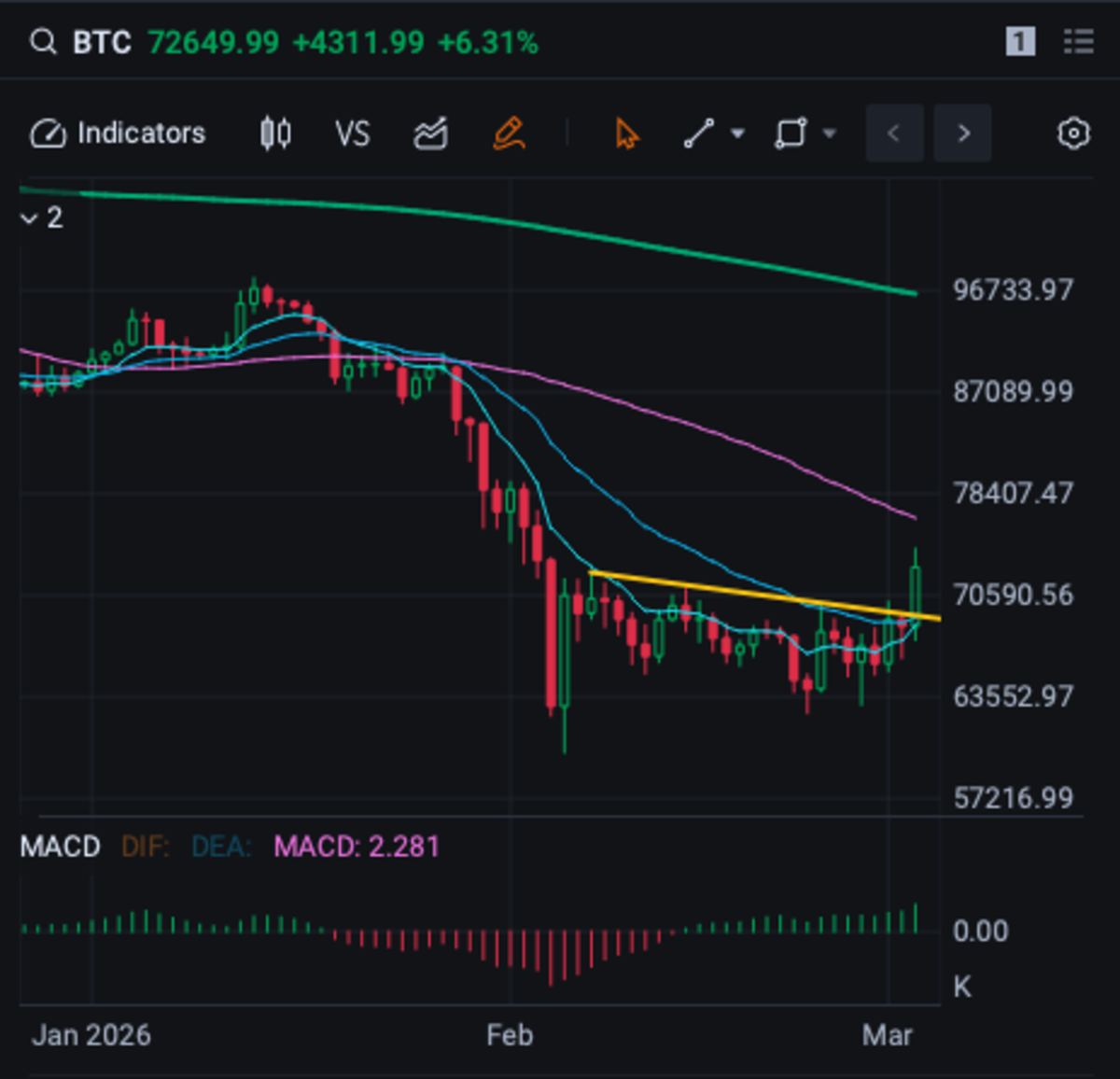
Bitcoin's surge above $72,000 on March 5, 2026, following easing Iran-Israel tensions, creates immediate financial optimization opportunities for cross-border e-commerce sellers. The cryptocurrency's 10% weekly rally—driven by $700M in U.S. spot Bitcoin ETF inflows and broader market recovery—signals shifting risk sentiment that directly impacts currency volatility, payment processing costs, and working capital management for sellers operating across multiple jurisdictions.
For cross-border sellers, this crypto market stabilization presents three critical financial windows: First, currency volatility compression as geopolitical risk premiums unwind. The rally reflects investor confidence that worst-case escalation scenarios are receding, which historically reduces USD/CNY, USD/INR, and EUR/USD volatility by 3-5% within 2-4 weeks. Sellers with exposure to Asian manufacturing (China, Vietnam, India) can lock in favorable FX rates now before volatility potentially re-expands if military operations extend beyond the forecasted 3-8 week window. Second, payment processing fee optimization becomes available as crypto-accepting payment providers (Coinbase Commerce, BitPay, Stripe Crypto) typically reduce settlement fees by 0.5-1.2% during periods of reduced volatility, since their hedging costs decline. Sellers processing 50+ BTC-denominated transactions monthly can negotiate better rates with providers during this stabilization window. Third, working capital acceleration through crypto-collateralized financing. Lenders like BlockFi, Celsius, and emerging fintech providers offer 6-9% APR on stablecoin-backed inventory loans when crypto markets show bullish momentum—compared to 12-15% APR during volatile periods—unlocking $50K-$200K in immediate working capital for mid-sized sellers.
The technical price zone between $73,750-$74,400 represents a critical decision point for sellers' FX hedging strategies. If Bitcoin decisively breaks above $74,400 (as CoinDesk analysis suggests), it signals sustained risk-on sentiment, meaning currency pairs will likely stabilize and payment processing costs will compress further. Sellers should consider: (1) Locking in 60-90 day forward contracts on USD/CNY and USD/INR at current rates before further appreciation; (2) Shifting 20-30% of payment processing volume to crypto-accepting providers to capture 0.8-1.5% fee savings; (3) Accessing inventory financing at current 6-9% rates before rates potentially rise if volatility returns. Conversely, if Bitcoin fails to break $74,400, the broader downtrend from October 2025 remains intact, suggesting geopolitical risk could re-escalate, volatility could spike 8-12%, and payment processing costs could increase 1-2%. In this scenario, sellers should prioritize hedging exposure and avoid locking in long-term financing at current rates.
Regional payment corridor impacts vary significantly. Asian sellers (China, Vietnam, India) benefit most from stabilizing USD pairs, as their primary payment corridors (USD→CNY, USD→INR) typically see 2-4% monthly volatility during geopolitical uncertainty. The 11% rally in South Korea's equity benchmark signals strong regional confidence, making KRW-denominated payments more stable—sellers can reduce hedging costs by 0.3-0.6% on Korea-bound shipments. U.S. and EU sellers face lower immediate impact but should monitor oil price retreats (mentioned in news as Strait of Hormuz stabilizes), which typically reduce logistics costs 3-5% within 4-6 weeks, improving cash conversion cycles by 5-7 days.
Questions 7
How does Bitcoin's $72K rally affect cross-border payment processing costs for sellers?
Bitcoin's stabilization above $72,000 reduces volatility-driven hedging costs for crypto payment processors like Coinbase Commerce and BitPay, typically lowering settlement fees by 0.5-1.2% during risk-on periods. Sellers processing 50+ monthly crypto transactions can negotiate better rates immediately, saving $200-500 monthly on transaction fees. The news reports $700M in ETF inflows and easing geopolitical tensions, which historically compress payment processing spreads by 3-5% within 2-4 weeks as providers reduce their own hedging costs.
What FX hedging opportunities exist for sellers with Asian manufacturing exposure?
The crypto rally signals declining geopolitical risk premiums, which typically reduces USD/CNY and USD/INR volatility by 3-5% over 2-4 weeks. Sellers with China/Vietnam/India sourcing should lock in 60-90 day forward contracts now at favorable rates before potential volatility re-expansion if military operations extend beyond the forecasted 3-8 week window. This hedging window typically closes within 2-3 weeks as markets fully price in the stabilization, making immediate action critical for sellers with $500K+ monthly payment exposure to Asia.