





$189B AI Funding Surge Reshapes E-Commerce Tools | Sellers Must Adopt AI Now
- Record $189B venture funding in February 2026 signals AI tools becoming essential for competitive sellers; 90% of capital flows to AI startups creating product research, pricing, and customer service automation opportunities



Overview
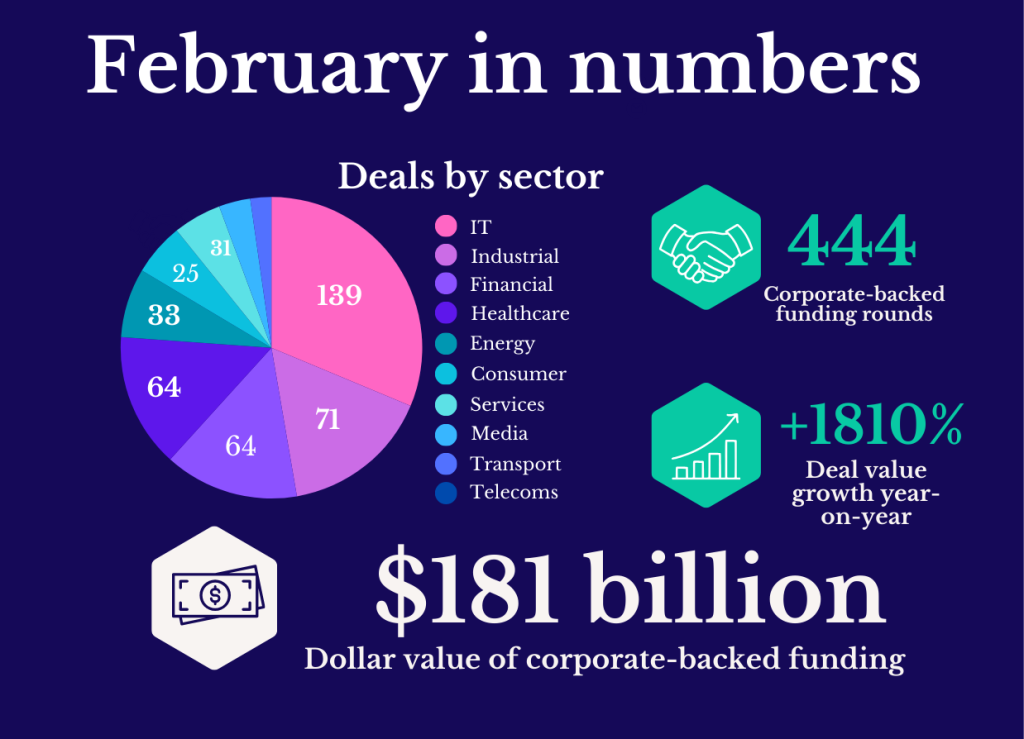
The February 2026 venture capital funding explosion—reaching a record $189 billion with 90% ($171B) flowing to AI-related startups—represents a fundamental shift in e-commerce infrastructure that sellers must immediately capitalize on. This capital concentration reflects investor conviction that AI will become the foundational technology for competitive advantage across retail, with OpenAI ($110B), Anthropic ($30B), and Waymo ($16B) capturing 83% of total funding. For e-commerce sellers, this funding surge directly translates to accelerated development of AI tools for product selection, dynamic pricing optimization, customer service automation, and competitive intelligence—capabilities that will soon separate market leaders from struggling competitors.
AUTOMATION WINS FOR SELLERS RIGHT NOW: The $171B flowing to AI startups is funding the exact tools sellers need. Runway's $315M Series E (backed by Azim Premji's family office) focuses on AI video generation—directly applicable to product listing videos and TikTok Shop content creation. World Labs' $1B+ round for Marble (3D world model creation) enables sellers to generate product photography and lifestyle imagery without expensive photoshoots. Goodfire's $150M Series B (Eric Schmidt's Hillspire investment) focuses on understanding AI model functionality—critical for sellers building proprietary recommendation engines and fraud detection systems. Sellers can immediately adopt these emerging tools to automate 15-20 hours weekly of content creation, reducing production costs by 40-60% while scaling output.
DATA-DRIVEN INSIGHTS & COMPETITIVE MOATS: The funding data reveals three critical patterns. First, U.S.-based startups captured 92% of global venture funding ($174B of $189B), indicating American sellers will access cutting-edge AI tools 6-12 months before international competitors. Second, early-stage funding ($13.1B, up 47% YoY) shows robust pipeline of new AI tools entering market—sellers adopting early gain 18-24 month competitive advantages before tools commoditize. Third, the $1 trillion stock market decline coinciding with record private AI funding signals institutional capital is rotating from public software stocks (Liftoff, Clear Street withdrew IPOs) to private AI infrastructure—meaning sellers using public SaaS tools (Shopify, BigCommerce) face potential disruption as venture-backed competitors build superior alternatives.
AI PRODUCT GAPS & OPPORTUNITIES: While $171B funds AI development, critical gaps remain for sellers. No funded startup specializes in cross-border seller compliance automation (VAT, tariffs, customs documentation)—a $2-3B opportunity. Dynamic pricing tools optimized for Amazon's Buy Box algorithm and category-specific elasticity remain underdeveloped. AI-powered competitive intelligence platforms that track 50,000+ competitor listings in real-time and surface pricing/content trends are nascent. Sellers should evaluate emerging tools from funded startups (Runway for video, World Labs for imagery, Goodfire for model optimization) while identifying gaps where custom AI solutions create defensible advantages.
IMMEDIATE SELLER ACTIONS: Audit current tools for AI-powered alternatives within 30 days. Prioritize automation of content creation (video, photography, descriptions) using Runway and similar platforms—ROI typically 3-6 months through labor cost reduction. Evaluate dynamic pricing tools powered by AI model optimization (Goodfire-type capabilities) to improve margins 2-5% through algorithmic Buy Box positioning. Monitor funded startups' product launches quarterly; early adoption of emerging tools provides 6-12 month competitive windows before widespread adoption.
Questions 8
How does the shift from public to private AI capital affect sellers' technology strategy?
The news reports that public software companies (Liftoff, Clear Street) withdrew IPO listings in February 2026 while private AI startups raised record capital. This divergence indicates institutional capital is rotating from mature public SaaS platforms to venture-backed AI infrastructure. For sellers, this means: (1) traditional platforms (Shopify, BigCommerce) may face disruption from venture-backed competitors; (2) cutting-edge AI capabilities will emerge first in private startups before reaching public platforms; (3) early adoption of private startup tools provides competitive advantage before features reach mainstream platforms. Sellers should evaluate both established platforms and emerging venture-backed tools to maintain technology leadership.
What risks should sellers consider regarding AI tool adoption in 2026?
Eric Schmidt warned that AI models face security vulnerabilities to malicious hacking, indicating sellers must evaluate tool security before adoption. The $1 trillion stock market decline coinciding with record private AI funding signals potential market correction—some venture-backed startups may fail despite funding. Public software stocks (Liftoff, Clear Street withdrew IPOs) face disruption from venture-backed competitors, meaning sellers using traditional SaaS tools may face obsolescence. Mitigate risks by: (1) diversifying across multiple AI tools rather than betting on single vendor; (2) prioritizing tools from well-funded startups with strong investor backing; (3) maintaining data portability and avoiding vendor lock-in.