
Blockchain Transforms Global Financial Infrastructure Through Strategic Middleware
- Emerging blockchain platforms redefine cross-border transactions and institutional financial technology integration
Overview
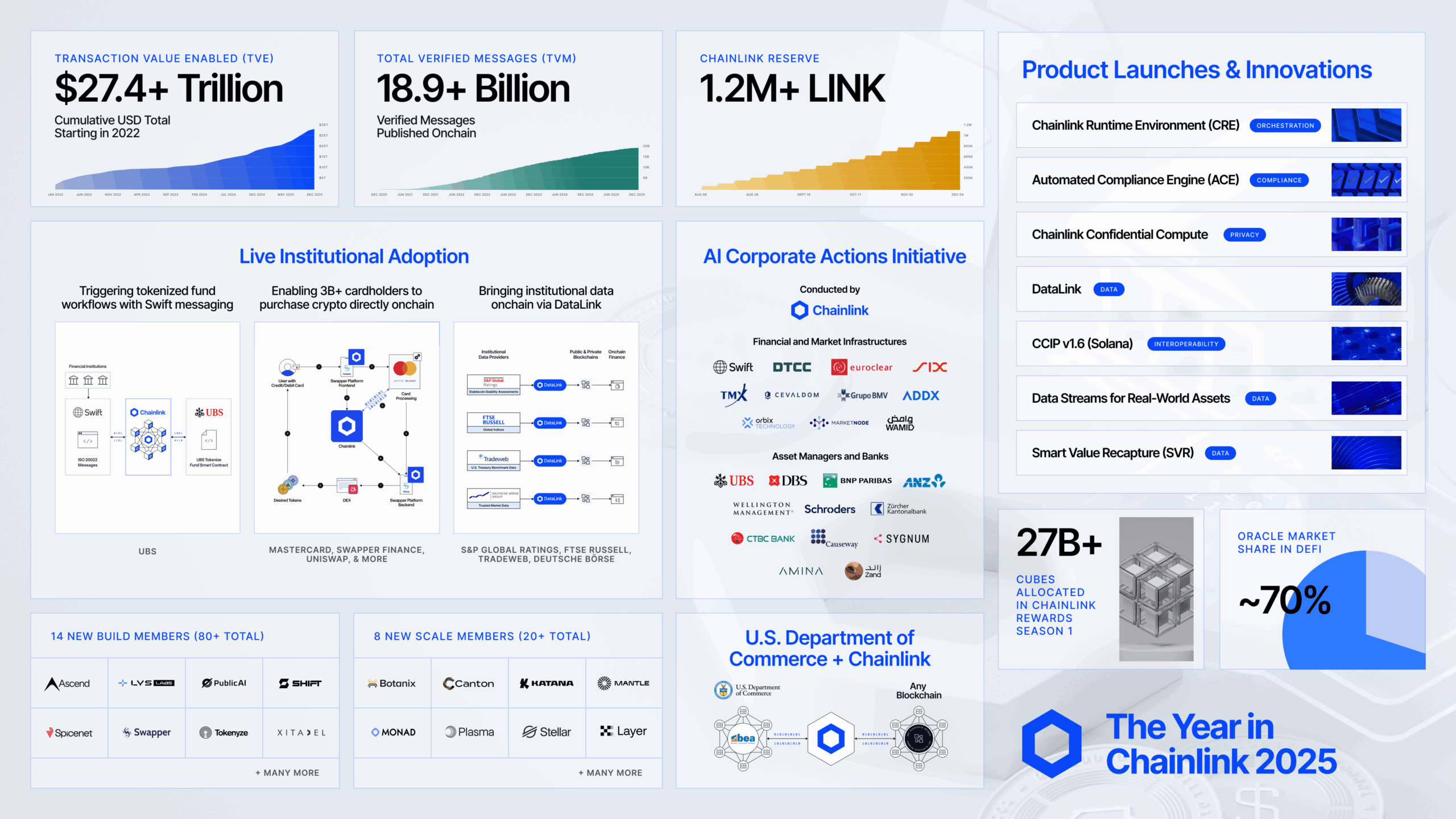
The fintech landscape is experiencing a transformative revolution, with blockchain middleware emerging as a critical infrastructure for reimagining global financial transactions. In 2025, Chainlink exemplifies this paradigm shift by establishing unprecedented connections between traditional financial institutions and decentralized technologies.
Strategic institutional partnerships are driving this transformation, with major players like Mastercard, UBS, and J.P. Morgan embracing blockchain's potential. Mastercard's groundbreaking move to enable 3 billion payment cardholders to purchase crypto assets directly onchain represents a watershed moment in financial technology integration. This signals a profound shift from viewing blockchain as a speculative technology to recognizing it as a robust, enterprise-grade financial infrastructure.
Government engagement further validates blockchain's strategic importance. The U.S. Department of Commerce's partnership to bring macroeconomic data onchain demonstrates institutional recognition of blockchain's transparency and reliability. Chainlink's growing credibility, underscored by high-level government interactions including the White House Digital Asset Summit, indicates a maturation of blockchain from a fringe technology to a mainstream financial solution.
Cross-border financial experiments are accelerating this transformation. The landmark project between the Central Bank of Brazil and Hong Kong Monetary Authority represents a critical milestone in automated cross-chain trade management. By demonstrating the ability to automatically manage fund transfers and documentation through blockchain technology, these initiatives are dismantling traditional barriers in international finance.
The implications are profound: blockchain is no longer just a technological curiosity but a strategic middleware enabling secure, transparent, and efficient financial transactions across government, banking, and capital market sectors. Financial institutions and governments are recognizing that blockchain can dramatically reduce friction, enhance transparency, and create new possibilities for global economic interaction.
Questions 3
What are the potential risks and opportunities in blockchain financial integration?
Opportunities include reduced transaction costs, increased transparency, faster cross-border settlements, and new financial product innovations. Risks involve regulatory uncertainty, potential security vulnerabilities, and the need for significant technological and organizational adaptation. Financial institutions must carefully navigate these challenges while leveraging blockchain's transformative potential.
What signals institutional acceptance of blockchain technologies?
Key indicators include major financial institutions forming strategic partnerships (like Mastercard and UBS), government collaborations (such as the U.S. Department of Commerce bringing macroeconomic data onchain), and high-profile engagement like Chainlink's participation in the White House Digital Asset Summit. These developments show blockchain moving from a speculative technology to a serious financial infrastructure solution.