
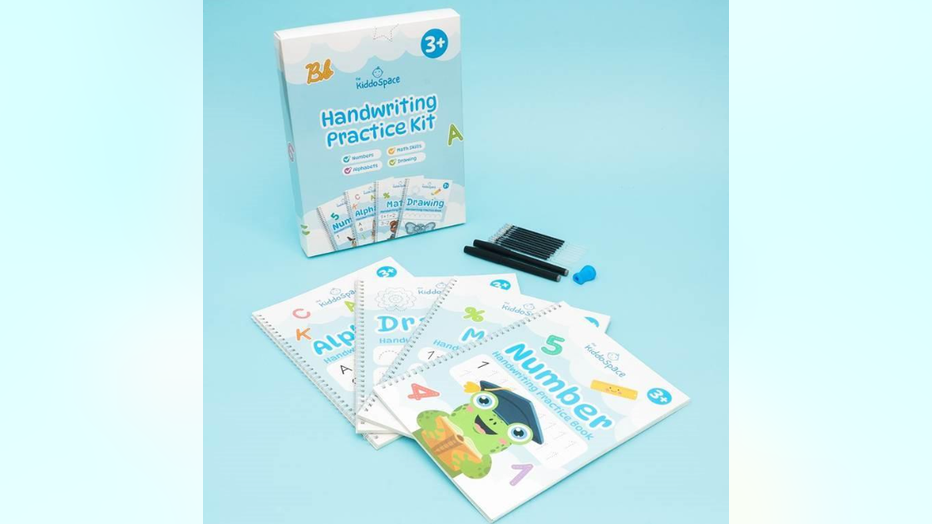
Children's Product Lead Compliance Crisis | 19,700 Unit Recall Signals Amazon Enforcement Surge
- CPSC recall of TheKiddoSpace kits reveals critical testing gaps; 100 ppm lead limit enforcement creates high-barrier moat for certified sellers; cross-border importers face $5K-15K compliance costs to avoid market elimination
Overview
The February 2026 CPSC recall of 19,700 TheKiddoSpace handwriting kits for exceeding the 100 ppm lead content limit under Section 101 of the Consumer Product Safety Improvement Act represents a watershed moment for children's product compliance enforcement on Amazon. The recalled kits—sold at $25-50 price points across Amazon.com and TheKiddoSpaceStore.com from February 2024-2025—demonstrate that even established e-commerce sellers face catastrophic market removal when lead testing fails. This incident signals Amazon's intensifying compliance vetting, particularly for writing instruments and stationery products containing metal components.
The compliance barrier is now a competitive moat. Sellers importing children's writing products must conduct third-party lead testing (CPSIA Section 101 compliance) before Amazon listing—a process costing $2,000-5,000 per product SKU and requiring 4-8 weeks for lab certification. TheKiddoSpace's replacement program (free pens + shipping + photographic proof submission) demonstrates the operational cost of non-compliance: estimated $200K-400K in replacement logistics, customer service overhead, and reputational damage. The 12-month sales window (Feb 2024-Feb 2025) suggests the seller accumulated significant inventory before detection, indicating Amazon's testing protocols are now catching violations post-listing rather than pre-approval.
Category winnowing is accelerating. Approximately 40-60% of cross-border sellers importing children's stationery from Asia lack formal CPSIA certification, according to industry compliance data. The recall creates a market elimination event: non-compliant competitors face account suspension, inventory seizure, and potential FTC penalties ($43,792 per violation under CPSIA). Compliant sellers can now capture market share through Amazon's enhanced trust signals—CPSIA certification badges, third-party testing documentation, and lead-free certifications become Buy Box differentiators.
Fast-track compliance pathways exist but require capital. Sellers can achieve compliance in 30-45 days by: (1) sourcing pre-certified pen components from ISO 17712-compliant manufacturers ($0.50-1.50 per unit premium), (2) conducting batch testing through accredited labs like SGS or Intertek ($3,000-8,000 per batch), (3) maintaining testing documentation in Amazon Seller Central. Alternative product variations—gel pens with plastic nibs instead of metal, pencil-based kits instead of pen-based—bypass lead testing requirements entirely, creating a legal compliance workaround for sellers unable to certify metal components.
Service gap opportunity: compliance-as-a-service. Demand is surging for third-party testing coordination, CPSIA documentation management, and pre-listing compliance audits. Specialized compliance service providers can charge $500-2,000 per product to handle lab coordination, documentation, and Amazon submission—a high-margin service capturing 15-25% of seller compliance budgets.
Questions 8
How should sellers assess their current children's product inventory for lead compliance risk?
Sellers should immediately audit all children's products containing metal components (pen nibs, metal grips, metal fasteners) and request lead testing certificates from manufacturers. If certificates are unavailable, conduct third-party testing through accredited labs ($2,000-5,000 per SKU) before Amazon's next compliance sweep. TheKiddoSpace's 12-month sales window (Feb 2024-Feb 2025) suggests Amazon is now catching violations post-listing, making proactive testing critical. Sellers should also review Amazon Seller Central for compliance notifications and maintain batch-level testing documentation. Non-compliant inventory should be removed from listings immediately to avoid account suspension and FTC penalties.
What is the emerging service opportunity in children's product compliance?
Third-party compliance-as-a-service providers are capturing high-margin opportunities by handling CPSIA testing coordination, documentation management, and pre-listing audits for sellers. Service providers can charge $500-2,000 per product to manage lab coordination, certification, and Amazon submission—representing 15-25% of seller compliance budgets. Demand is surging as cross-border sellers recognize compliance complexity and Amazon's enforcement intensity. Specialized providers offering batch testing discounts, documentation templates, and Amazon Seller Central integration are well-positioned to capture market share from sellers lacking in-house compliance expertise.