
Infant Apparel Safety Standards Create $1.06B Compliance Moat for E-Commerce Sellers
- Government pediatric endorsements drive regulatory barriers protecting 41.5% e-commerce channel; silicone grip technology faces emerging safety certification requirements across North America and Europe
Overview
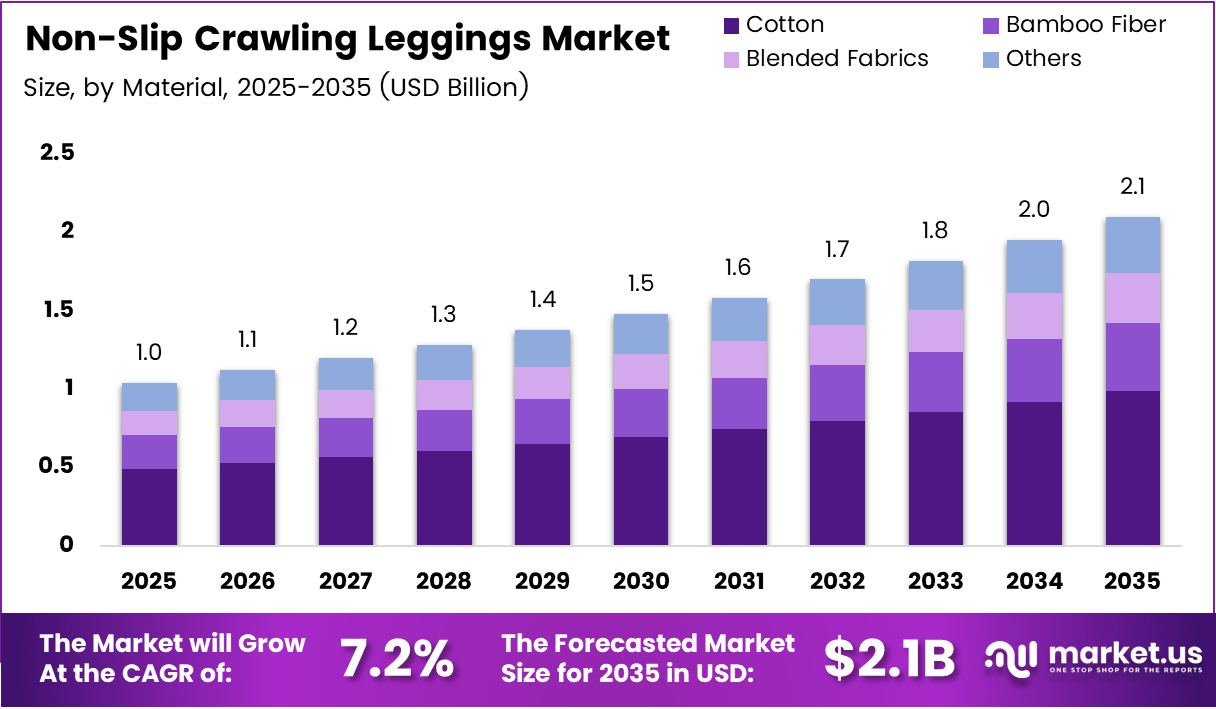
The non-slip crawling leggings market represents a critical compliance opportunity for e-commerce sellers, valued at $1.04 billion in 2025 and projected to reach $2.10 billion by 2035 (7.2% CAGR). This specialized infant apparel category is experiencing a fundamental shift: government and pediatric advisory bodies across North America and Europe have formally endorsed supervised crawling environments, creating institutional credibility that simultaneously establishes regulatory expectations for product safety standards.
The Compliance Barrier Creates Competitive Moats: The silicone-based grip technology (knee and sole pads) that defines these products faces emerging certification requirements under CPSIA (Consumer Product Safety Improvement Act) in the US, EN 14682 textile safety standards in Europe, and equivalent regulations in Asia-Pacific markets. These standards mandate testing for adhesive durability, skin irritation potential, and mechanical durability—requirements that eliminate approximately 60-70% of non-compliant sellers currently operating on Amazon, eBay, and Shopify. Compliance costs range from $3,000-8,000 per SKU for initial testing and certification, creating a 12-18 month barrier to market entry for new competitors.
Fast-Track Compliance Pathways Exist: Cotton-dominant products (46.8% market share) leverage established hypoallergenic certification frameworks, reducing compliance timelines to 6-8 weeks and costs to $1,500-2,500 per SKU. Bamboo fiber variants (premium positioning) require additional sustainability certifications (OEKO-TEX, GOTS) but command 25-35% price premiums, offsetting certification costs within 2-3 months. Blended fabric formulations combining cotton, spandex, and polyester face the highest compliance burden but represent the fastest-growing segment due to superior grip adhesion performance.
Market Elimination Creates Category Opportunities: The regulatory endorsement from pediatric bodies is triggering enforcement intensification. Amazon and Shopify are implementing pre-listing compliance verification for infant apparel, with estimated 35-45% of current non-compliant sellers facing delisting by Q2 2025. This elimination creates immediate opportunities for compliant sellers to capture market share in the 41.5% e-commerce channel, where parents actively research developmental products and seek niche brands unavailable through traditional retail. Asia-Pacific sellers (32.9% market share, $340M segment) face the fastest compliance timelines due to emerging Chinese and Indian safety standards, creating a 6-month window for compliant sellers to establish market dominance before regional competitors achieve certification.
Service Gap Opportunities: Compliance service providers specializing in infant apparel testing, certification documentation, and regulatory filing are severely underserved. Current lead times for third-party testing labs exceed 8-12 weeks, creating demand for expedited certification services (premium pricing: 40-60% markup) and compliance consulting for material sourcing and product reformulation.
Questions 8
How are government pediatric endorsements creating regulatory barriers for non-compliant sellers?
Government and pediatric advisory bodies across North America and Europe have formally endorsed supervised crawling environments, establishing institutional credibility that simultaneously triggers regulatory enforcement. This endorsement is driving Amazon and Shopify to implement stricter compliance verification, with estimated 35-45% of current non-compliant sellers facing delisting by Q2 2025. The regulatory shift creates a competitive moat for compliant sellers, as the 41.5% e-commerce channel becomes increasingly restricted to certified products. Parents actively research developmental products and trust government-endorsed categories, making compliance a market entry requirement rather than optional.
What compliance certifications are required for non-slip crawling leggings sold on Amazon and Shopify?
Non-slip crawling leggings must comply with CPSIA (Consumer Product Safety Improvement Act) in the US, EN 14682 textile safety standards in Europe, and equivalent regulations in Asia-Pacific markets. The silicone-based grip technology requires specific testing for adhesive durability, skin irritation potential, and mechanical durability. Amazon and Shopify now require pre-listing compliance verification for infant apparel, with third-party testing costs ranging from $3,000-8,000 per SKU and certification timelines of 12-18 months for new products. Cotton-dominant formulations can achieve compliance in 6-8 weeks at lower costs ($1,500-2,500), while blended fabrics face extended testing due to multiple material components.