



Costco Tariff Refund Strategy Reshapes Retail Pricing | Seller Margin Pressure 2026
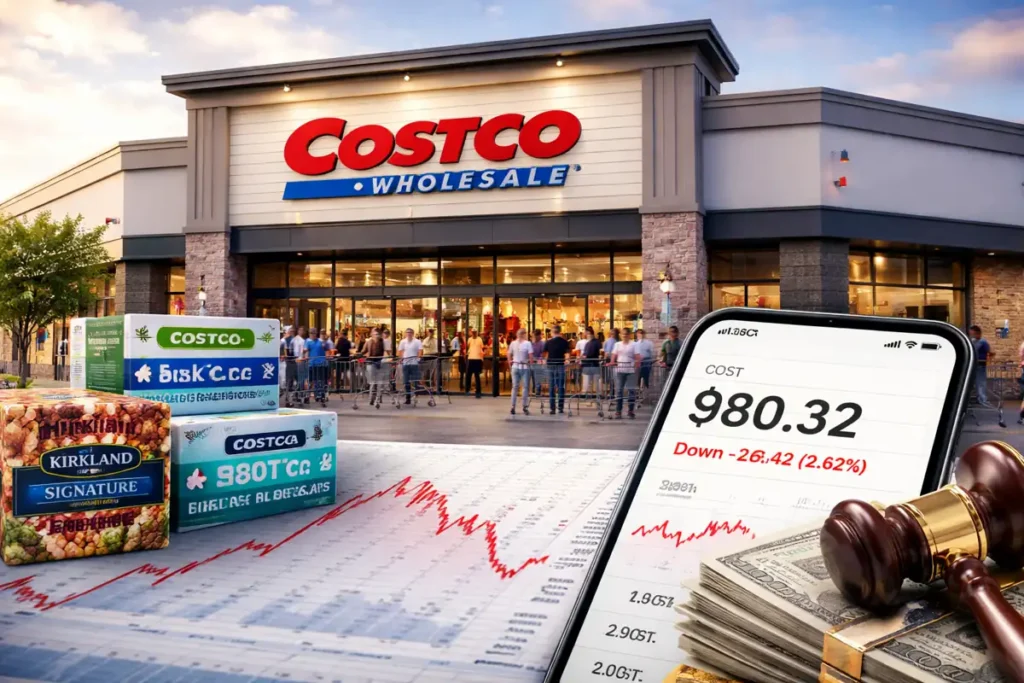
- Supreme Court tariff ruling creates $2B+ refund opportunity for major retailers; Costco commits to price pass-through, intensifying competitive pressure on Amazon/Walmart sellers across imported goods categories











Overview
Costco's strategic response to the Supreme Court's tariff invalidation represents a critical inflection point for cross-border e-commerce sellers. Following the Court's decision to strike down President Trump's global tariffs, Costco reported FY26 Q2 revenue of $69.6 billion (9.2% YoY growth) while aggressively pursuing tariff refunds and committing to pass 100% of recovered duties directly to members through lower prices. CEO Ron Vachris emphasized the company's philosophy: "We always want to be the first to lower prices and the last to raise them." This commitment, combined with Costco's operational strength (924 global warehouses, 28 new openings planned for FY26), signals a deliberate strategy to weaponize tariff savings for competitive advantage rather than margin expansion.
The tariff refund window creates immediate margin compression across imported merchandise categories. Costco's mitigation playbook—shifting country of origin, consolidating global buys, strengthening Kirkland Signature private label, and increasing domestic sourcing—directly threatens third-party sellers on Amazon, Walmart Marketplace, and eBay who compete in consumer goods, home products, and imported merchandise. The company absorbed portions of tariff costs internally over the past year, demonstrating willingness to sacrifice short-term margins for market share. If Costco successfully navigates the refund process (currently uncertain, with no clear timeline established), resulting price reductions could trigger cascading pressure on competitors. Costco's Q2 digital transformation initiatives—personalized recommendation carousels generating $470M+ in e-commerce sales, 8-second auto-pay checkout times, and AI-powered shopping tool integration—amplify this competitive threat by improving conversion efficiency while maintaining price leadership.
The policy uncertainty window (150+ days for new tariff implementation) creates both tactical opportunities and strategic risks for sellers. Costco's November lawsuit seeking tariff refunds and its cautious public stance ("the future impact of tariffs remains extremely fluid") reflect the practical complexity: importers are not guaranteed refunds without individual court judgments. However, the company's $6.5B full-year capex commitment to warehouse expansion, DC network upgrades, and digital experience improvements signals confidence in sustained volume growth. For sellers, this creates a critical decision point: suppliers to Costco face potential wholesale price pressure as the retailer passes refunds forward; competitors must decide whether to match Costco's pricing or cede market share. Fresh categories (low double-digit growth in premium beef and value proteins) and non-foods (jewelry, gold, tires, appliances showing high single-digit growth) demonstrate where Costco is investing competitive energy. Supply chain deflation in produce, eggs, and dairy provides temporary pricing relief, but Middle East geopolitical monitoring suggests fuel cost and shipping schedule volatility could offset these gains. Trump's signaled intention to raise global tariffs to 15% post-ruling creates a secondary uncertainty layer, potentially reversing any refund benefits within 6-12 months.
Questions 8
How does Costco's warehouse expansion strategy affect seller distribution opportunities?
Costco opened four new warehouses in Q2 and is targeting 28 additional openings for FY26 (multiyear target of 30 annually), bringing the global total to 924. This expansion creates both opportunities and threats: (1) Opportunity—new warehouses represent new distribution channels for suppliers; (2) Threat—Costco's limited-SKU model and private label focus mean supplier selection is highly competitive. Sellers should evaluate direct supplier relationships with Costco's procurement team if they operate in high-growth categories (fresh foods, jewelry, appliances, tires). The company's $6.5B capex commitment to warehouse expansion and DC network upgrades signals sustained volume growth, making Costco a strategic channel for suppliers with scale and supply chain reliability. Sellers with $10M+ annual revenue should initiate Costco supplier conversations within 60 days to position for 2026-2027 distribution agreements.
What sourcing strategy should sellers adopt to counter Costco's tariff advantage?
Costco's mitigation approach—shifting country of origin, consolidating global buys, and increasing domestic sourcing—provides a roadmap for seller adaptation. The company is strengthening Kirkland Signature private label where supply-chain control is highest, indicating that vertical integration and direct sourcing relationships provide competitive insulation. Sellers should evaluate: (1) nearshoring to Mexico or Central America to reduce tariff exposure and shipping costs; (2) Vietnam and India sourcing for categories where tariff rates are lower; (3) domestic manufacturing partnerships for high-margin categories; (4) private label development to capture margin expansion. Sellers with $5M+ annual revenue should consider establishing direct supplier relationships in lower-tariff jurisdictions within 90 days to lock in cost advantages before broader market realignment occurs.