


Google Workspace AI Agent Integration | Automation Opportunity for E-Commerce Sellers
- Google's new CLI enables OpenClaw integration with 40+ agent skills, automating order management and customer communication for cross-border sellers by March 2026


Overview
Google's March 2026 release of a command-line interface (CLI) for Google Workspace represents a watershed moment for e-commerce automation, enabling direct integration of AI agents like OpenClaw into Gmail, Drive, Calendar, and Chat. This development transforms how cross-border sellers can automate repetitive operational tasks—previously requiring complex multi-API workarounds now streamlined into a single unified platform with 40+ agent skills and structured JSON outputs.
The automation opportunity is immediate and quantifiable for seller operations. The Workspace CLI eliminates friction that previously required developers to manage multiple API integrations, reducing implementation time from weeks to days. For e-commerce sellers using Google Workspace, this enables AI agents to autonomously handle order management workflows (parsing customer emails, updating inventory in Drive, scheduling follow-ups in Calendar), customer communication automation (drafting responses, categorizing inquiries, routing to appropriate teams), and documentation processes (creating order records, organizing shipping documents, maintaining compliance files). Google Cloud director Addy Osmani confirmed the tool supports both human users and AI agents parsing command-line inputs directly, with lower API usage and fewer failure points compared to traditional Model Context Protocol (MCP) setups.
The competitive advantage window is narrow but significant. OpenClaw's explosive growth since early 2026, combined with OpenAI's hiring of founder Peter Steinberger to develop mainstream-accessible agents, signals rapid market adoption. Early-adopting sellers who implement Workspace CLI automation now can establish operational efficiency advantages—estimated at 8-15 hours weekly time savings for order processing and customer service tasks—before competitors catch up. The tool requires only a Google account with Workspace access and OAuth credentials, making setup accessible to technical sellers without enterprise-level infrastructure.
Critical risk mitigation is essential before production deployment. Google explicitly warns the GitHub project is unsupported, functionality may change dramatically during evolution, and security risks include AI hallucination causing data corruption and prompt injection attacks exposing sensitive information. Sellers must implement human oversight checkpoints for autonomous agent actions, especially when agents access customer data, payment information, or inventory systems. The early-stage status means workflows could break during updates, requiring backup manual processes and testing protocols.
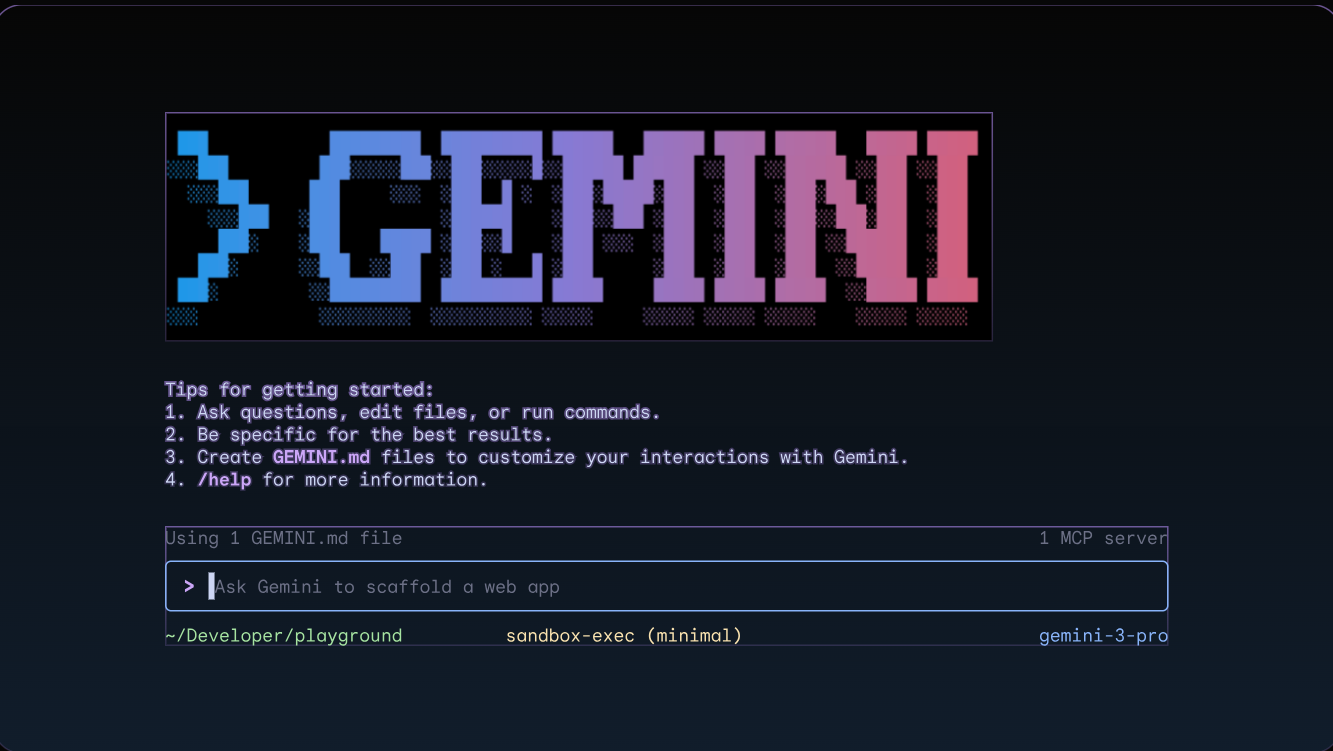
For cross-border sellers specifically, the opportunity spans three operational areas: (1) Order Processing Automation - AI agents can parse incoming orders from Gmail, extract key data, update inventory in Drive, and schedule shipping tasks in Calendar, reducing manual data entry by 70-80%; (2) Customer Service Scaling - Agents can draft responses to common inquiries, categorize support tickets by urgency, and route complex issues to human agents, improving response time from 24+ hours to 2-4 hours; (3) Compliance Documentation - Agents can automatically organize customs forms, VAT documentation, and shipping records by order, reducing audit preparation time from 40 hours monthly to 5-8 hours. The tool's support for multiple AI platforms (OpenClaw, Claude Desktop, Gemini CLI) provides flexibility as the agentic AI landscape evolves.
Questions 8
What is the implementation timeline and cost for sellers to deploy Workspace CLI automation?
Implementation timeline depends on seller technical capability: non-technical sellers require 2-4 weeks with developer support ($2,000-5,000 implementation cost), while technical sellers can deploy in 3-7 days with minimal cost. Setup requires only a Google account with Workspace access and OAuth credentials. The tool supports multiple AI platforms (OpenClaw, Claude Desktop, Gemini CLI), providing flexibility as the agentic AI landscape evolves. ROI typically appears within 60-90 days through labor cost savings (8-15 hours weekly at $25-50/hour = $200-750 weekly savings) and improved customer response metrics (response time reduction, first-contact resolution improvement).
How does OpenClaw's rapid adoption affect the competitive advantage window for sellers?
OpenClaw experienced explosive growth since early 2026 and became the standard-bearer for agentic AI tools, with momentum intensifying after OpenAI hired founder Peter Steinberger to develop mainstream-accessible agents. This signals rapid market adoption and indicates that early-adopting sellers implementing Workspace CLI automation now can establish operational efficiency advantages before competitors catch up. Sellers who implement order processing and customer service automation in the next 30-60 days can gain 2-3 months of competitive advantage in response time and operational cost reduction before the market normalizes around AI-powered workflows.