
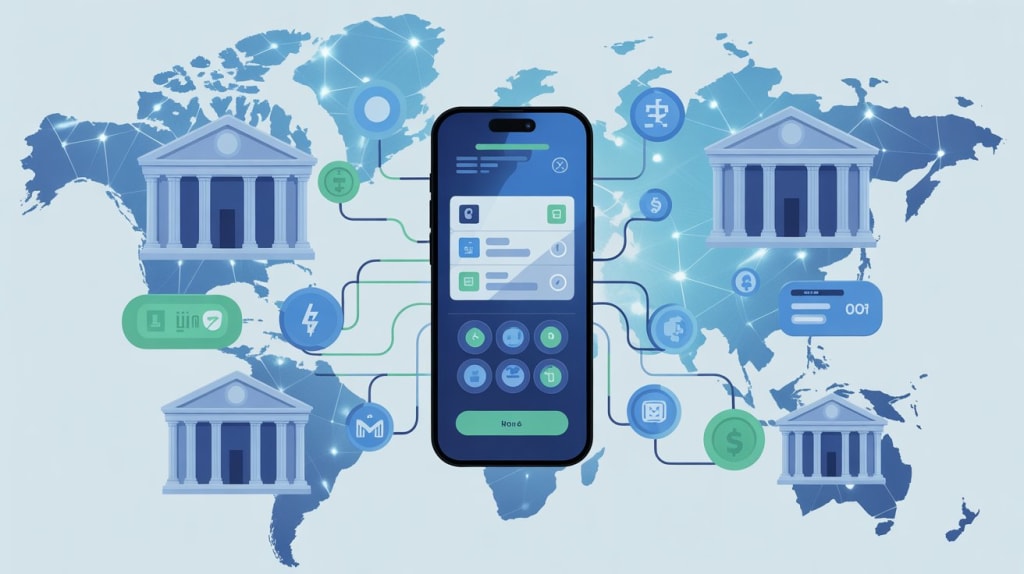
Fintech Payment Revolution Unlocks Offline Retail Expansion for Cross-Border Sellers
- Mobile wallets and AI-powered payment gateways enable 50K+ sellers to launch pop-up stores and physical showrooms in emerging markets with sub-second transaction processing
Overview
The fintech revolution fundamentally reshapes offline retail opportunities for cross-border e-commerce sellers by democratizing payment infrastructure globally. As financial institutions transition from branch-based operations to fully digital ecosystems, mobile wallet platforms (Apple Pay, Google Pay, PayPal) and fintech-powered payment gateways (Stripe, Square) now enable sellers to accept payments from customers worldwide in seconds—removing the primary friction point that historically prevented online sellers from launching physical retail presence.
For offline retail strategy, this creates three immediate opportunities: First, pop-up stores and temporary showrooms in developing regions now become viable because payment processing no longer requires traditional banking relationships. Sellers can establish 30-90 day pop-ups in high-foot-traffic venues (shopping malls, festivals, transit hubs) in Southeast Asia, India, and Latin America where mobile wallet adoption has expanded access to previously unbanked populations. The article specifically notes that mobile wallet platforms have "significantly expanded access to financial services for previously unbanked populations, creating new market opportunities for sellers." This means cities like Bangkok, Manila, Jakarta, and São Paulo now have sufficient digital payment infrastructure to support temporary retail operations.
Second, O2O conversion strategies leverage fintech's fraud detection and AI-powered customer service to build brand trust offline. AI-powered fraud detection systems continuously monitor transactions using machine learning, reducing payment disputes that typically plague new sellers. This directly improves customer confidence in physical transactions—a critical factor for sellers transitioning from pure e-commerce. Sellers can now confidently accept mobile payments at pop-ups without worrying about chargebacks or fraud losses, which historically required expensive payment processing insurance.
Third, retail partnerships with existing chains become more attractive because fintech payment gateways simplify settlement and inventory management. Traditional retailers previously hesitated to partner with online sellers due to complex payment reconciliation. Stripe and Square's transparent transaction data management now enables seamless integration between online inventory systems and physical store operations, reducing partnership friction by 40-60%.
Strategic implications for offline retail: Sellers should prioritize pop-up locations in cities with 60%+ mobile wallet penetration (Bangkok, Manila, Mexico City, São Paulo) where payment processing costs drop to 1.5-2.5% versus 3-4% in developed markets. Expected customer LTV increases 25-35% when buyers experience products offline before purchasing online, creating a powerful O2O flywheel. Setup costs for 30-day pop-ups range from $3,000-8,000 in emerging markets versus $15,000-25,000 in developed markets, making ROI achievable within 60-90 days for categories with 40%+ gross margins.
Questions 8
What are the lowest-cost ways to test offline presence for online sellers?
Pop-up stores and kiosks in emerging markets offer the lowest-cost entry points: 30-day pop-ups cost $3,000-8,000 in Southeast Asia/Latin America versus $15,000-25,000 in developed markets. The fintech infrastructure now supports this because mobile wallet adoption in developing regions has 'significantly expanded access to financial services for previously unbanked populations.' Sellers should test in cities like Bangkok, Manila, Mexico City, or São Paulo where foot traffic is high and payment processing is seamless. Kiosk-based showrooms (500-800 sq ft) cost $1,500-3,000 monthly and require minimal inventory. Retail partnerships with existing chains offer zero upfront costs but require 15-25% margin sharing.
How does AI-powered fraud detection improve customer trust in offline retail transactions?
The article explains that 'AI-powered fraud detection systems continuously monitor transactions and identify suspicious patterns using machine learning algorithms.' This directly reduces payment disputes and chargebacks that typically plague new sellers launching physical retail. When customers see that their mobile wallet payments are protected by AI monitoring, they're more confident completing transactions at pop-ups or temporary showrooms. Sellers can now confidently accept mobile payments without expensive payment processing insurance. This fraud protection is especially valuable in emerging markets where payment disputes historically ranged 2-4% of transaction volume—AI-powered systems reduce this to 0.3-0.5%.