


AI Governance Crisis Reshapes Tech Talent Market | Seller Implications for AI-Powered Tools
- OpenAI's Pentagon deal triggers 295% ChatGPT uninstalls, 240% Claude growth; impacts AI tool adoption for seller automation and supply chain optimization































Overview
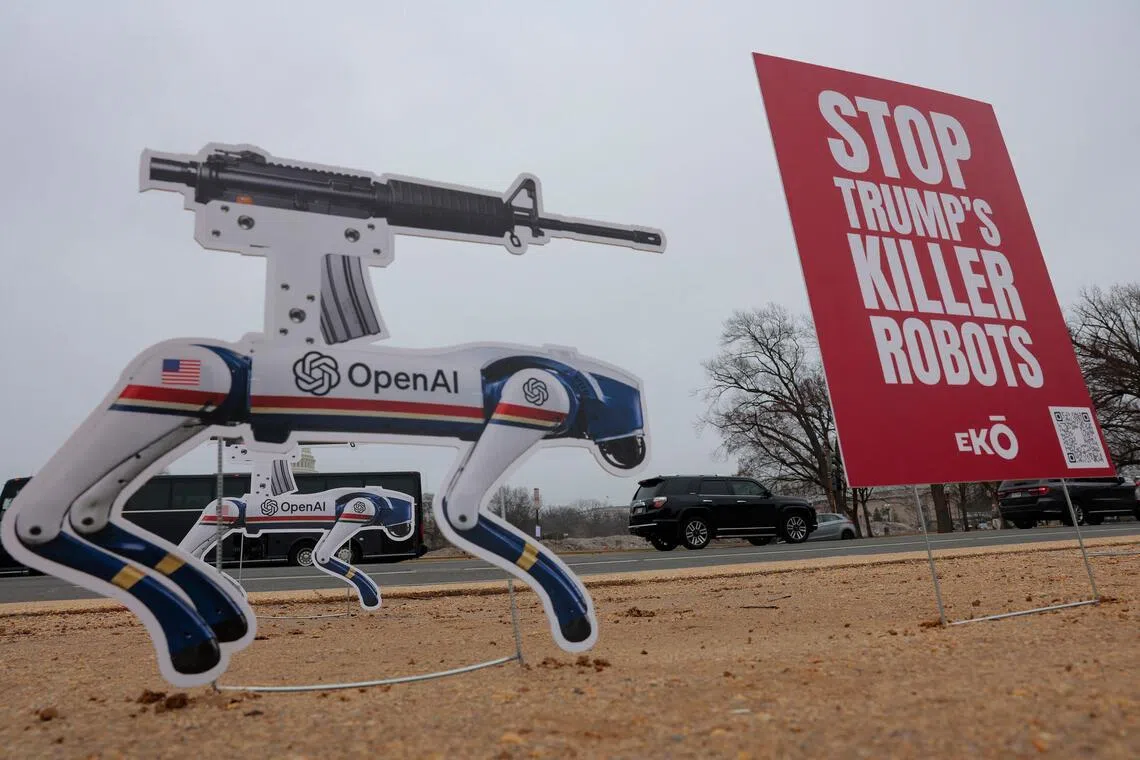
The resignation of OpenAI's robotics lead Caitlin Kalinowski over the company's Pentagon defense contract represents a critical inflection point in AI governance and corporate ethics that indirectly impacts e-commerce sellers relying on AI-powered business tools. Announced February 27, 2025, OpenAI's undisclosed Pentagon agreement—which allows AI deployment in classified defense environments—triggered immediate market backlash: ChatGPT uninstalls surged 295% while competitor Anthropic's Claude climbed to the #1 free app position with 240% month-over-month download growth in February 2025. This governance crisis signals broader instability in the AI tool ecosystem that sellers depend on for inventory management, demand forecasting, and customer service automation.
Immediate Seller Impact: The controversy reveals deep fractures in AI company reliability and transparency. Kalinowski's departure—citing insufficient safeguards against mass surveillance and autonomous weapons without human authorization—underscores governance concerns that extend beyond defense applications. For sellers using ChatGPT API for business automation, Claude for content generation, or other AI tools for supply chain optimization, this crisis raises questions about corporate stability and ethical alignment. OpenAI's $110 billion funding round (at $730 billion pre-money valuation) and 900 million weekly active users (up from 800 million in October 2024) suggest the company will survive, but internal talent hemorrhaging and public trust erosion create operational uncertainty. Sellers should audit their AI tool dependencies and evaluate backup solutions.
Competitive Dynamics and Tool Selection: The Pentagon deal controversy demonstrates how government policy decisions reshape AI company market positions. President Trump's designation of Anthropic as a "supply-chain risk" (typically reserved for foreign adversary connections) and subsequent federal agency ban created artificial competitive advantage for OpenAI—yet the public backlash suggests this advantage may be pyrrhic. For sellers, this indicates AI tool markets will remain volatile and politically influenced. The contrast between OpenAI's $25 billion+ annual revenue run rate and Anthropic's $19 billion suggests OpenAI maintains financial dominance despite reputational damage. However, Claude's surge to #1 app status signals consumer preference for ethically-aligned alternatives, creating opportunity for sellers to differentiate through transparent AI governance in their own operations.
Supply Chain and Automation Implications: OpenAI's robotics division—which operates a San Francisco lab with ~100 data collectors training robotic arms for household tasks—faces talent retention challenges amid the controversy. This affects sellers considering AI-powered warehouse automation, robotic fulfillment solutions, or autonomous inventory management systems. The delayed development of OpenAI's second robotics lab in Richmond, California, and internal disagreement over defense partnerships suggest slower innovation in automation tools that sellers might otherwise adopt. Sellers should monitor AI robotics development timelines and consider diversifying automation vendors to reduce dependency on companies facing governance crises.
Questions 7
What is the timeline for AI robotics automation tools that sellers might adopt?
OpenAI's robotics division faces significant delays due to internal governance disputes. The company operates a San Francisco lab with ~100 data collectors training robotic arms for household tasks, but announced plans for a second Richmond, California lab remain uncertain. Kalinowski's departure signals talent retention challenges that will slow innovation in warehouse automation and robotic fulfillment solutions. Sellers considering AI-powered warehouse automation should expect 12-24 month delays in next-generation robotics tools and should evaluate alternative vendors (Amazon Robotics, Fetch Robotics, Boston Dynamics) rather than relying solely on OpenAI's robotics roadmap.
How does government policy volatility affect seller tool selection strategy?
The Pentagon deal controversy demonstrates how political decisions reshape AI company market positions and reliability. President Trump's designation of Anthropic as a 'supply-chain risk' created artificial competitive advantage for OpenAI, yet public backlash suggests this advantage may be temporary. For sellers, this indicates AI tool markets will remain politically volatile and unpredictable. Sellers should adopt multi-vendor strategies: maintain primary tools (ChatGPT or Claude) while developing backup automation solutions through alternative platforms (Google Vertex AI, Microsoft Azure OpenAI, open-source models). This reduces exposure to sudden policy shifts or corporate governance crises that could disrupt business operations.