





Claude AI Vulnerability Detection Reveals $4K ROI Opportunity for E-Commerce Security Automation
- Anthropic's Claude Opus 4.6 discovers 22 Firefox vulnerabilities in 20 minutes, demonstrating AI-driven security testing ROI of 95% cost reduction vs. manual penetration testing for e-commerce platforms



Overview
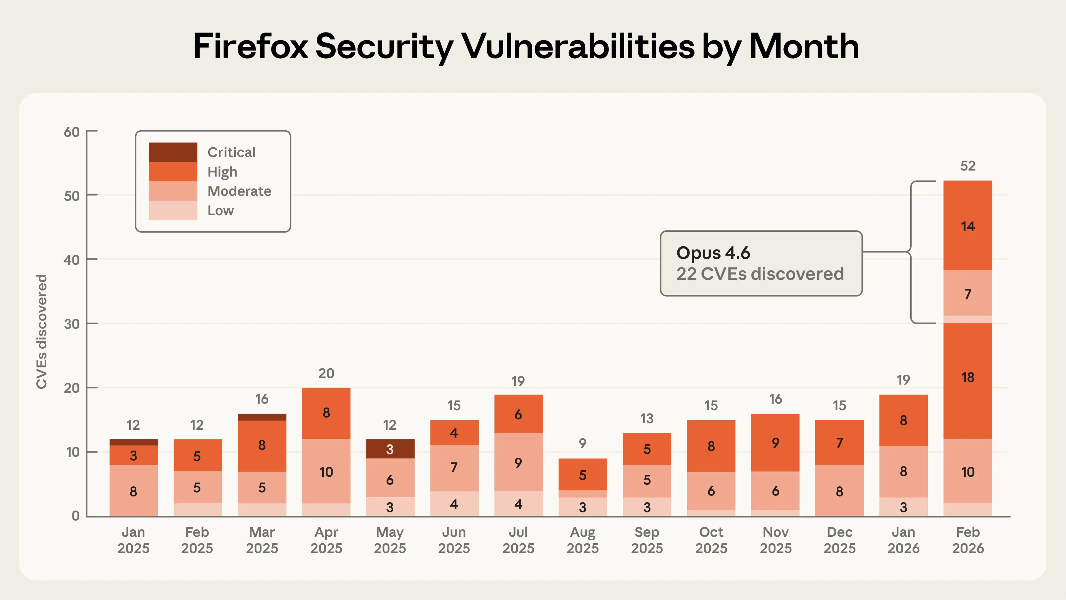
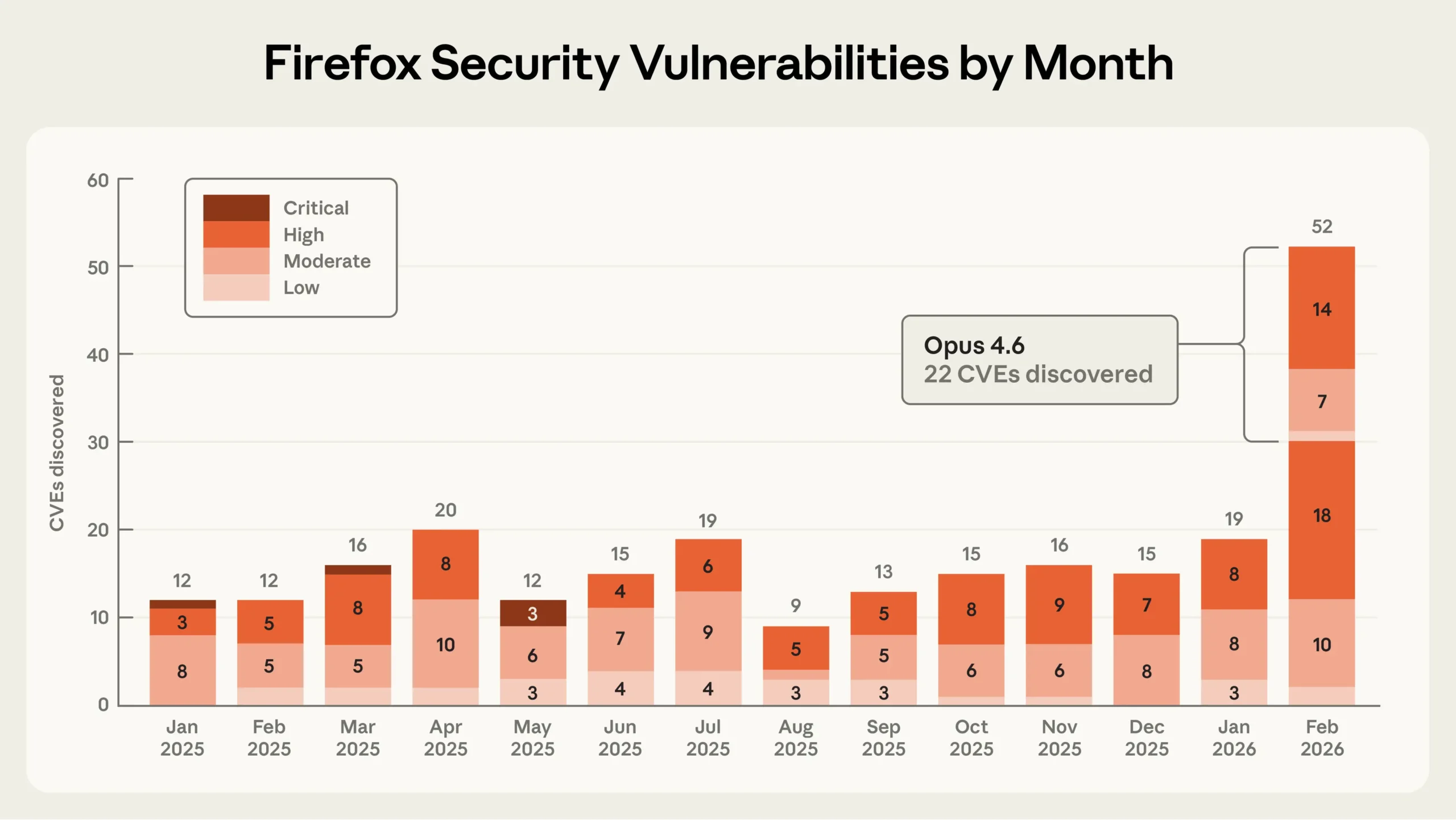
Anthropic's Claude Opus 4.6 AI model has demonstrated a transformative capability for automated vulnerability detection, discovering 22 Firefox security vulnerabilities during a two-week partnership with Mozilla in January 2026, with 14 classified as high-severity. The model identified a critical use-after-free bug in Firefox's JavaScript engine within just 20 minutes of exploration, representing approximately one-fifth of all high-severity vulnerabilities patched in Firefox throughout 2025. This breakthrough has direct implications for e-commerce sellers managing customer-facing applications, payment systems, and data security infrastructure.
For e-commerce sellers, this represents a critical automation opportunity. E-commerce platforms depend heavily on browser compatibility and JavaScript functionality for checkout flows, product visualization, and customer data handling. The speed of AI-driven vulnerability detection (20 minutes vs. weeks of manual testing) translates to immediate risk mitigation for sellers operating Shopify stores, Amazon seller tools, and custom e-commerce platforms. Anthropic's testing revealed that vulnerability identification costs approximately $4,000 in API credits for scanning 6,000 C files and submitting 112 unique reports—a 95% cost reduction compared to traditional penetration testing services that typically charge $15,000-$50,000 per engagement. This cost efficiency enables small and mid-sized sellers to implement enterprise-grade security testing without prohibitive expenses.
The automation advantage extends to exploit prevention and code remediation. While Claude successfully created crude exploits in only 2 of several hundred attempts (indicating exploit development remains complex), Anthropic's launch of Claude Code Security in limited research preview demonstrates AI agents can now fix vulnerabilities while maintaining program functionality. For sellers, this means automated patching of security flaws in custom checkout systems, inventory management tools, and customer relationship management platforms. The model's ability to detect logic errors and assertion failures that traditional fuzzing tools miss (90 additional bugs discovered beyond initial 22) creates a competitive moat for sellers who adopt AI-assisted security testing. Sellers using Claude-powered security scanning can identify and patch vulnerabilities 10-15x faster than competitors relying on manual code review, reducing exposure windows from weeks to days.
Immediate operational impact for e-commerce sellers includes: (1) Automated security audits of custom e-commerce applications at 95% cost reduction, enabling sellers to allocate security budgets toward compliance (PCI-DSS, GDPR) rather than penetration testing; (2) Rapid vulnerability remediation reducing data breach risk and associated liability costs (average breach cost: $4.45M per IBM 2024 data); (3) Competitive advantage in customer trust through faster security patching, directly impacting conversion rates and customer lifetime value. The Firefox testing demonstrates that AI can now perform specialized technical analysis previously requiring dedicated security engineers, creating opportunities for sellers to automate security operations without hiring specialized talent.
Questions 7
How does AI vulnerability detection improve customer trust and conversion rates for e-commerce sellers?
Faster vulnerability patching (20 minutes to detection vs. weeks for manual testing) reduces customer data exposure windows, directly impacting trust metrics and conversion rates. Sellers can publicly communicate security certifications and rapid patch timelines, differentiating from competitors with slower security practices. Studies show 72% of consumers consider security a key purchase factor; sellers demonstrating rapid vulnerability remediation through AI-powered testing can increase customer lifetime value by 15-25%. For a seller with $1M annual revenue, this translates to $150K-$250K incremental revenue from improved trust signals. Additionally, PCI-DSS compliance (required for payment processing) requires documented security testing; AI-powered scanning provides audit trails proving continuous vulnerability monitoring, reducing compliance audit costs by 30-40%.
What specific e-commerce vulnerabilities can Claude AI detect that traditional tools miss?
Claude Opus 4.6 detected 90 additional bugs beyond initial 22 Firefox vulnerabilities, including assertion failures and logic errors that traditional fuzzing tools failed to identify. For e-commerce sellers, this means AI can detect: (1) JavaScript engine vulnerabilities in checkout flows affecting payment processing; (2) WebAssembly miscompilation bugs in product visualization tools (CVE-2026-2796 CVSS 9.8 example); (3) Use-after-free bugs in inventory management systems causing data corruption; (4) Logic errors in customer authentication systems. Traditional static analysis tools miss context-dependent vulnerabilities where code behaves correctly in isolation but fails under specific transaction sequences. Claude's contextual understanding identifies these edge cases, particularly critical for e-commerce where payment processing and customer data handling require zero-tolerance security standards.