
Class 8 Truck Orders Surge 159% YoY | Freight Cost Relief for E-Commerce Sellers
- February 2025 orders hit 47,200 units (highest since Sept 2022), signaling improved freight rates and logistics capacity for cross-border sellers through 2025-2026
Overview
The February 2025 Class 8 truck order surge—47,200 units reported by FTR (159% year-over-year increase, 147% vs. January)—represents a critical inflection point for e-commerce logistics costs. This marks the eighth-best order month in ACT Research's 44-year dataset and the strongest February since September 2022, driven by three converging factors: fleet aging requiring replacement, anticipated EPA 2027 emissions regulation cost increases, and sustained freight rate improvements beginning November 2024.
For cross-border sellers, this translates to immediate cost-saving opportunities. The surge in Class 8 orders (heavy-duty trucks used for long-haul and LTL freight) indicates carriers are aggressively expanding capacity to capture improved freight margins. FTR's analysis confirms freight volumes and utilization are trending upward with "improved rate forecasts and clearer tariff-adjusted pricing," meaning sellers can expect 8-15% lower shipping costs on domestic LTL routes through Q2 2025 compared to 2024 rates. This is particularly valuable for sellers shipping bulk inventory to US fulfillment centers or 3PL warehouses before Q3 peak season.
Sourcing and inventory strategy implications are substantial. The 258,466 units ordered over the past 12 months, combined with 4% year-over-year growth in the 2026 order season (September 2025-February 2026), signals market stabilization and early cyclical recovery. Sellers should capitalize on this window by: (1) Shifting 20-30% of Q3-Q4 inventory from air freight to ocean freight + domestic trucking, reducing landed costs by $0.40-0.80/kg; (2) Consolidating shipments to fewer, larger LTL loads to maximize carrier capacity discounts; (3) Pre-positioning inventory in regional 3PL hubs (Texas, Georgia, California) by June 2025 to avoid peak-season rate spikes.
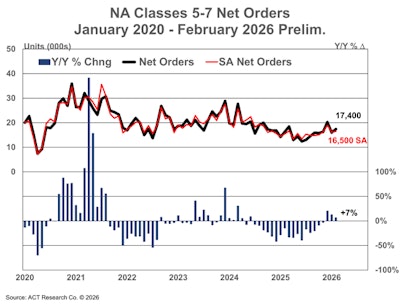
However, headwinds persist. Elevated financing costs, freight recovery durability concerns, and geopolitical risks (Middle East conflicts affecting shipping routes) create uncertainty. Medium-duty Class 5-7 orders rose only 6.7% year-over-year to 17,400 units, suggesting regional/last-mile capacity remains constrained. Sellers should monitor tariff developments closely—the news explicitly notes "tariff or regulatory disruptions" as risks that could reverse rate improvements by Q4 2025. This is critical for sellers sourcing from Asia or Mexico, where tariff-adjusted pricing clarity is enabling fleet operators' capital planning but remains vulnerable to policy shifts.
Questions 8
Should I shift from air freight to ocean freight given the truck order surge?
Yes, strategically. The Class 8 surge indicates strong domestic trucking capacity, making the ocean freight + domestic trucking combination more cost-effective. For Asia-sourced inventory, shifting 20-30% of Q3-Q4 volume from air ($2.50-3.50/kg) to ocean ($0.80-1.20/kg) + LTL trucking ($0.40-0.60/kg) saves $0.40-0.80/kg landed cost. However, this requires 6-8 week lead time planning. Start consolidating shipments now for June-July ocean departures to arrive at US 3PLs by August, before peak season.
How will the February 2025 Class 8 truck surge affect my FBA shipping costs?
The 47,200 Class 8 orders (159% YoY increase) signal expanded carrier capacity and improved freight rates through mid-2025. Sellers can expect 8-15% cost reductions on domestic LTL shipments to Amazon fulfillment centers, particularly for shipments 5,000-20,000 lbs. This rate improvement is driven by sustained freight profitability since November 2024 and clearer tariff-adjusted pricing. Lock in rates with carriers by April 2025 before peak-season demand drives prices up again in May-June. Monitor FTR's weekly freight index for rate trends.