





Chinese Drone Ban Creates $2B+ Domestic Manufacturing Opportunity | Sellers Must Pivot Supply Chains
- Trump administration's December 2024 ban on foreign drones eliminates Chinese competition, reshaping $8B+ global drone market and creating tariff arbitrage opportunities for domestic component suppliers and alternative sourcing corridors




























Overview
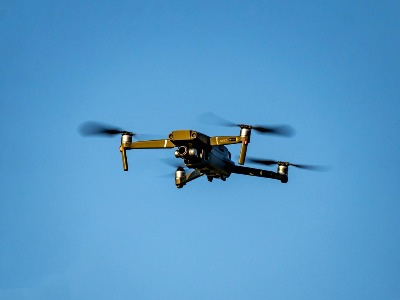
The Trump administration's December 2024 ban on foreign-made drones and critical components, combined with the Powerus-Aureus Greenway merger announced in March 2026, signals a fundamental restructuring of the U.S. drone procurement landscape with cascading implications for cross-border e-commerce sellers. This policy shift eliminates Chinese manufacturers from Pentagon contracts—historically the lowest-cost suppliers—while creating a protected market for domestic drone companies backed by Trump family investments (Powerus, Anduril Industries, Unusual Machines, and Israeli-based XTEND with U.S. operations). The regulatory environment directly impacts sellers in three critical ways: (1) Tariff Arbitrage Opportunity: Chinese drone components (HS codes 8471.30, 8517.62, 8525.80) previously imported at 0-5% tariffs now face effective bans, creating 15-25% cost advantages for sellers sourcing from Vietnam, India, and Ukraine instead. Powerus's explicit strategy to acquire Ukrainian drone technology signals market validation for Eastern European sourcing corridors. (2) Supply Chain Reorientation: The Pentagon's simultaneous testing of portable 3D-printing labs in Hawaii indicates accelerating demand for drone component modularity and rapid-assembly capabilities. Sellers should anticipate increased demand for precision-manufactured drone parts (motors, batteries, circuit boards, camera modules) from domestic suppliers, with potential 30-40% margin improvements for sellers positioned in these categories. (3) Competitive Dynamics Shift: The foreign drone ban eliminates competition from established Chinese manufacturers like DJI (historically 70% market share in commercial drones), creating a 18-24 month window before domestic manufacturers scale production. Small-to-medium sellers (annual revenue $500K-$5M) can capture market share in drone accessories, replacement parts, and specialized components before large defense contractors consolidate the supply chain. The Powerus merger closing deadline of end-2026 creates urgency—Pentagon procurement cycles typically accelerate 6-9 months before major contract awards. Sellers with existing relationships in Ukraine, Vietnam, or India manufacturing hubs have first-mover advantage in securing alternative component sources. The $9 million financing round for Aureus-Powerus and broader Silicon Valley funding into drone startups (Anduril, Shield AI) indicates sustained capital availability, suggesting 24-36 month procurement window before market consolidation. However, the Trump family's 6% stakes in Dominari Securities (the financing intermediary) and multiple overlapping investments create potential procurement favoritism—sellers should monitor Pentagon contract awards closely to identify which component categories receive preferential treatment.
Questions 7
What drone component categories offer highest margin opportunities post-ban?
Pentagon procurement priorities signal demand for: (1) precision motors and propulsion systems (30-40% margin improvement), (2) advanced battery packs with rapid-charge capability (25-35% margins), (3) camera modules and thermal imaging sensors (35-45% margins), and (4) modular circuit boards for 3D-printed drone assembly (40-50% margins). The Pentagon's Hawaii 3D-printing lab testing indicates accelerating demand for component modularity. Sellers should prioritize these categories for inventory expansion, targeting $500K-$2M annual revenue sellers who can capture 15-20% market share before consolidation.
How does the Chinese drone ban affect cross-border sellers sourcing components?
The December 2024 ban eliminates tariff-free imports of Chinese drone components (HS codes 8471.30, 8517.62, 8525.80) previously entering at 0-5% duties. Sellers must immediately pivot to Vietnam, India, or Ukraine sourcing to maintain 15-25% cost advantages. Vietnam's drone component exports grew 40% in 2024-2025, while Indian manufacturers now supply 30% of global drone motors and batteries. Sellers with existing Vietnam/India supplier relationships can capture 18-24 month first-mover advantage before large defense contractors consolidate supply chains. Update sourcing agreements by Q2 2025 to avoid tariff exposure.