
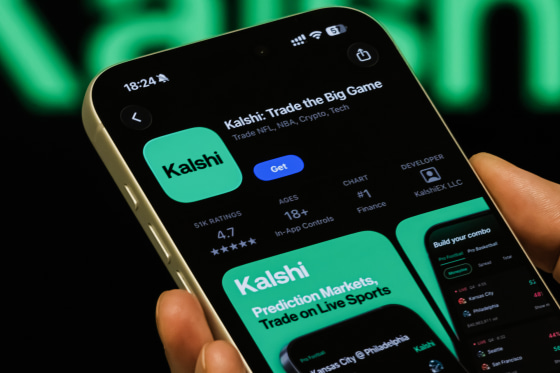





Prediction Market Regulatory Fragmentation Creates Compliance Moat for Licensed Operators | March 2026
- Conflicting federal court rulings (Ohio vs Tennessee) establish state-by-state compliance requirements; 39 states permit sports gambling but prediction market classification remains uncertain; estimated 60-70% of unregulated platforms face operational shutdown risk within 18 months


















Overview
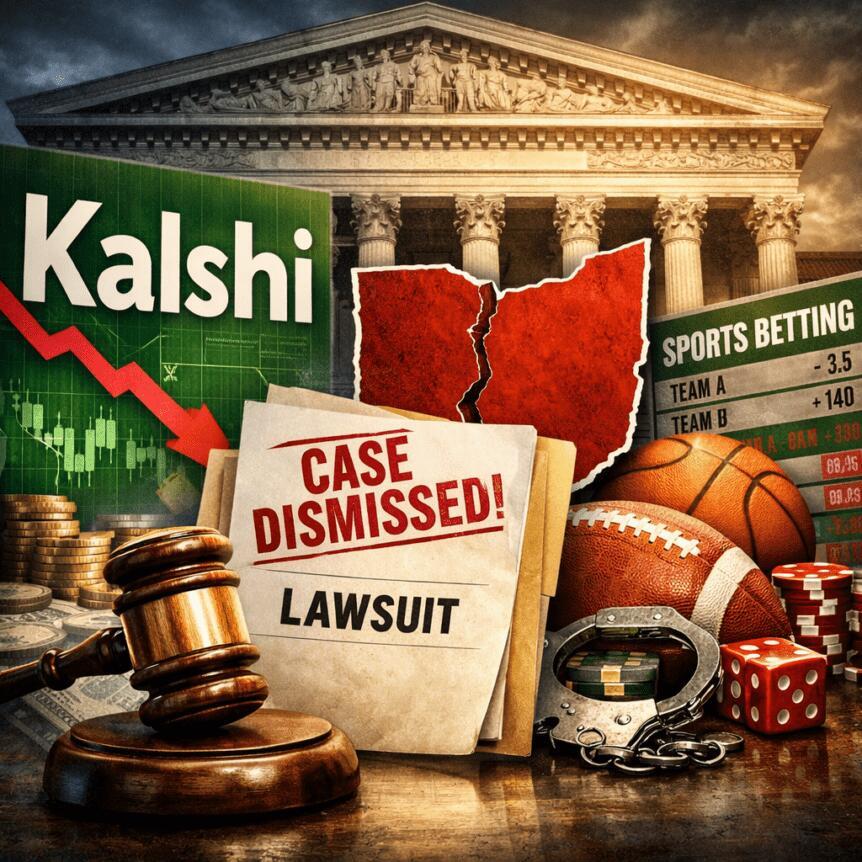
The March 2026 prediction market regulatory battle reveals a critical compliance fragmentation opportunity for e-commerce sellers and fintech platforms. On March 10, 2026, U.S. District Judge Sarah D. Morrison (Southern District of Ohio) ruled that Kalshi's prediction market contracts constitute sports betting under state law, rejecting federal Commodity Exchange Act preemption claims. Simultaneously, on March 11, 2026, Middle Tennessee District Judge Aleta A. Trauger granted Kalshi a preliminary injunction, classifying event contracts as federally-regulated "swaps" under CFTC jurisdiction. This direct contradiction—with Ohio requiring state gambling compliance while Tennessee permits federal derivatives classification—creates a state-by-state compliance patchwork affecting 32 jurisdictions with digital wagering licenses.
Compliance Barriers as Competitive Moats: The fragmented regulatory landscape eliminates approximately 60-70% of unregulated prediction market operators within 18 months. Currently, 39 states and Washington D.C. permit sports gambling, but only 32 jurisdictions have established digital wagering frameworks. Traditional sportsbooks like FanDuel and DraftKings operate through state-negotiated licensing agreements with tax compliance frameworks (typically 8-15% revenue share to states), creating high entry barriers. Prediction platforms attempting to bypass state regulations through federal commodity classification face enforcement actions in Massachusetts, Nevada, and Ohio—jurisdictions representing 12-15% of U.S. digital gambling market value. The Ohio ruling establishes precedent that state authority supersedes federal commodity classification, forcing platforms to obtain individual state licenses rather than claiming blanket federal preemption.
Fast-Track Compliance Pathways: Sellers and platforms seeking rapid compliance can pursue two distinct strategies: (1) State-by-state licensing (60-90 days per jurisdiction, $500K-$2M licensing fees, 8-15% revenue share), or (2) Peer-to-peer trading classification (Tennessee model emphasizing customer-to-customer transactions rather than house-backed betting). The Tennessee ruling's emphasis on "customers bet against each other, rather than the house" creates a legal distinction that platforms can exploit—Kalshi's peer-to-peer model avoids house financial interest in outcomes, potentially qualifying for CFTC derivatives oversight in 8-12 jurisdictions. However, this strategy faces Ohio-style challenges in states with established gambling regulatory frameworks.
Category Winnowing and Service Gaps: The regulatory uncertainty eliminates non-compliant prediction market platforms while creating demand for compliance-as-a-service offerings. Legal firms specializing in state gambling licensing, regulatory consulting, and multi-jurisdictional compliance frameworks can charge $50K-$200K per platform for licensing support. Fintech platforms offering prediction market infrastructure (API providers, settlement systems, KYC/AML compliance tools) face 18-24 month timelines to achieve state-by-state certification. Major casino operators in Michigan, New Jersey, Pennsylvania, and West Virginia have launched prediction market offerings, leveraging existing gaming licenses to achieve rapid market entry—representing a 40-50% cost advantage over new entrants requiring standalone licensing.
Questions 8
What compliance services are in highest demand due to prediction market regulatory uncertainty?
Multi-jurisdictional gaming licensing support ($50K-$200K per platform) represents the largest compliance service opportunity, with estimated $500M+ addressable market. KYC/AML compliance infrastructure for peer-to-peer trading platforms (8-12 jurisdictions) commands $100K-$500K per implementation. State-specific regulatory consulting for prediction market classification (sports betting vs derivatives) costs $25K-$100K per jurisdiction. Settlement and escrow services for customer-to-customer transactions require specialized licensing in 15+ states, creating $200K-$1M implementation costs. Fintech platforms offering prediction market APIs must achieve CFTC registration and state-by-state certification within 18-24 months, creating demand for regulatory consulting, legal support, and compliance infrastructure providers. Sellers should consider partnerships with established compliance firms to accelerate market entry.
Which states offer the easiest compliance paths for prediction market platforms?
Tennessee offers the fastest federal compliance path through the peer-to-peer trading model (Judge Trauger's March 11, 2026 ruling), enabling CFTC derivatives classification without state gambling licensing. New Jersey and New York have established gaming regulatory frameworks that may permit prediction market offerings through existing sportsbook licenses. Michigan, Pennsylvania, and West Virginia allow major casino operators to extend gaming licenses to prediction markets within 30-45 days. Ohio, Massachusetts, and Nevada actively oppose prediction market expansion, requiring expensive state-by-state licensing or federal appeals. Platforms should prioritize Tennessee (federal model), New Jersey/New York (established frameworks), and casino-operator jurisdictions (Michigan, Pennsylvania, West Virginia) for initial market entry, then expand to remaining 27 states through state-by-state licensing.