

%20(1).webp)

%20(1).webp)
Microsoft March 2026 Patch Tuesday | Critical Security Updates for E-Commerce Infrastructure
- 77-79 vulnerabilities patched including critical Office RCE flaws; SQL Server privilege escalation (CVSS 8.8) and AI-discovered zero-day (CVSS 9.8) require immediate enterprise action; Adobe Commerce and Azure services also affected





%20(1).webp)




















Overview
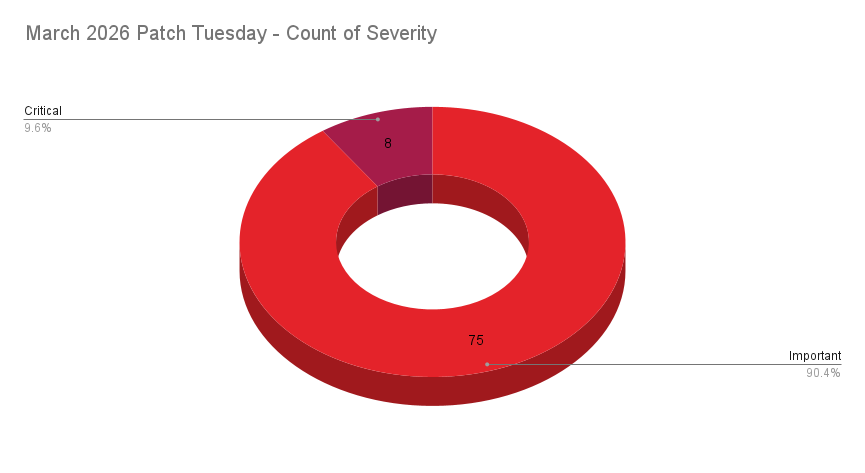
Microsoft's March 2026 Patch Tuesday addresses 77-79 critical vulnerabilities across Windows, Office, SQL Server, and Azure infrastructure—directly impacting e-commerce sellers relying on Microsoft-powered backend systems, payment processing, and inventory management platforms. The update includes two publicly disclosed zero-day flaws and multiple critical remote code execution (RCE) vulnerabilities in Microsoft Office exploitable via preview pane (CVE-2026-26113, CVE-2026-26110), requiring urgent patching for any seller using Office for business operations, email communications, or document processing.
For e-commerce infrastructure, the most critical vulnerabilities are SQL Server privilege escalation (CVE-2026-21262, CVSS 8.8) and the AI-discovered RCE in Microsoft Devices Pricing Program (CVE-2026-21536, CVSS 9.8). Sellers operating on platforms built on SQL Server backends—including many enterprise e-commerce systems, inventory management tools, and payment processors—face immediate risk of unauthorized database access and data exfiltration. The SQL Server flaw allows network-based attackers to escalate to sysadmin privileges, potentially exposing customer payment data, order histories, and business intelligence. According to Tenable's analysis, 55 of 77 CVEs (71%) are privilege escalation bugs affecting Windows Graphics Component, Accessibility Infrastructure, Kernel, SMB Server, and Winlogon processes—all critical for secure multi-user e-commerce environments. The March 2 emergency out-of-band update for Windows Server 2022 addressing Windows Hello for Business passwordless authentication is particularly relevant for sellers implementing secure seller account access and two-factor authentication systems.
Adobe Commerce sellers face additional risk from 80 Adobe CVEs patched simultaneously, including backend security vulnerabilities in Adobe Commerce platform itself. While News 2 notes these are technical backend issues, they directly affect sellers using Adobe Commerce for storefronts, inventory synchronization, and order management. The combination of Microsoft Office RCE vulnerabilities (exploitable through email phishing) and SQL Server privilege escalation creates a compounding risk: attackers could compromise seller accounts via malicious Office documents, then escalate to database access. Additionally, CVE-2026-26144 (Excel information disclosure enabling zero-click attacks via Microsoft Copilot Agent mode) poses data exfiltration risk for sellers using Excel for financial reporting, customer data analysis, or inventory forecasting—common practices among mid-market sellers managing multi-channel operations.
**Immediate actions for e-commerce sellers: (1) Patch all Windows Server instances hosting e-commerce infrastructure by March 15, 2026; (2) Update Microsoft Office across all business systems to prevent preview pane RCE exploitation; (3) Audit SQL Server access controls and implement principle-of-least-privilege for database accounts; (4) If using Adobe Commerce, coordinate with hosting provider to confirm patch deployment; (5) Review email security policies to block Office documents from untrusted sources. Strategic adjustments include evaluating cloud-based alternatives (Azure App Service, managed databases) that receive automatic patching, reducing manual patch management burden. Risk mitigation: Monitor seller account access logs for suspicious privilege escalation attempts, implement database activity monitoring, and consider cyber insurance coverage for data breach scenarios. The emergence of AI-discovered vulnerabilities (XBOW system) signals accelerating vulnerability discovery rates—sellers should budget for more frequent critical patches and maintain 24-48 hour patching SLAs for production systems.
Questions 8
How do Microsoft Office RCE vulnerabilities in preview pane affect e-commerce sellers?
CVE-2026-26113 and CVE-2026-26110 allow attackers to execute code by sending malicious messages viewed in Outlook preview pane—a critical risk for sellers who receive supplier communications, customer inquiries, and payment notifications via email. An attacker could compromise a seller's business email account, access integrated payment systems, or steal customer data without requiring the seller to open attachments. Sellers should immediately update Office to the March 2026 patch and disable preview pane for untrusted senders. This vulnerability is particularly dangerous for sellers managing multi-channel operations through email-integrated systems like Shopify, Amazon Seller Central notifications, or payment processor alerts.
Should sellers using Adobe Commerce be concerned about the 80 Adobe CVEs?
Yes, Adobe Commerce sellers should prioritize coordination with their hosting provider to confirm patch deployment. While News 2 notes these are backend technical vulnerabilities, they directly affect platform security and data protection. The combination of Adobe Commerce backend vulnerabilities with Microsoft infrastructure vulnerabilities creates compounding risk—attackers could exploit Adobe Commerce flaws to access seller data, then use SQL Server escalation to access payment databases. Sellers should request patch confirmation from their hosting provider by March 15, 2026, and monitor for any platform maintenance windows indicating patch deployment.