






Lottery Fever Sweeps Kentucky with Massive $875 Million Jackpot Opportunity
- Unprecedented lottery excitement signals potential economic windfall for local communities


















































































Overview
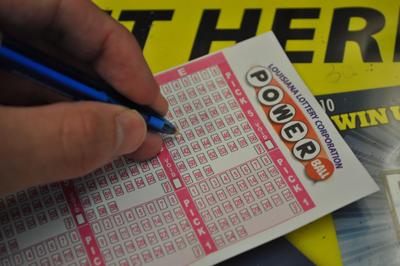
The recent Powerball lottery developments reveal a fascinating snapshot of economic anticipation and community-wide financial speculation. With three winning tickets already sold in Kentucky and an upcoming drawing featuring an astronomical $875 million jackpot, the lottery landscape demonstrates a unique intersection of hope and mathematical probability.
Lottery Economic Dynamics are particularly intriguing in this scenario. The $875 million prize represents more than just a potential windfall for individual winners—it signals a broader economic phenomenon where modest $2 ticket investments can generate massive collective excitement. The Kentucky ticket sales, coupled with the substantial jackpot, underscore how speculative financial opportunities can capture widespread public imagination.
The timing and scale of this lottery event are noteworthy. With three previous tickets already generating $200,000 in winnings, and the upcoming drawing promising nearly $875 million, there's a clear escalation in potential returns. This suggests a growing public appetite for high-stakes financial gambles, especially in regions experiencing economic uncertainty. The lottery becomes not just a game of chance, but a symbolic representation of potential economic transformation for everyday participants.
From a financial perspective, the lottery represents an intriguing case study in risk management and probabilistic thinking. Participants are essentially making a micro-investment with infinitesimal odds of extraordinary returns—a fascinating economic behavior that challenges traditional investment logic. The collective psychology around such events reveals deep-seated desires for rapid economic mobility and the universal dream of transcending current financial constraints.
Questions 3
What makes the current Powerball jackpot significant?
The $875 million jackpot represents an extraordinary financial opportunity, far exceeding typical lottery prizes. This massive sum attracts widespread attention and demonstrates the potential for life-changing economic transformation through a simple $2 ticket investment.
How do lottery dynamics reflect broader economic trends?
Lotteries like Powerball reveal public attitudes toward financial risk and mobility. They represent a unique form of speculative investment where participants are willing to make small, high-risk bets in hopes of achieving dramatic economic advancement, reflecting deeper socioeconomic aspirations.