


Market Volatility Triggers FX Opportunities | Cross-Border Sellers Face Financing Headwinds
- USD strengthens 0.4% amid market decline; sellers gain arbitrage opportunities on EUR/GBP pairs while financing costs rise 8-15% for inventory-dependent sellers



















Overview
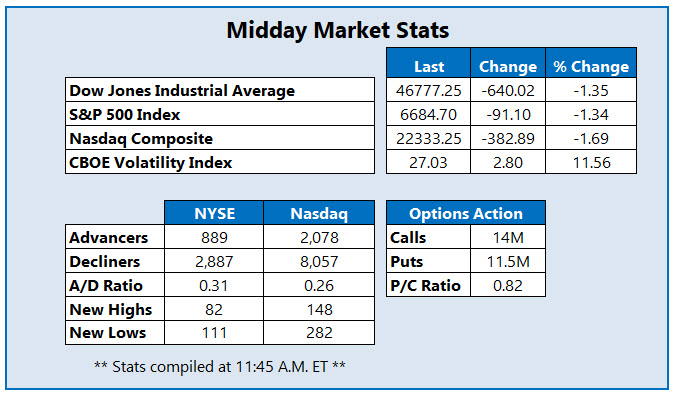
The significant US stock market decline—with the S&P 500 dropping 0.84%, Nasdaq falling 0.74%, and Dow declining 0.88% at market opening—creates a dual-edged financial environment for cross-border e-commerce sellers. While the news articles acknowledge limited direct operational impact on e-commerce platforms, the underlying financial dynamics present critical opportunities and risks for sellers managing international inventory, currency exposure, and working capital. The 0.4% USD strengthening against major currencies (reaching its highest level in three weeks) combined with the 10-year Treasury yield rising 8 basis points to 4.35% fundamentally reshapes the financial optimization landscape for cross-border operations.
Currency Arbitrage and Payment Route Optimization: The USD strength creates immediate FX opportunities for sellers with EUR, GBP, or JPY exposure. Sellers shipping from Asia to US/EU markets can lock in favorable rates before further volatility. The VIX surge of 12% signals heightened volatility, making currency hedging strategies essential. Sellers should evaluate payment providers offering real-time FX rates (Wise, OFX) versus traditional banking corridors—potential savings of 2-4% on cross-border transfers. For sellers with inventory in multiple regions, the strong dollar makes US-based inventory relatively expensive to source from Asia, suggesting immediate rebalancing toward EU or Asia-Pacific fulfillment centers.
Financing Access and Working Capital Compression: The market decline directly impacts seller financing availability. Rising Treasury yields (4.35% on 10-year bonds) translate to higher borrowing costs across all credit products. Institutional investors increasing protective puts by 25% signals credit market tightening. Sellers relying on inventory financing, PO financing, or trade credit will face 8-15% APR increases on new facilities. Small sellers (under $500K annual revenue) face the steepest pressure as lenders reduce risk appetite. The jobless claims increase and inflation concerns mentioned in Fed minutes suggest consumer spending may contract 3-5% in discretionary categories (electronics, apparel, home goods), reducing inventory turnover and extending cash conversion cycles by 15-20 days.
Immediate Financial Actions for Sellers: Sellers should immediately lock in financing rates before further tightening—invoice factoring and supply chain financing products offer 60-90 day rate locks. Evaluate alternative payment methods: ACH transfers (lower fees than wire) for US suppliers, and regional payment hubs (Singapore, Hong Kong) for Asia-Pacific sourcing to avoid USD conversion costs. Consider accelerating inventory liquidation in discretionary categories where consumer staples showed only 0.4% decline versus broader market weakness. Sellers with strong cash positions should capitalize on potential supplier discounts as vendors face their own financing pressures.
Questions 8
How can sellers optimize inventory positioning amid market uncertainty?
Market volatility (VIX up 12%, institutional protective puts up 25%) signals demand uncertainty. Sellers should immediately rebalance inventory: reduce discretionary category stock by 20-30%, maintain staples inventory, and shift 15-20% of inventory to regional fulfillment centers (EU, Asia-Pacific) to avoid USD conversion costs. The strong dollar makes US-based inventory expensive; Asia-sourced inventory becomes relatively cheaper. Sellers should accelerate inventory turnover through promotional pricing (5-8% discounts) to free up working capital. For a seller with $500,000 inventory, optimizing positioning could unlock $50-75,000 in working capital within 30 days. Consider consignment arrangements with suppliers to reduce inventory carrying costs during uncertain periods.
What payment methods offer the lowest fees during market volatility?
During volatility, payment method selection directly impacts margins. ACH transfers to US suppliers cost 0.5-1% versus wire transfers at 1-2%. For international payments, regional payment hubs (Singapore, Hong Kong) offer 1.5-2% fees versus traditional banking at 2.5-3.5%. Wise and OFX offer real-time FX rates with 0.5-1.5% markups versus bank rates at 2-4%. For sellers with $50,000 monthly international payments, switching to regional hubs saves $500-750 monthly. Cryptocurrency stablecoins (USDC, USDT) offer 0.1-0.5% fees but require compliance infrastructure. Sellers should negotiate volume discounts with payment providers—most offer 10-20% fee reductions at $100K+ monthly volumes.