


Meta 20% Layoffs Signal AI-Driven Platform Shifts | Seller Impact
- 15,800 job cuts planned as $600B AI investment reshapes Facebook/Instagram advertising and commerce tools for 2M+ cross-border sellers
)


/sambad-english/media/media_files/2025/10/06/meta-office-2025-10-06-14-54-44.jpeg)

















_20240427194350original_image_13.webp)















)
Overview
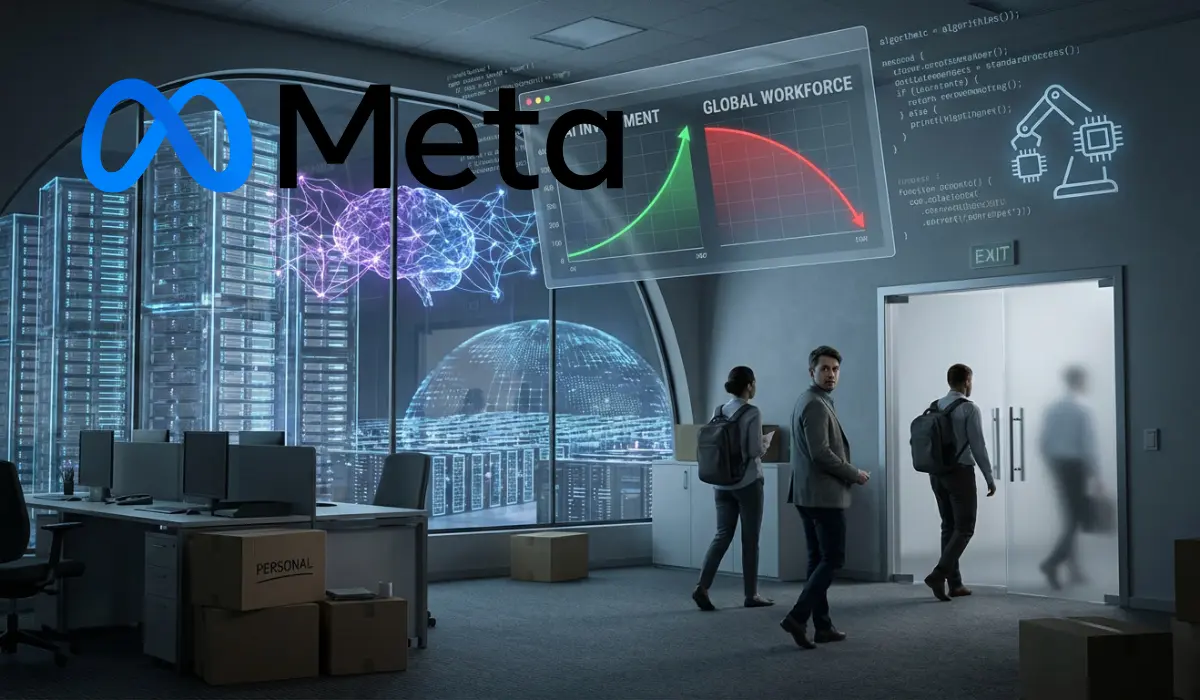
Meta's planned 20% workforce reduction (approximately 15,800 positions from 79,000 employees) represents a critical inflection point for cross-border e-commerce sellers relying on Facebook and Instagram as primary sales channels. The layoffs directly correlate with Meta's $600 billion data center investment through 2028 and CEO Mark Zuckerberg's strategic pivot toward AI-assisted worker efficiency—where single talented individuals using AI tools now accomplish work previously requiring large teams. This restructuring mirrors broader industry patterns: Amazon cut 16,000 employees (10% of workforce) in January 2025 citing AI efficiency gains, while fintech Block eliminated nearly 50% of staff with CEO Jack Dorsey explicitly stating AI capabilities enable smaller operational footprints.
For e-commerce sellers, the immediate operational risk centers on three critical areas: advertising algorithm development, customer support responsiveness, and seller infrastructure maintenance. Meta's engineering and support departments typically absorb the heaviest cuts during restructuring, directly impacting the teams responsible for maintaining Facebook Shop features, Instagram Checkout functionality, and Ads Manager optimization. Sellers managing 1,000+ monthly units through Meta's commerce ecosystem face potential delays in feature rollouts, slower response times for merchant support tickets (currently 24-48 hour SLAs), and possible degradation of ad targeting precision as algorithm development teams shrink. The company's $2 billion acquisition of Chinese AI startup Manus and recent Moltbook purchase signal Meta's intention to automate merchant-facing services, but implementation timelines remain uncertain during transition periods.
The strategic opportunity for sellers emerges from Meta's documented shift toward "higher-margin AI-focused services." Industry analysts note that post-restructuring, Meta typically consolidates merchant tools into premium tiers, potentially increasing advertising costs 8-15% for sellers unwilling to adopt AI-powered campaign management. Sellers currently spending $5,000-50,000 monthly on Facebook/Instagram ads should immediately audit their campaign performance baselines and diversify advertising spend across Amazon Advertising (growing 25% YoY), TikTok Shop (expanding to 50+ countries), and Google Shopping to mitigate platform dependency risk. The layoffs also create a 60-90 day window of reduced algorithm changes—an optimal period for sellers to test new creative formats and audience segments before Meta's AI systems stabilize post-restructuring.
Competitive intelligence advantage accrues to sellers who adopt AI-powered tools NOW before Meta's internal AI capabilities mature. Tools like Optmyzr, Adverity, and Revealbot enable sellers to automate bid management, creative testing, and audience optimization—functions Meta's reduced teams will struggle to enhance in the near term. Sellers implementing AI-driven dynamic pricing and inventory management can capture market share from competitors still relying on manual campaign optimization. The 15,800 job cuts represent approximately 20% reduction in Meta's ability to innovate on merchant features, creating a 12-18 month window where third-party AI tools provide competitive moats unavailable to sellers dependent solely on Meta's native capabilities.
Questions 8
How will Meta's 20% layoffs affect Facebook and Instagram advertising for sellers?
Meta's 15,800 job cuts will directly impact advertising algorithm development and feature optimization teams, potentially slowing new feature rollouts and reducing ad targeting precision. Sellers managing $5,000-50,000 monthly ad spend should expect 24-48 hour delays in merchant support responses and possible 8-15% cost increases as Meta consolidates tools into premium tiers. The engineering teams responsible for Ads Manager optimization and campaign automation typically absorb 25-30% of restructuring cuts, creating a 60-90 day window where algorithm changes pause—ideal for sellers to test new creative formats before systems stabilize.
What immediate actions should sellers take to protect their Meta advertising investments?
Sellers should immediately audit current Facebook/Instagram campaign performance baselines (CTR, ROAS, CPC trends) and diversify advertising spend across Amazon Advertising, TikTok Shop, and Google Shopping within 30 days. Implement third-party AI tools like Optmyzr or Revealbot for bid management and creative testing to reduce dependency on Meta's native optimization—these tools provide competitive advantages during Meta's 12-18 month innovation slowdown. Establish backup audience segments and creative variations to test during the 60-90 day algorithm pause window. Monitor Meta's official business communications for announcements regarding merchant support changes, platform features, or advertising service level modifications.