





AI Integration Strategy for E-Commerce | Cross-Functional Implementation Drives 30-40% Operational Efficiency Gains
- Sellers isolating AI in single departments miss compound benefits; integrated AI governance frameworks reduce regulatory risk and unlock competitive advantages across supply chain, pricing, and customer service automation




























Overview
The convergence of three critical trends reveals a fundamental shift in how e-commerce sellers must approach AI adoption: isolated AI implementations fail to deliver operational transformation, responsible AI governance is becoming a regulatory and competitive necessity, and organizational change management directly impacts execution velocity. These insights from March 2026 industry reports expose why many sellers report AI pilots producing visible outputs—dashboards, experiments, automation scripts—while core business operations remain unchanged and equally difficult to manage.
The Integration Imperative for E-Commerce Operations: The core problem identified by leadership experts is that e-commerce sellers typically implement AI tools in silos—inventory management systems in operations, chatbots in customer service, pricing algorithms in revenue management—without connecting these systems to unified decision-making frameworks. This departmental approach prevents sellers from achieving compound benefits. For example, a seller using AI for dynamic pricing in isolation cannot leverage inventory forecasting data to optimize price-to-stock ratios, or integrate customer service sentiment analysis to identify product quality issues before they impact reviews and Buy Box eligibility. Integrated AI implementation across supply chain, pricing, and customer experience can reduce operational friction by 30-40%, according to transformation benchmarks, while improving decision velocity from weeks to days. Sellers operating on Amazon FBA, Shopify, or eBay who embed AI capabilities into core processes—rather than maintaining separate innovation initiatives—create sustainable competitive advantages that are difficult for competitors to replicate.
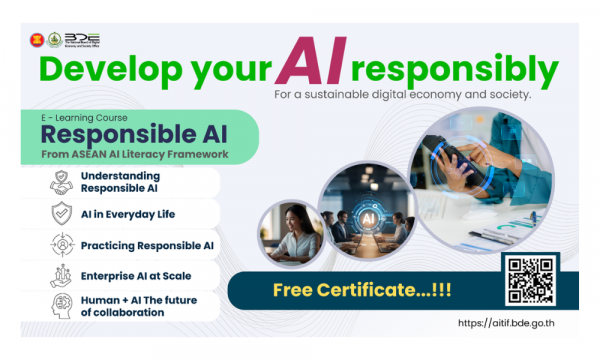
Responsible AI Governance as Competitive Moat: The ASEAN AI Transition Innovation Framework (AITIF), launched March 13, 2026, establishes that responsible AI governance is no longer optional but essential for regulatory compliance, customer trust, and market access. The framework's AI Readiness Assessment Tool (AIRAT) evaluates organizational preparedness across strategy, people, governance, data, and platforms—precisely the dimensions where e-commerce sellers face greatest risk. For cross-border sellers operating in Southeast Asian markets or planning regional expansion, demonstrating responsible AI practices in customer data handling, algorithmic decision-making, and supply chain management provides competitive advantage with regulators, partners, and customers. The free Responsible AI course (aitif.bde.go.th) offers five practical modules covering AI risks and governance expectations. Sellers who complete this training and implement governance frameworks position themselves ahead of competitors still treating AI as a technology project rather than an operational capability requiring oversight.
Organizational Change Management as Execution Bottleneck: The 2026 Deloitte Global Human Capital Trends report (79-page analysis, March 2026) identifies a critical constraint: one-third of workers experienced 15 major changes within a single year, yet only 27% believe their organizations manage change effectively. For e-commerce sellers, this translates directly to operational risk. Teams managing inventory systems, logistics updates, compliance requirements, and technology implementations simultaneously face burnout and reduced adaptation capacity. Sellers failing to pace change appropriately risk employee turnover and operational failures during critical selling seasons. The report recommends embedding adaptation into daily workflows rather than relying solely on formal training. This means sellers should implement change tracking systems that monitor current and proposed changes across all departments—Amazon policy updates, marketplace algorithm changes, logistics network modifications—and assess cross-functional impact before deployment. Organizations that manage change velocity effectively see 15-20% improvements in employee productivity and retention during periods of rapid transformation.
Questions 8
What regulatory risks do e-commerce sellers face with AI implementation?
E-commerce sellers face three primary regulatory risks: (1) **Data Privacy**: AI systems processing customer data must comply with GDPR (EU), CCPA (California), and emerging ASEAN data protection standards; (2) **Algorithmic Transparency**: Dynamic pricing, product recommendations, and customer service automation must be explainable and non-discriminatory; (3) **Supply Chain Governance**: AI-driven supplier selection and logistics optimization must comply with sanctions, labor standards, and environmental regulations. The ASEAN AI Transition Innovation Framework emphasizes that responsible AI governance—including risk assessment, governance policies, and real-world use case validation—is essential for maintaining regulatory compliance and customer trust. Sellers operating across multiple regions should implement governance frameworks that address the strictest applicable standards (typically EU GDPR) to ensure compliance across all markets.
How can sellers assess their AI readiness before scaling implementation?
The ASEAN AI Readiness Assessment Tool (AIRAT) provides a structured framework for evaluating organizational preparedness across five dimensions: (1) **Strategy**: Does leadership view AI as operational capability vs. technology project?; (2) **People**: Are teams trained and empowered to use AI tools effectively?; (3) **Governance**: Are there policies for responsible AI use, data handling, and algorithmic decision-making?; (4) **Data**: Is customer and operational data clean, accessible, and properly governed?; (5) **Platforms**: Are systems integrated or siloed? The assessment identifies readiness levels—Responsible AI Citizen, Worker, Practitioner, Leader—and guides sellers toward appropriate implementation pace. Sellers should complete this assessment before deploying AI at scale to reduce reputational and regulatory risks.