




BlockFills Bankruptcy 2026 | Crypto Payment Risk Alert for Cross-Border Sellers
- $61B institutional crypto platform collapses with $75M losses; sellers using crypto payment gateways face liquidity and custody risks

















Overview
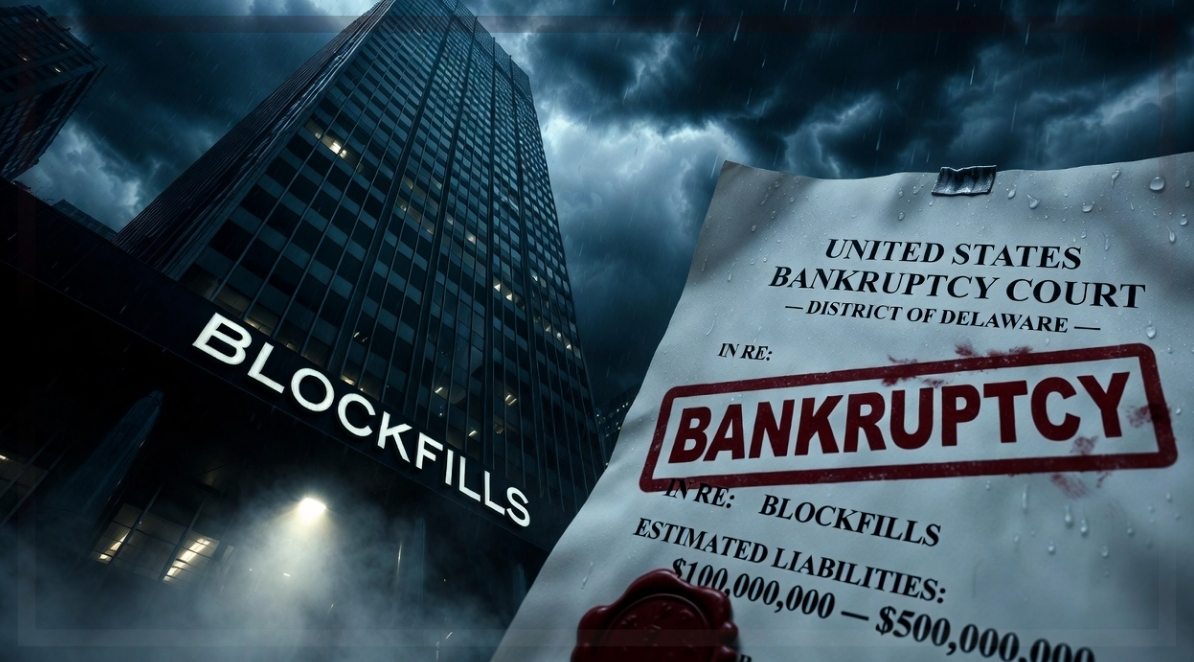
BlockFills' March 15, 2026 Chapter 11 bankruptcy filing represents a critical inflection point for cross-border e-commerce sellers evaluating cryptocurrency payment solutions. The Chicago-based institutional crypto trading and lending platform processed $61 billion in trading volume during 2025 (28% YoY growth) while serving 2,000+ institutional clients, yet collapsed under $75 million in lending losses tied to declining collateral values and commingled customer assets. The company reported assets of $50-100 million against liabilities of $100-500 million, with a $77 million shortfall discovered when customer funds were improperly mixed with company capital on a single balance sheet.
For cross-border sellers, this bankruptcy exposes three critical payment infrastructure risks. First, custody and commingling risk: BlockFills' February 11 suspension of customer deposits and withdrawals—followed by a federal judge's temporary restraining order freezing assets—demonstrates that even well-capitalized crypto platforms ($50M+ assets) can rapidly become inaccessible. Sellers holding cryptocurrency reserves for cross-border transactions face potential 12-36 month recovery timelines through Chapter 11 proceedings, directly impacting working capital cycles. Second, payment processor concentration risk: The 2,000 institutional clients served by BlockFills included hedge funds and asset managers who relied on the platform for liquidity and derivatives trading. If sellers used BlockFills for crypto-to-fiat conversion or stablecoin settlement, they now face alternative routing costs of 0.5-2.0% per transaction through competitors like Kraken, Coinbase Prime, or Gemini—adding $305K-$1.22M annually for sellers processing $61B in volume. Third, regulatory arbitrage collapse: BlockFills operated with minimal regulatory oversight compared to traditional financial institutions, a structural advantage that evaporated when the company disclosed asset misappropriation allegations from Dominion Capital. This signals accelerating regulatory tightening across crypto payment infrastructure, with custody standards and segregation requirements likely to increase operational costs 15-25% for compliant platforms.
The institutional focus of BlockFills' client base—rather than retail exposure—has limited immediate contagion risk, unlike the 2022-2023 crypto winter bankruptcies (Celsius, Voyager, BlockFi, Genesis) that triggered cascading failures. However, the asset freeze and commingling allegations serve as a critical reminder that crypto payment infrastructure remains structurally fragile. For sellers currently using crypto payment gateways or considering blockchain-based settlement for cross-border transactions, this bankruptcy underscores the importance of evaluating provider financial stability, regulatory compliance status, and customer fund segregation practices. The Chapter 11 restructuring process will likely extend 2-4 years, during which customer asset recovery remains uncertain. Sellers should immediately audit their crypto payment exposure, diversify across multiple regulated providers (prioritizing those with banking partnerships and insurance coverage), and consider hybrid payment models combining traditional cross-border payment rails (ACH, SWIFT, local bank transfers) with crypto settlement only for high-velocity, low-friction corridors where regulatory clarity exists.
Questions 8
How does BlockFills' bankruptcy affect sellers' FX hedging strategies?
BlockFills provided derivatives trading and risk-management services for institutional clients, including FX hedging. The platform's collapse eliminates access to institutional-grade hedging products for sellers who relied on BlockFills for currency pair exposure management. Sellers should immediately transition FX hedging to regulated platforms: Kraken offers spot and futures trading for major pairs (EUR/USD, GBP/USD, JPY/USD) with 0.1-0.25% fees; Coinbase Prime offers institutional hedging with banking partnerships. For sellers managing multi-currency working capital (e.g., sourcing from China in CNY, selling in EUR/USD), the loss of BlockFills' liquidity increases hedging costs 0.2-0.5% per transaction. Consider traditional FX providers (OANDA, Interactive Brokers) as complements to crypto platforms for critical hedging needs.
What immediate actions should sellers take if they held funds with BlockFills?
Sellers with BlockFills exposure should: (1) file a claim in the Delaware bankruptcy court immediately (deadline typically 60-90 days from filing), (2) document all transaction records and fund balances as of February 11, 2026, (3) contact BlockFills' restructuring team (Joseph Perry, interim CEO) to understand recovery timelines, and (4) pursue insurance claims if applicable. Simultaneously, sellers should: (1) diversify remaining crypto holdings across Kraken, Coinbase Prime, and Gemini, (2) implement daily crypto-to-fiat conversion to minimize custody exposure, and (3) establish backup payment processors (Wise, Stripe, PayPal) for cross-border settlement. Recovery from BlockFills will likely take 24-36 months; sellers should not depend on these funds for operational working capital.