


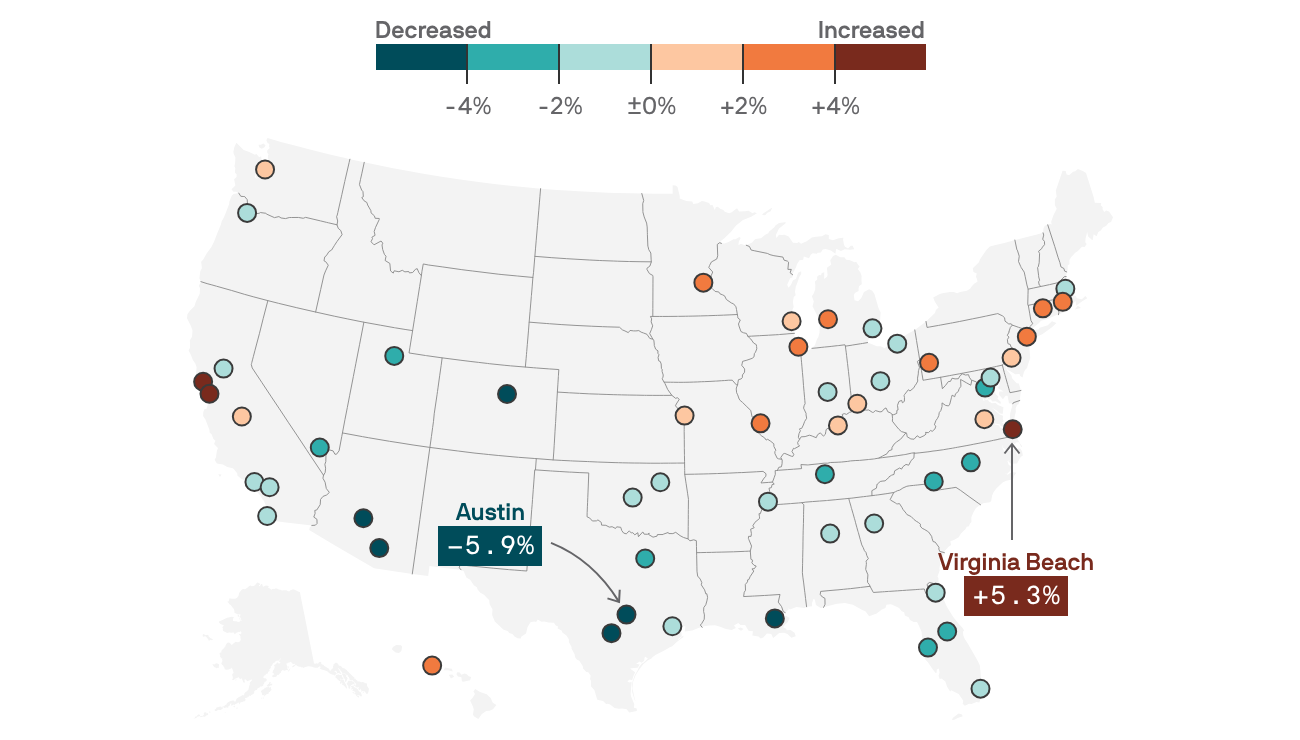

Sun Belt Rent Decline Reshapes E-Commerce Seller Logistics | Regional Opportunity Map
- 608K multifamily units built in 2024 creates 153M population in declining-rent metros; Austin/Phoenix/Tampa emerge as 3PL hub opportunities with 4-6% rent compression















Overview
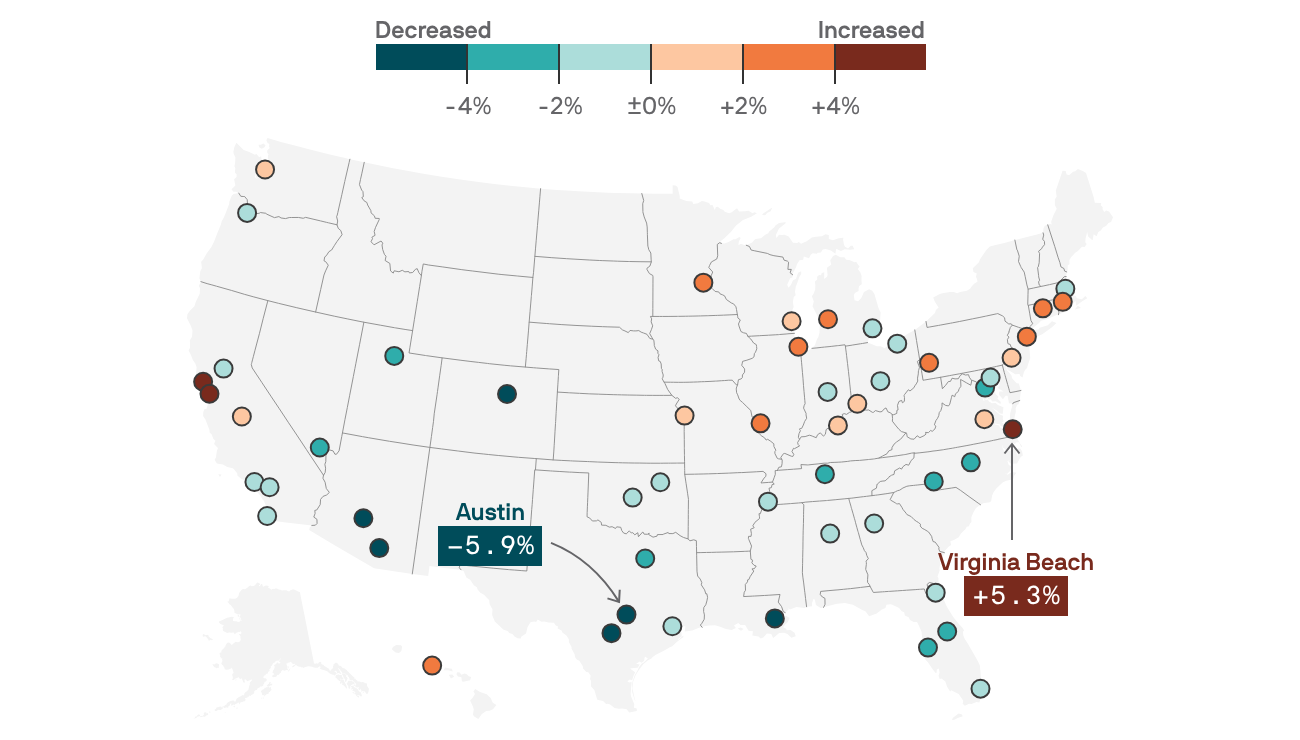
The U.S. rental market's dramatic 30-month declining trend—with median asking rents falling to $1,357 nationally (1.5% YoY decline as of February 2026)—creates a critical operational opportunity for e-commerce sellers managing fulfillment infrastructure. The construction boom of 608,000 multifamily units in 2024 (highest since 1986) has concentrated rent relief in Sun Belt metros: Austin experienced nearly 6% declines, while San Antonio, New Orleans, and Denver each posted ~5% decreases. This geographic divergence directly impacts seller cost structures for 3PL warehousing, fulfillment centers, and return processing operations.
For cross-border and domestic sellers, this represents a 12-18 month window to relocate or establish fulfillment operations in high-growth, low-rent regions. Austin, Phoenix, Tampa, and Denver now offer 4-6% annual rent savings compared to 2025 rates, translating to $8,000-15,000 annual savings per 5,000 sq ft fulfillment space. Conversely, supply-constrained markets (Bay Area +5%, Chicago +4%, Northeast corridor +3-5%) are experiencing rent increases, making these regions increasingly expensive for seller operations. The news reveals that 153 million people live in metros with declining rents, while 100 million reside in rising-rent areas—a critical segmentation for logistics network optimization.
The affordability crisis underlying this trend—22.7 million cost-burdened renter households spending 30%+ of income on housing—signals reduced consumer discretionary spending in tight-rent markets. This creates a dual opportunity: (1) establish fulfillment hubs in declining-rent Sun Belt metros to reduce operational costs, and (2) adjust inventory positioning toward lower-income consumer segments in high-rent Northeast/West Coast markets where purchasing power is compressed. Sellers should monitor summer leasing season (anticipated rent increases per industry analysts) and lock in long-term 3PL contracts before Q2 2026 when landlords may adjust pricing upward. The divergence between construction-saturated and supply-constrained markets will persist, creating distinct regional fulfillment economics for the foreseeable future.
Questions 8
How should sellers adjust pricing strategy by region based on rent trends?
Declining rents in Sun Belt metros enable sellers to reduce fulfillment costs by 4-6% annually, creating margin expansion opportunities for competitive pricing in these regions. Conversely, rising rents in Northeast/West Coast (3-5% increases) compress margins, requiring price increases or category mix shifts toward higher-margin products. Implement dynamic regional pricing that reflects local fulfillment economics: more aggressive pricing in Sun Belt to capture market share, premium pricing in tight-rent markets to maintain margins. Monitor regional rent data monthly via Apartment List to adjust pricing quarterly.
What are the long-term logistics implications of regional rent divergence?
The divergence between construction-saturated Sun Belt markets and supply-constrained Northeast/West Coast will persist indefinitely, creating permanent regional fulfillment economics gaps. Sellers should build dual-hub strategies: low-cost operations in Austin/Phoenix/Denver for national distribution, and premium/specialty fulfillment in Northeast/West Coast for high-margin categories. The news indicates developer caution is reducing new construction, meaning supply constraints will worsen in tight markets. Plan for 15-20% cost differential between Sun Belt and Northeast fulfillment by 2027, requiring strategic network redesign.