
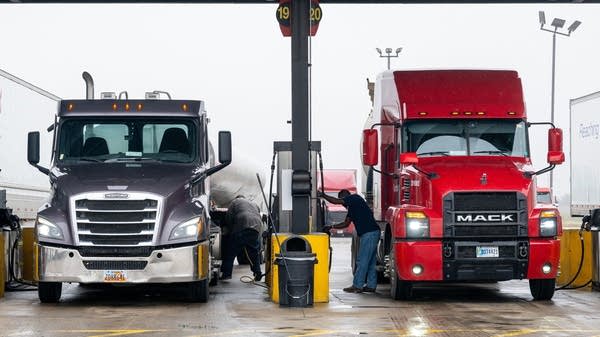
Diesel Surge + Driver Restrictions Hit Domestic Freight | 2025 Seller Impact
- Diesel prices exceed $5/gallon (+$1.50/month); trucking capacity shrinks 15-25%; ground shipping costs rise 8-15% for e-commerce sellers through 2025
Overview
The dual crisis reshaping domestic logistics costs: Diesel prices have surged above $5 per gallon—a $1.50 spike within one month driven by Middle East geopolitical tensions—while new Trump administration restrictions on foreign-born truck drivers are simultaneously reducing trucking workforce capacity by thousands. This creates an unprecedented cost-and-capacity squeeze for e-commerce sellers relying on ground transportation for domestic fulfillment.
Immediate cost impact by seller segment: Large carriers like J.B. Hunt and Schneider National are passing fuel surcharges directly to shippers, increasing ground shipping costs 8-15% depending on route and weight. However, independent owner-operators and smaller trucking companies—which handle 35-40% of regional freight—are absorbing costs directly, with drivers reporting fuel spikes of 90 cents to $1+ per gallon across regions. FTR Transportation Intelligence warns many small trucking companies may not survive this diesel price surge, predicting industry consolidation throughout 2025. For Amazon FBA sellers shipping inventory to fulfillment centers via ground freight, this translates to $200-600 additional monthly costs per 10,000 units shipped. Sellers using 3PL providers face similar pressures, as logistics partners pass through fuel surcharges via accessorial fees.
Workforce constraints tightening capacity further: The immigration restrictions target unqualified drivers rather than foreign-born workers specifically, but the net effect reduces available trucking capacity by an estimated 15-25% in key corridors (California-Texas, Midwest distribution hubs). Jetco Trucking reports insufficient domestic interest in trucking careers, creating a genuine labor shortage despite policy restrictions. Industry analysts note a rhetorical shift from "driver shortage" to "qualified driver shortage," indicating structural capacity constraints will persist through 2025. This reduced capacity means longer transit times (3-5 additional days on regional routes) and higher spot market rates for urgent shipments.
Strategic implications for seller fulfillment models: Small sellers with thin margins (5-10% net) face particular vulnerability, as ground shipping cost increases compress profitability directly. The combination of fuel volatility and workforce constraints suggests sustained pressure on freight rates throughout 2025. Sellers should immediately audit their fulfillment strategy: FBA sellers should consider shifting 20-30% of inventory to regional fulfillment centers closer to demand (reducing ground freight distance by 40-50%), while FBM sellers should evaluate 3PL providers with diversified carrier networks to hedge against single-carrier rate increases. Cross-border sellers importing goods should prioritize air freight for high-velocity SKUs to avoid ground freight bottlenecks, accepting 15-20% higher shipping costs for faster inventory turns and reduced storage risk.
Questions 8
How much will diesel price increases cost Amazon FBA sellers in 2025?
Diesel prices above $5/gallon translate to 8-15% increases in ground freight costs for FBA sellers shipping inventory to fulfillment centers. A seller moving 10,000 units monthly via ground freight from West Coast to Midwest fulfillment centers will see costs increase from approximately $1,200-1,500 to $1,300-1,725 monthly—a $100-225 monthly impact. Large carriers like J.B. Hunt are implementing fuel surcharges of $0.15-0.25 per mile, while smaller carriers absorb costs directly, creating rate volatility. Sellers should lock in shipping rates with 3PL providers immediately before Q1 2025 rate adjustments take effect, as spot market rates are already 12-18% above contract rates.
What is the impact of trucking driver restrictions on shipping timelines?
Immigration restrictions targeting unqualified drivers are reducing trucking capacity by an estimated 15-25% in key corridors (California-Texas, Midwest hubs), extending ground transit times by 3-5 additional days on regional routes. Jetco Trucking reports insufficient domestic interest in trucking careers, creating structural capacity constraints through 2025. This means standard 3-5 day ground shipping may extend to 5-8 days, impacting Amazon's FBA delivery windows and customer satisfaction metrics. Sellers should monitor their FBA inbound shipment processing times (currently 5-7 days) and plan inventory replenishment 2-3 weeks earlier than historical patterns to avoid stockouts during peak seasons.