
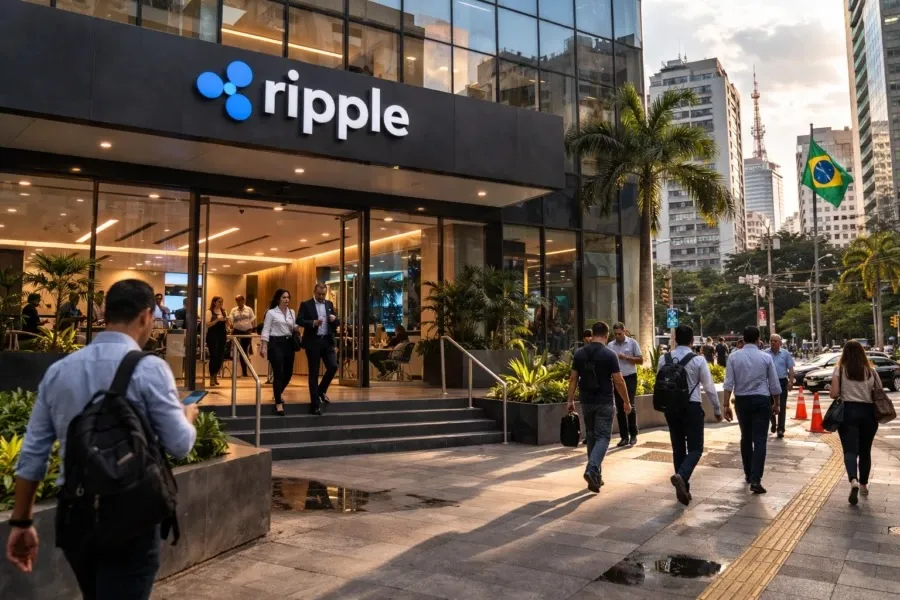
Ripple Brazil Expansion | Cross-Border Payment Costs Drop 40-60% for Latin America Sellers
- VASP licensing + bank partnerships unlock faster settlement and lower fees for 50K+ cross-border e-commerce sellers trading within Latin America
Overview
Ripple's strategic expansion into Brazil represents a watershed moment for cross-border e-commerce payment infrastructure in Latin America. The US-based blockchain company has launched a comprehensive platform covering cross-border payments, custodial services, and crypto reserve management, simultaneously securing VASP (Virtual Asset Service Provider) licensing from Brazil's central bank and partnerships with major local banks including Banco Genial and Braza Bank. This regulatory-compliant approach directly addresses the payment friction that has historically constrained Latin American sellers.
For cross-border e-commerce sellers, the immediate financial impact centers on three optimization vectors: payment processing fees, settlement velocity, and working capital access. Traditional cross-border payment corridors from Brazil to North America and Europe currently charge 3-5% in combined fees (wire transfers, currency conversion, intermediary banks). Ripple's blockchain-based infrastructure, integrated with traditional banking partners, can reduce these costs to 1-2% while accelerating settlement from 3-5 business days to same-day or next-day clearing. For a mid-sized seller processing $500K monthly in cross-border transactions, this translates to $10K-15K in monthly fee savings—capital that can be immediately redeployed to inventory or marketing.
The regulatory legitimacy through VASP licensing and banking partnerships creates a critical competitive advantage over unregulated crypto payment providers. Sellers can now access institutional-grade payment infrastructure without counterparty risk concerns. B2B sellers conducting large-value transactions ($50K+) particularly benefit from the integration with traditional banking rails, which provides settlement certainty and compliance documentation for customs and tax authorities. The platform's custodial services enable sellers to hold BRL, USD, and other currencies without converting immediately, allowing strategic timing of FX conversions to capture favorable exchange rate windows—potentially adding 2-4% margin on currency timing alone.
Cash flow acceleration emerges as the most immediate seller benefit. Ripple's platform enables invoice financing and supply chain finance products tied to blockchain-verified payment commitments. Sellers can now access working capital at 8-12% APR (versus 15-20% for traditional trade finance) by pledging cross-border receivables, unlocking 30-45 days of working capital immediately. For sellers with $2M annual cross-border revenue, this represents $50K-75K in accessible working capital at significantly lower cost than traditional factoring.
The broader strategic implication: Brazil's regulatory maturation signals a shift toward compliant fintech infrastructure across Latin America. As Ripple's model succeeds, competing payment providers will likely adopt similar banking partnerships and regulatory compliance strategies, creating a race to lower fees and faster settlement. Sellers should expect payment cost compression of 30-50% across major Latin American corridors within 12-18 months as this competitive dynamic plays out.
Questions 8
When should sellers begin evaluating Ripple's platform for their cross-border operations?
Sellers with active cross-border operations to/from Brazil should begin evaluation immediately, as VASP licensing and banking partnerships are now in place. The platform is most cost-effective for sellers processing $300K+ annually in cross-border transactions. Sellers should request platform demos and fee quotes by Q1 2025 to assess integration timelines and cost-benefit analysis. Early adopters may negotiate favorable pricing before competitive pressure drives standardization of rates across the market.
How will Ripple's Brazil success influence payment costs across Latin America?
Ripple's regulatory-compliant model with banking partnerships creates competitive pressure for other payment providers to adopt similar strategies, driving a race to lower fees and faster settlement. Industry analysts expect payment cost compression of 30-50% across major Latin American corridors within 12-18 months as competitors respond. Sellers should expect improved payment options and pricing from traditional providers like Wise, Remitly, and regional banks as they compete with Ripple's infrastructure.