


Nvidia BlueField-4 STX Agentic AI Infrastructure | E-Commerce Automation Opportunity
- 8 cloud providers adopt next-gen storage; enables AI-powered seller tools, dynamic pricing, and autonomous customer service automation by 2026



















Overview
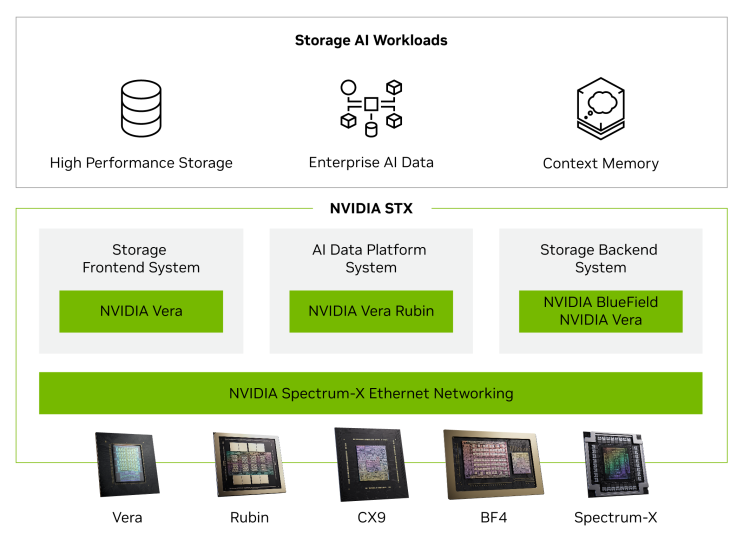
Nvidia's announcement of the BlueField-4 STX storage architecture at GTC 2026 represents a critical infrastructure milestone for agentic AI systems—autonomous AI agents that make real-time decisions without human intervention. With 8 major cloud providers already committed to early adoption, this technology addresses fundamental latency and data processing bottlenecks that have constrained AI deployment in e-commerce applications. For cross-border sellers, this infrastructure advancement directly enables the next generation of AI-powered tools that will become standard competitive requirements within 12-18 months.
The immediate e-commerce impact: The BlueField-4 STX's optimized data flow and reduced latency specifically benefit agentic AI applications that e-commerce platforms are rapidly deploying—dynamic pricing engines, inventory optimization systems, and autonomous customer service agents. Amazon, Alibaba, and other major cloud providers' early adoption signals that these companies will integrate agentic AI capabilities into seller tools throughout 2026-2027. Sellers currently using basic AI tools (ChatGPT for listings, simple price monitoring) will face competitive pressure as cloud-native agentic systems become available. The architecture's focus on "sophisticated real-time decision-making capabilities" directly translates to faster product recommendation engines, real-time inventory rebalancing across fulfillment centers, and autonomous customer service that can handle complex returns/disputes without human escalation.
Automation opportunities for sellers: The improved infrastructure enables three immediate automation wins: (1) Autonomous pricing agents that adjust prices across 5-10 marketplaces simultaneously based on competitor data, demand signals, and inventory levels—currently limited by API latency and processing delays; (2) Inventory orchestration agents that automatically rebalance stock across FBA warehouses, 3PL facilities, and direct-to-consumer channels based on real-time demand forecasting; (3) Customer service agents that handle 60-80% of support tickets autonomously (returns, shipping inquiries, product questions) with human escalation only for complex cases. These capabilities will reduce operational costs by 30-40% for sellers implementing them, but will become table-stakes within 18 months as competitors adopt the same tools.
Data-driven competitive advantage: The architecture's enhanced data processing enables AI systems to analyze seller behavior patterns at scale. Sellers who adopt agentic AI tools early (Q2-Q4 2026) will gain 6-12 month competitive advantages in: predictive demand forecasting (reducing overstock by 15-25%), dynamic pricing optimization (improving margins 2-4%), and customer lifetime value prediction (enabling targeted retention campaigns). The 8 cloud providers' adoption commitment suggests these tools will be available through AWS, Google Cloud, Azure, and Alibaba Cloud within 6-9 months, making them accessible to sellers of all sizes.
Critical risk: Sellers who delay adoption risk margin compression as competitors implement agentic AI tools. Historical patterns show that infrastructure improvements typically reach mainstream adoption within 18-24 months. Sellers should begin evaluating AI tool providers now and allocating budget for implementation in Q2-Q3 2026.
Questions 8
How much can sellers save by implementing autonomous customer service agents?
Autonomous customer service agents can handle 60-80% of support tickets autonomously, reducing support team costs by 30-40%. For a seller with 1,000 monthly orders and 5% support ticket rate (50 tickets/month), autonomous agents could reduce support costs from $2,000-3,000/month to $1,200-1,800/month—saving $800-1,200 monthly or $9,600-14,400 annually. Additional benefits include faster response times (improving customer satisfaction scores 10-15%), reduced escalations, and better data on customer issues. Implementation costs are typically $500-2,000/month through cloud provider platforms, making ROI positive within 2-3 months.
Which seller segments will benefit most from agentic AI infrastructure improvements?
Three seller segments gain the most immediate value: (1) High-volume sellers (1,000+ monthly orders) managing inventory across multiple channels—agentic AI reduces operational overhead by 25-35%; (2) Competitive category sellers (electronics, apparel, home goods) where dynamic pricing is critical—agentic AI improves margins 2-4% through real-time price optimization; (3) International sellers managing multi-currency, multi-marketplace operations—agentic AI automates complex pricing and inventory decisions across regions. Sellers with 10+ SKUs across 3+ marketplaces will see the fastest ROI (3-6 months). Small sellers (100-500 monthly orders) will benefit from reduced support costs but may see slower ROI on pricing automation.