
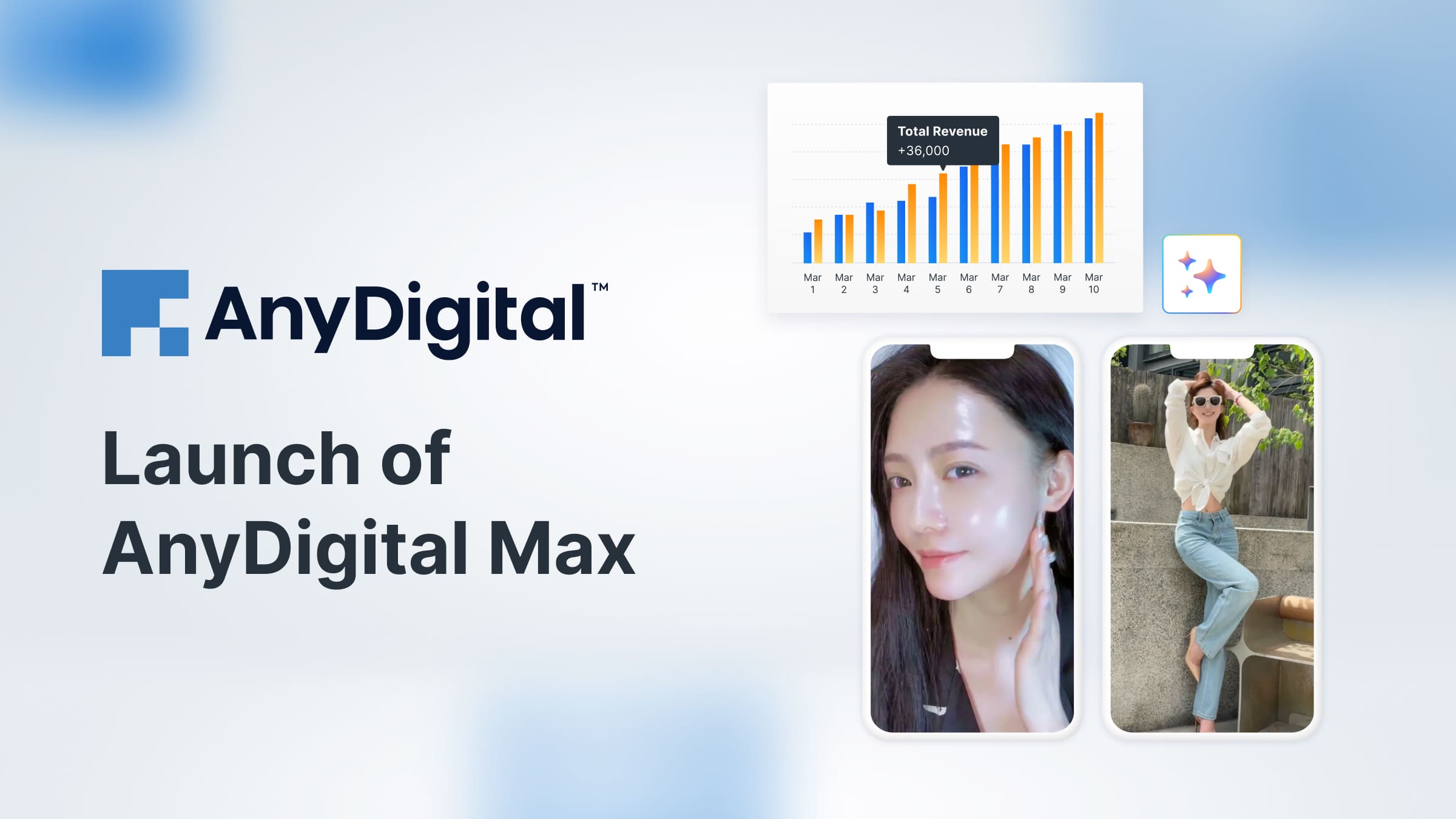
UGC Ads Deliver 2.4x Higher CTR | AnyMind Max Cuts Ad Costs 20% for E-Commerce Sellers
- AnyMind Group's AI platform reduces cost-per-click by 20% while boosting engagement 3.7x through user-generated content optimization across APAC markets
Overview
User-generated content (UGC) advertising has emerged as a game-changing strategy for e-commerce sellers facing ad fatigue and rising customer acquisition costs. AnyMind Group's launch of AnyDigital Max in 2025 directly addresses this critical challenge by providing AI-powered tools to analyze, optimize, and scale UGC campaigns across social platforms. According to first-party data from APAC markets, UGC-based advertisements dramatically outperform traditional brand creatives: 2.4x higher click-through rates, 3.7x higher view rates, and approximately 20% lower cost-per-click. This performance differential is transformative for sellers operating on thin margins, particularly in competitive categories like fashion, beauty, electronics, and home goods where customer acquisition costs have surged 15-25% year-over-year.
The platform's architecture directly solves mid-funnel advertising inefficiencies that plague Amazon, TikTok Shop, and Shopify sellers. AnyDigital Max integrates UGC performance insights, AI-powered optimization recommendations, cross-platform campaign dashboards, and automated advertising workflows—enabling sellers to reduce manual optimization time by 40-60% while improving conversion rates. The ecosystem integration is particularly powerful: AnyTag extracts UGC from influencer campaigns, the Premium Marketplace provides access to 1,700+ publishers, and MISM's network of 2,000 creators produces 20,000 videos annually with a library of 60,000 UGC assets. This means sellers can source, test, and scale winning creative variations in 2-3 weeks instead of the traditional 6-8 week creative development cycle. For sellers spending $5,000-50,000 monthly on paid social, the 20% CPC reduction translates to $1,000-10,000 in monthly savings—capital that can be reinvested in inventory or additional channels.
The shift toward UGC-driven advertising reflects fundamental changes in consumer psychology and platform algorithms. Consumers increasingly trust peer reviews and authentic user content over polished brand messaging, particularly in Gen Z and millennial segments (ages 18-40) who represent 60%+ of e-commerce spending. Meta, TikTok, and Google algorithms now prioritize authentic, lower-production-value content, making UGC naturally aligned with platform incentives. Sellers in high-competition categories (apparel, supplements, home fitness, beauty) should immediately audit their creative libraries and identify top-performing UGC assets. The data suggests sellers can expect 15-30% improvement in ROAS (return on ad spend) by shifting 30-50% of budget allocation from brand creatives to optimized UGC variations. This is particularly valuable for sellers with limited creative budgets or those struggling with declining conversion rates due to ad fatigue in saturated markets.
Questions 8
Which seller segments benefit most from UGC-driven advertising strategies?
Sellers in high-competition, visually-driven categories benefit most: fashion, beauty, supplements, home fitness, electronics, and home goods. These categories typically face 15-25% annual CPC increases due to saturation. Additionally, sellers targeting Gen Z and millennial consumers (ages 18-40) see 20-30% higher engagement with UGC versus brand creatives, as these demographics trust peer reviews over polished marketing. Sellers with limited creative budgets or those experiencing declining ROAS on existing campaigns should prioritize UGC testing. Small-to-medium sellers (annual revenue $500K-$5M) typically see the fastest ROI improvement, as they can reallocate 30-50% of creative budget to UGC optimization.
What metrics should sellers track to measure UGC campaign performance?
Key metrics include click-through rate (CTR), view rate, cost-per-click (CPC), cost-per-acquisition (CPA), and return on ad spend (ROAS). AnyDigital Max provides dashboards tracking these across platforms. Sellers should establish baselines: typical brand creative CTR is 0.8-1.2%, while UGC typically achieves 1.9-2.9% (2.4x improvement). View rates should increase 3-4x. CPC should decrease 15-25%. ROAS targets vary by category but should improve 20-35% when shifting 30-50% budget to optimized UGC. Sellers should also track creative fatigue signals: declining CTR over 2-3 weeks indicates need for rotation. Monitor these metrics weekly via platform dashboards (Meta Ads Manager, TikTok Ads Manager, Google Ads).