


Media Titans Clash: The $108 Billion Battle Reshaping Entertainment's Future
- Strategic warfare in streaming reveals the next evolution of content and distribution platforms


































Overview
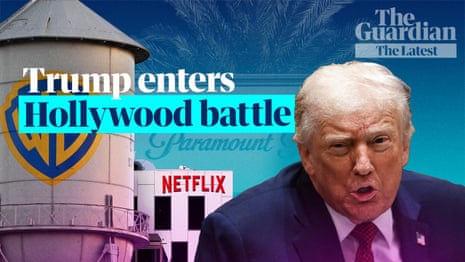
In a high-stakes corporate chess match, Netflix and Paramount are rewriting the rules of media acquisition, transforming what was once a simple streaming platform competition into a complex battle for global entertainment dominance. The core drama centers on the Warner Bros Discovery acquisition, where Paramount has boldly countered Netflix's initial $83 billion proposal with a more aggressive $108 billion direct-to-shareholder offer.
This isn't just about buying a media company—it's a strategic repositioning that reveals deeper industry transformations. Netflix, traditionally seen as a streaming service, is signaling its ambition to become a comprehensive content powerhouse by targeting Warner Bros Discovery's extensive library and production capabilities. Paramount's counter-move demonstrates the increasing value of content libraries and the critical importance of scale in the digital entertainment ecosystem.
The geopolitical dimensions add another layer of complexity. Tencent's withdrawal of financing due to national security concerns highlights the intricate cross-border investment landscape. By having foreign sovereign wealth funds from Saudi Arabia, Abu Dhabi, and Qatar limit their management participation, Paramount is navigating a complex regulatory environment that goes far beyond simple corporate acquisition.
The negotiation's nuanced timeline reveals strategic maneuvering at the highest levels. David Ellison's bid, which escalated from $19 to $30 per share, and the ultimate board preference for Netflix's proposal, underscore how personal relationships, financial considerations, and strategic positioning intersect in modern media mergers.
For digital strategists and cross-border entrepreneurs, this battle offers a masterclass in adaptive corporate strategy. It demonstrates that success now depends on understanding not just content, but the complex ecosystem of distribution, regulatory environments, and global investment dynamics. The streaming wars have evolved—this is now a fight for comprehensive media infrastructure and global content control.
Questions 3
What does this battle reveal about the future of streaming and media platforms?
The competition shows that scale, content diversity, and strategic infrastructure are becoming more important than traditional streaming metrics. Companies are no longer just competing on subscriber numbers, but on their ability to create, distribute, and monetize content across complex global ecosystems.
How are national security considerations impacting media investments?
Tencent's withdrawal demonstrates growing scrutiny of cross-border technology investments. The Committee on Foreign Investment in the United States (CFIUS) is increasingly examining international media and tech transactions, forcing companies to carefully structure deals to avoid potential national security challenges.