



Strategic Recalibration: How Nvidia's H200 Chip Export Signals a New Era of US-China Tech Engagement
- A nuanced policy shift redefining technological interdependence and strategic competition







Overview
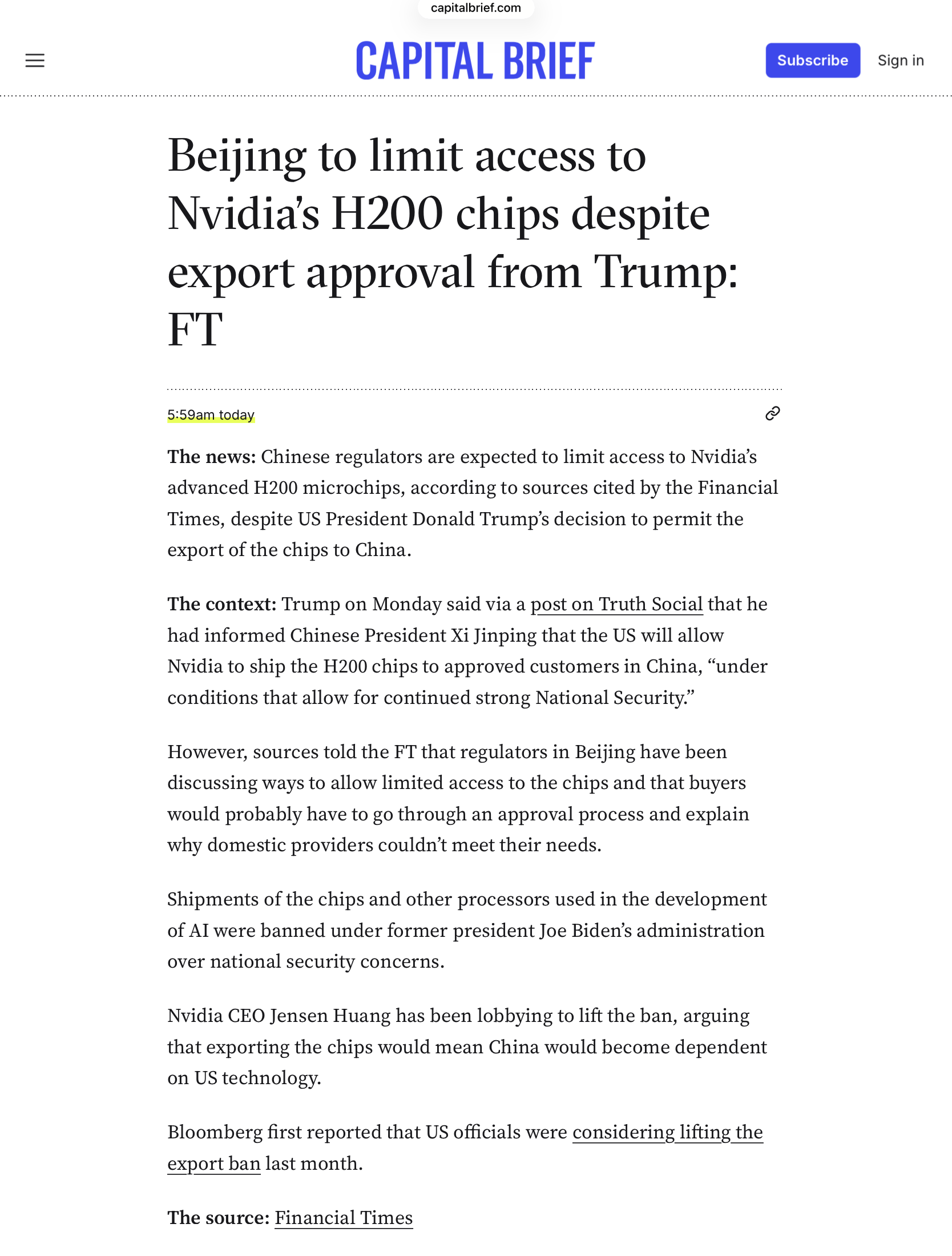
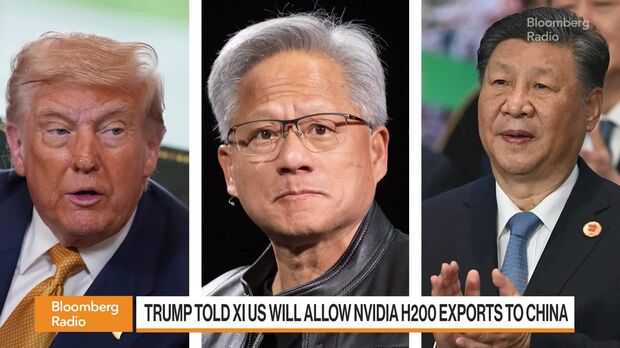
The recent authorization of Nvidia's H200 chip exports to China represents a pivotal moment in international technology policy, signaling a sophisticated departure from decades of strict technological containment. This strategic pivot reveals a complex geopolitical recalibration where technological interdependence becomes a deliberate policy instrument rather than an unintended consequence.
The core innovation lies in the 25% revenue return condition, transforming a simple export transaction into a strategic leverage mechanism. By permitting limited H200 chip sales while maintaining technological control, the United States is essentially creating a new model of technological engagement with China. This approach goes beyond traditional export restrictions, introducing a nuanced strategy of controlled knowledge transfer that maintains American technological superiority.
The decision's underlying logic is particularly compelling. Recognizing that Huawei already possesses comparable AI system capabilities, the policy shifts from pure restriction to strategic management. The Trump administration's approach suggests a profound understanding that complete technological isolation is less effective than creating structured interdependencies. By allowing controlled chip exports, the U.S. can potentially slow China's independent technological development while generating revenue and maintaining strategic optionality.
For cross-border technology sellers and AI-related businesses, this represents a significant policy evolution. The 25% revenue return mechanism creates a novel template for technology transfer that balances economic opportunity with national security considerations. Companies must now think beyond simple export/import dynamics and consider more complex, strategically layered international technology exchanges.
Critically, this move signals a potential long-term transformation in U.S.-China technology relations. Rather than a zero-sum technological competition, we're witnessing the emergence of a more sophisticated engagement model—one that seeks to maintain technological leverage through controlled, strategic interactions.
Questions 3
How might this policy impact global AI technology competition?
The policy suggests a shift from pure technological containment to a more sophisticated engagement model. It creates a framework where technological competition becomes more about strategic management and controlled interaction rather than complete isolation.
Why did the US allow Nvidia to export H200 chips to China?
The decision was strategic, recognizing that Huawei already has comparable AI capabilities. By allowing controlled exports with a 25% revenue return, the US maintains technological leverage while preventing complete market isolation and generating revenue.