



Fed's Strategic Rate Cut Signals Complex Economic Recalibration
- Monetary Policy Pivot Creates Nuanced Investment Landscape for Adaptive Businesses



























Overview
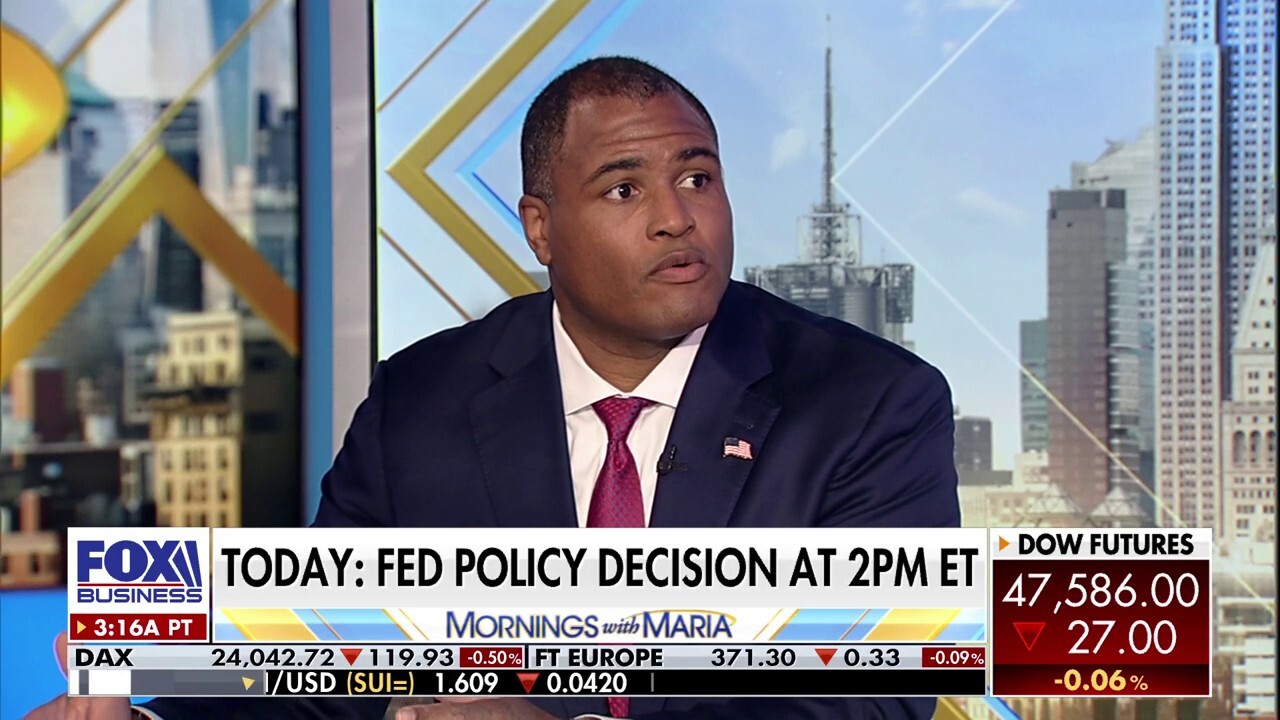
The Federal Reserve's latest monetary policy decision represents a pivotal moment of strategic recalibration, revealing deep complexities in the current economic ecosystem. With an 87% probability of a quarter-point rate cut, the Fed is navigating a delicate balance between addressing inflationary pressures and supporting economic growth.
Market dynamics are showing remarkable nuance, reflecting the intricate decision-making process. The Russell 2000 small-cap index hitting an all-time high suggests smaller companies are poised to benefit from reduced borrowing costs, while major indices display cautious optimism. This signals a potential strategic inflection point where monetary policy is attempting to stimulate economic momentum without triggering excessive market volatility.
The 'hawkish cut' approach indicates the Fed's sophisticated strategy of providing economic support while maintaining disciplinary monetary constraints. Investors and businesses must recognize this as more than a simple rate reduction—it's a carefully calibrated signal about future economic expectations. The dot-plot projections will be crucial in understanding the Federal Reserve's near-term economic outlook, offering insights into potential subsequent policy decisions.
For cross-border businesses and investors, this moment demands strategic adaptability. The mixed global market responses—from European markets' uncertainty to Asian indexes' downward pressure—underscore the need for flexible financial strategies. Tech sectors and small-cap companies appear particularly well-positioned to leverage these monetary shifts, suggesting opportunities for strategic reallocation and investment.
The broader implications extend beyond immediate market reactions. This decision reflects deeper tensions between addressing inflation management and supporting job market resilience. Businesses should view this as a signal to optimize their financial structures, potentially exploring more dynamic financing options and maintaining agile capital deployment strategies.
Questions 3
How should cross-border businesses respond to this monetary policy shift?
Businesses must maintain financial flexibility, reassess their capital allocation strategies, and be prepared to quickly adapt to changing economic signals. This includes exploring diverse financing options and maintaining agile investment approaches.
What are the potential risks in the current economic environment?
The 'hawkish cut' approach suggests ongoing economic uncertainty. Potential risks include limited future rate cuts, continued market volatility, and the need for businesses to continuously monitor macroeconomic indicators for strategic decision-making.