





Humans Unmasked: The Complex Science of Monogamy in Our Species
- Revealing the nuanced evolutionary strategies that define human pair-bonding and social cooperation














Overview
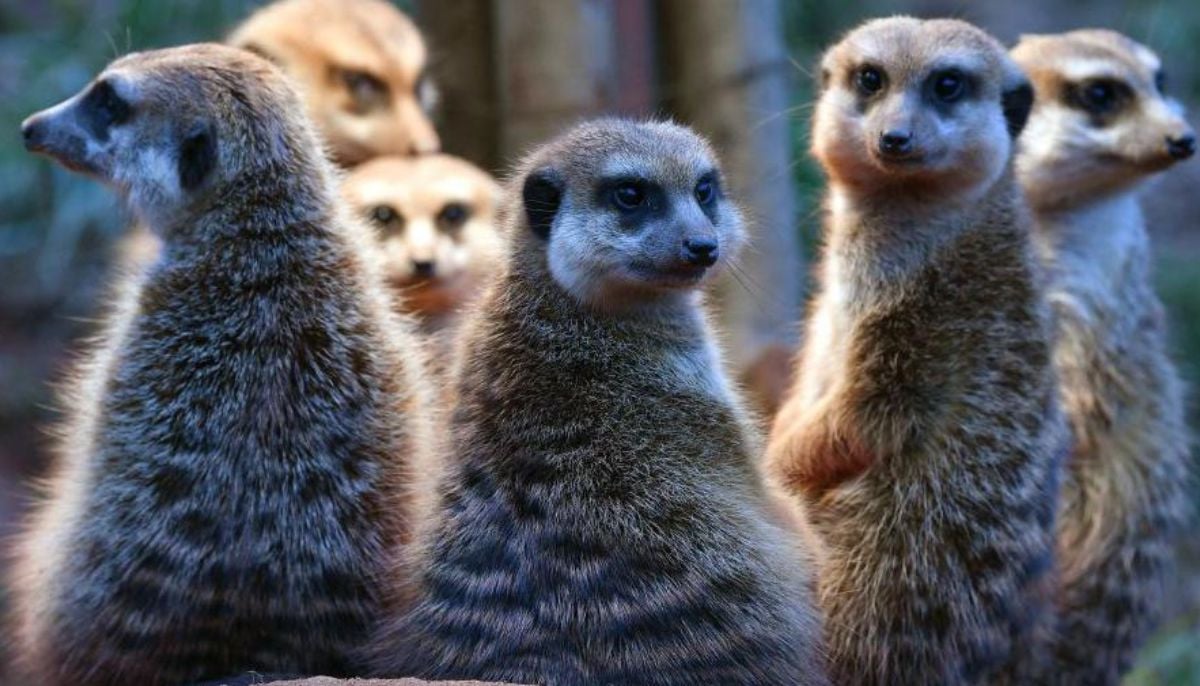
The intricate landscape of human social monogamy emerges as a fascinating evolutionary puzzle, challenging simplistic assumptions about our mating behaviors. A groundbreaking University of Cambridge study reveals that humans occupy a unique middle ground in the mammalian monogamy spectrum, with a monogamy rating of 66% that positions us between meerkats and beavers—neither purely monogamous nor completely promiscuous.
Evolutionary complexity defines our reproductive strategy. Unlike our primate relatives like chimpanzees (scoring a mere 4 on the monogamy scale) or mountain gorillas (6), humans have developed a sophisticated approach to pair-bonding. The research, led by evolutionary anthropologist Dr. Mark Dyble, demonstrates that our social success stems not from a single mating model, but from a complex interplay of kinship networks, cultural institutions, and adaptive partnership structures.
The study's most provocative insight is how humans have transcended biological determinism. By analyzing genetic data from 103 human societies and 34 mammal species, researchers discovered that our monogamous tendencies are remarkably flexible. We can range from serial monogamy to stable polygamy while maintaining strong parental investment—a strategy that has been crucial to our species' evolutionary success.
Notably, even human societies with the lowest proportion of full siblings (26%) still exceeded the highest-ranked non-monogamous mammal species (22%). This suggests our reproductive adaptability is not just a cultural phenomenon, but a deeply ingrained evolutionary advantage. Dr. Dyble's computational model reveals that humans have developed a unique reproductive approach that prioritizes social cooperation over strict genetic replication.
The implications are profound. Monogamy, in the human context, is less about sexual exclusivity and more about creating stable social structures that enable complex cooperative networks. By pairing up, our species has developed an extraordinary capacity to protect, nurture, and collectively advance our young—a strategy that has been fundamental to our global dominance.
This research challenges both romantic notions of eternal pair-bonding and cynical views of human mating as purely transactional. Instead, it presents a nuanced view of human relationships as dynamic, strategic, and fundamentally oriented toward collective survival and advancement.
Questions 4
How monogamous are humans compared to other mammals?
Humans rank seventh out of eleven studied species, with a 66% monogamy rating. We're more monogamous than chimpanzees (4%) and mountain gorillas (6%), but less monogamous than beavers (73%) and the California deermouse (100%).
What makes human monogamy unique?
Unlike other mammals, humans demonstrate remarkable flexibility in mating systems. We can adapt between serial monogamy, stable polygamy, and complex multi-partner social structures while maintaining strong parental investment and cooperative social networks.