
Section 230 Reform Threatens Platform Liability Shield | Seller Account Risk Alert
- Senate hearing March 18, 2026 could reshape content moderation policies affecting 5M+ cross-border sellers and account security protections
Overview
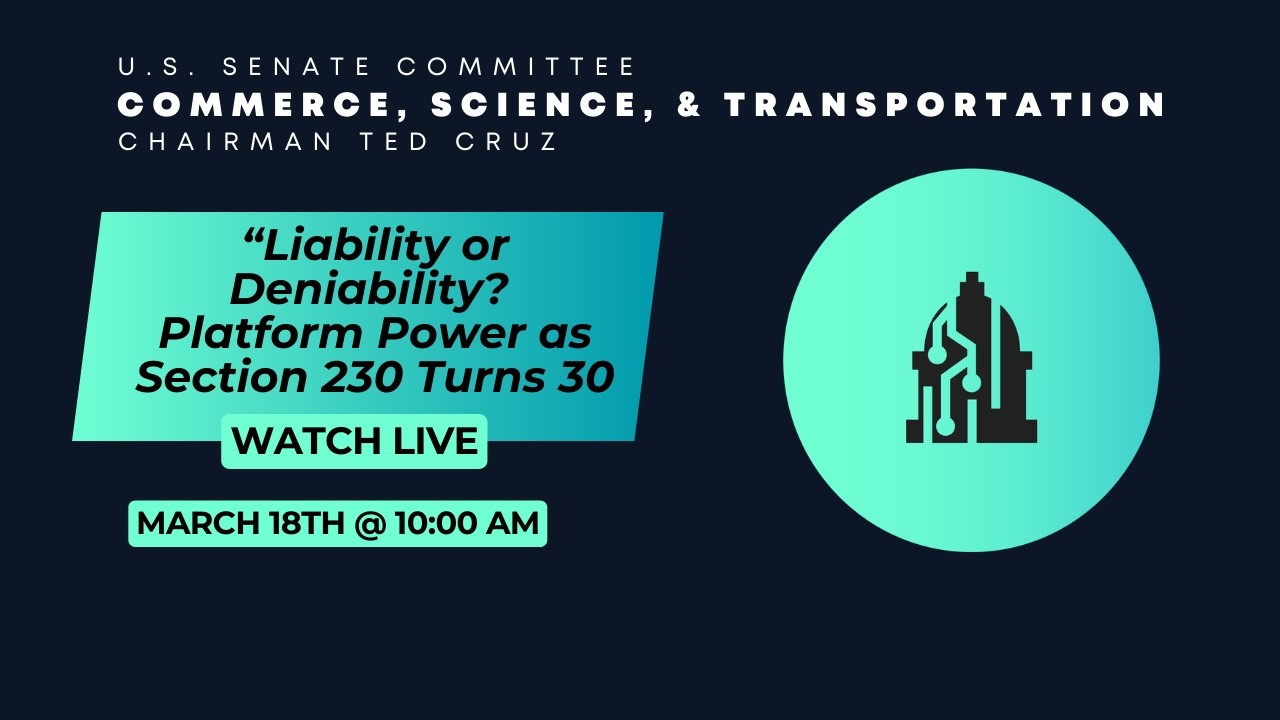
The U.S. Senate Committee on Commerce, Science, and Transportation has scheduled a critical hearing for March 18, 2026, examining Section 230 of the Communications Decency Act as it reaches its 30th anniversary. This legislation, foundational since 1996, shields Amazon, eBay, Shopify, and other e-commerce platforms from liability for user-generated content. Senator Ted Cruz's committee will scrutinize platform monopoly power and content moderation practices, with testimony from Stanford Law School's Daphne Keller, the Knight First Amendment Institute's Nadine Farid Johnson, and other policy experts.
For cross-border e-commerce sellers, this hearing represents a watershed moment. Section 230 protections directly determine how platforms handle seller disputes, moderate product listings, manage account suspensions, and enforce policies. Current protections allow platforms to moderate content aggressively without legal liability—a framework that has enabled rapid scaling of Amazon FBA, eBay seller networks, and Shopify storefronts. Potential reforms could shift liability burdens to platforms, forcing stricter pre-moderation of seller listings, more rigorous verification processes, and enhanced dispute resolution mechanisms. This could increase operational costs for platforms, which may pass expenses to sellers through higher fees or stricter account requirements.
The competitive landscape varies significantly by platform. Amazon's 2M+ third-party sellers rely on Section 230 protections for account security and dispute handling; eBay's 25M+ active sellers depend on these shields for transaction protection; Shopify's 2M+ merchants benefit from reduced platform liability for customer interactions. If Section 230 is reformed to impose greater platform responsibility, expect: (1) stricter seller verification requirements (potentially 15-30 day account approval delays), (2) enhanced content moderation requiring product listing pre-approval, (3) increased account suspension rates for policy violations, and (4) higher platform fees to offset compliance costs (estimated 2-5% increase in seller fees).
Regional impact varies by market. US-based sellers face immediate policy changes post-hearing; EU sellers already operate under GDPR and DSA frameworks with higher liability standards; Asian sellers may see delayed impacts as platforms prioritize US/EU compliance. The hearing will be livestreamed March 18, 2026, with testimony documents publicly available. Sellers should monitor testimony from Matthew Bergman (Social Media Victims Law Center) and Brad Carson (Americans for Responsible Innovation) for insights into potential liability frameworks. Strategic sellers should diversify across platforms now—reducing Amazon dependency from 60-70% to 40-50% of revenue—before potential policy changes increase account risk or operational costs in Q2-Q3 2026.
Questions 8
What is Section 230 and how does it affect e-commerce sellers?
Section 230 of the Communications Decency Act (1996) shields online platforms from liability for user-generated content, including seller listings, reviews, and customer interactions. This protection allows **Amazon, eBay, and Shopify** to moderate content without facing lawsuits for every user post or seller listing. For sellers, Section 230 means platforms can suspend accounts or remove listings with limited legal recourse—platforms aren't liable for these moderation decisions. The March 18, 2026 Senate hearing will examine whether this 30-year-old framework still serves the digital economy or enables platform monopoly power. Sellers should understand that reforms could shift liability to platforms, potentially increasing account verification requirements and listing pre-approval processes.
How could Section 230 reform impact my Amazon FBA or eBay seller account?
If Section 230 is reformed to impose greater platform liability, expect stricter account verification (potentially adding 15-30 days to approval), mandatory product listing pre-approval before publication, and higher suspension rates for policy violations. **Amazon FBA sellers** could face enhanced brand verification requirements; **eBay sellers** might need pre-listing approval for high-risk categories. Platforms may increase seller fees by 2-5% to offset compliance costs. Account security could improve (fewer false suspensions due to better review processes), but operational friction increases significantly. Sellers should diversify revenue across 2-3 platforms now rather than relying 60-70% on Amazon, reducing risk exposure before potential policy changes in Q2-Q3 2026.