
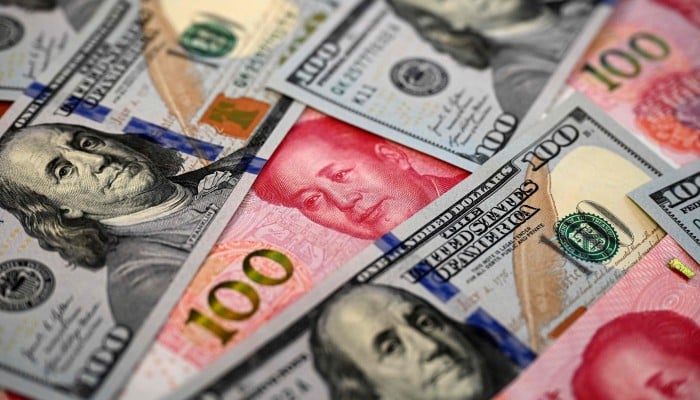
China's Alternative Payment System | Cross-Border Fee Reduction Opportunity for Asia-Pacific Sellers
- Multi-currency payment network removes yuan restrictions, potentially cutting transaction costs 8-15% for sellers with $500K+ annual Asia-Pacific volume
Overview
China's regulatory overhaul of its global payment infrastructure represents a watershed moment for cross-border e-commerce sellers, particularly those operating in Asia-Pacific markets. The South China Morning Post reports that Chinese authorities have removed key restrictions that previously confined the system to yuan-denominated transactions, enabling the payment network to support multiple currencies and expand internationally. This directly challenges the Western payment dominance of SWIFT, Visa, and Mastercard, which currently process the majority of cross-border e-commerce transactions and are subject to US regulatory oversight and sanctions regimes.
For sellers, the immediate financial opportunity centers on payment cost reduction. Currently, Asia-Pacific cross-border transactions incur 2.5-4.5% processing fees through Western payment networks, with additional currency conversion spreads of 1-2%. An alternative Chinese payment system supporting multiple currencies could reduce these combined costs to 1.5-2.5%, translating to $5,000-15,000 annual savings for sellers processing $500K-$2M in annual Asia-Pacific volume. The timing aligns with China's Belt and Road Initiative and yuan internationalization efforts, signaling sustained government investment in payment infrastructure development.
The cash flow acceleration potential is substantial but requires strategic positioning. Sellers with significant transaction volumes in Asia-Pacific regions—particularly those selling to Southeast Asian, Indian, and Middle Eastern buyers—should monitor integration timelines with major cross-border platforms like Shopify, Amazon Global, and eBay International. The transition requires coordination among payment processors, banks, and e-commerce platforms, meaning adoption will likely follow a 12-24 month rollout pattern. Early adopters who integrate alternative payment methods could gain 3-5 day settlement speed improvements, unlocking working capital equivalent to 2-3% of monthly revenue.
FX arbitrage opportunities emerge from currency pair volatility during this transition period. As the Chinese payment system expands to support multiple currencies (likely including USD, EUR, GBP, and regional currencies), sellers can exploit temporary pricing inefficiencies between traditional SWIFT corridors and new payment routes. Sellers with exposure to CNY-denominated supplier payments could hedge through the new system at potentially better rates than traditional forex markets, reducing currency conversion costs by 0.5-1.2%.
Risk mitigation remains critical. Western-based sellers should not expect immediate infrastructure changes, and adoption requires merchant and consumer acceptance. Sellers should establish dual payment acceptance capabilities rather than migrating entirely, maintaining SWIFT/Visa/Mastercard infrastructure while testing alternative systems with 10-20% of Asia-Pacific transaction volume. Regulatory uncertainty around sanctions compliance and data localization requirements means sellers must verify that alternative payment systems meet their jurisdiction's compliance obligations before full integration.
Questions 8
How does China's payment system align with the Belt and Road Initiative for sellers?
The news reports that China's regulatory changes align with the Belt and Road Initiative and yuan internationalization efforts, signaling sustained government investment in payment infrastructure. For sellers, this means the alternative payment system will likely prioritize trade corridors along Belt and Road routes—Southeast Asia, South Asia, Central Asia, Middle East, and Africa. Sellers with supply chains or customer bases in these regions benefit from enhanced payment infrastructure, faster settlement, and reduced costs. Conversely, sellers focused on Western markets (US, EU) should expect slower integration and lower priority. The strategic implication: sellers should evaluate their geographic exposure and prioritize integration in Belt and Road regions where government support ensures system stability and adoption momentum.
How should sellers prepare for China's alternative payment system integration?
Sellers should establish dual payment acceptance capabilities rather than migrating entirely, maintaining SWIFT/Visa/Mastercard infrastructure while testing alternative systems with 10-20% of Asia-Pacific transaction volume. The news emphasizes that adoption requires widespread merchant and consumer acceptance, meaning early testing is essential. Immediate actions: (1) Monitor platform announcements from **Shopify, Amazon, and eBay** regarding integration timelines; (2) Audit current Asia-Pacific transaction volumes and fee structures to quantify potential savings; (3) Establish FX monitoring protocols comparing SWIFT rates against alternative system rates; (4) Verify compliance obligations around sanctions and data localization before integration. Strategic adjustments over 6-12 months should include pilot programs with 10-20% of Asia-Pacific volume, gradual migration as adoption increases, and contingency plans maintaining Western payment infrastructure.