






Strategic Lineup Disruption: How Unconventional Coaching Transforms Team Performance
- Tactical Flexibility Reveals the Power of Adaptive Leadership in High-Stakes Competitive Environments



























Overview
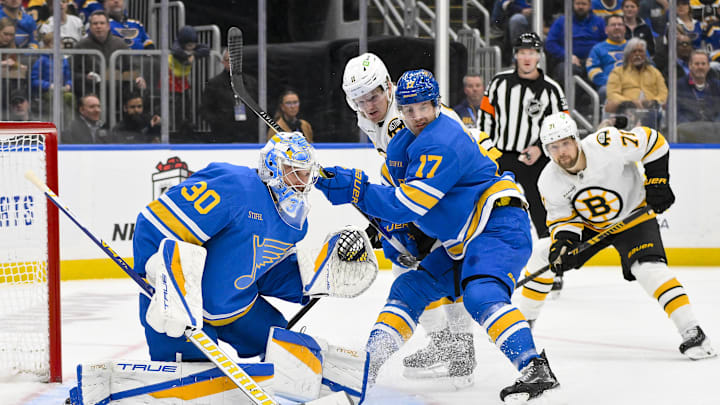
Strategic adaptability emerges as the critical differentiator in competitive team dynamics, as demonstrated by Marco Sturm's bold coaching approach with the Boston Bruins. In a surprising tactical maneuver, Sturm restructured his hockey lineup by repositioning star player David Pastrnak to the third line alongside Fraser Minten and Marat Khusnutdinov, a decision that yielded remarkable results in a dominant 5-2 victory against the St. Louis Blues.
The core insight lies not just in the win, but in the strategic reconfiguration itself. By breaking up the previously successful third line and redistributing players like Tanner Jeannot and Mark Kastelic, Sturm demonstrated a counterintuitive approach to team optimization. The reconfigured lines showcased extraordinary performance metrics during 5-on-5 play: a 13-6 shot advantage, 4-1 scoring, and a striking 13-4 high-danger chance differential. This isn't merely a lineup change—it's a masterclass in organizational flexibility.
What makes this strategy particularly compelling is the psychological dimension. Sturm emphasized team character, praising players for their professional attitude in accepting potentially disruptive changes. Pastrnak's lighthearted description of the new line as "just three young kids playing together" reveals a deeper narrative of adaptability and team spirit. The coaching staff transformed potential uncertainty into a strength, demonstrating that leadership is about creating opportunities from apparent challenges.
The broader implications extend far beyond this single game. In high-performance environments, the ability to dynamically reconfigure resources—whether hockey lines or business teams—becomes a critical competitive advantage. Sturm's approach reveals that predictability can be a strategic weakness, and that calculated disruption can unlock unexpected potential. By challenging established patterns and empowering younger talent alongside experienced players, organizations can create innovative, resilient performance models.
Ultimately, this case study illuminates a universal principle: true strategic excellence emerges not from rigid structures, but from the capacity to reimagine and reconfigure existing capabilities. The Bruins' victory is less about hockey and more about the transformative power of adaptive leadership.
Questions 3
What performance metrics indicate the success of this strategic lineup change?
The reconfigured lines achieved remarkable 5-on-5 play metrics: a 13-6 shot advantage, 4-1 scoring, and a 13-4 high-danger chance differential. These statistics reveal that the unconventional lineup not only maintained performance but significantly enhanced the team's competitive edge.
How does Marco Sturm's lineup change demonstrate strategic leadership?
Sturm's approach shows strategic leadership by breaking traditional lineup patterns, redistributing talent dynamically, and creating opportunities for younger players. By moving Pastrnak to the third line and reshuffling other players, he demonstrated the ability to challenge established structures and unlock unexpected team potential.