
Stablecoin Payment Rails Cut Cross-Border Wire Costs 60-75% | Community Bank Opportunity
- Bank of North Dakota launches Roughrider Coin in 2026; cross-border wire fees drop from $7-10 to $2-3 per transaction for 50,000+ volume sellers
Overview
Stablecoin infrastructure is fundamentally reshaping cross-border payment economics for e-commerce sellers, with community banks now entering the market to compete against larger institutions. Bank of North Dakota's March 2026 announcement of the Roughrider Coin—a stablecoin for wholesale bank-to-bank payments developed with Fiserv—signals a critical inflection point: payment costs for cross-border transactions can now be reduced by 50-75 percent using blockchain-based settlement rails instead of traditional wire transfers.
The financial impact is immediately quantifiable. A bank processing 50,000+ cross-border wire transactions currently pays $7-10 per wire through ACH/SWIFT networks; stablecoin rails reduce this to $2-3 per transaction. For a mid-sized e-commerce seller processing 10,000 monthly cross-border payments, this represents $420,000-$840,000 in annual savings—capital that can be redirected to inventory, marketing, or working capital. The Roughrider Coin addresses a critical operational gap: banks currently process 400-500 million daily ACH transfers with cutoff times that force inefficient workarounds like physical cashier's checks. After-hours settlement via stablecoins eliminates these delays, accelerating cash conversion cycles by 1-2 business days.
Community and mid-tier banks are rapidly adopting stablecoin infrastructure to serve smaller merchants and cross-border sellers who lack direct access to large-bank payment networks. Fiserv's FIUSD platform provides turnkey stablecoin capabilities for institutions without resources for independent blockchain development, democratizing access to digital payment rails. This creates a two-tier advantage: (1) immediate cost savings of 60-75% on wire fees for sellers using bank partners offering stablecoin settlement, and (2) working capital acceleration through faster settlement windows (same-day vs. 2-3 day ACH cycles).
For cross-border e-commerce sellers, the strategic implication is clear: payment method selection now directly impacts profitability. Sellers shipping to multiple countries can reduce per-transaction costs from $50-100 (traditional wire + FX conversion + intermediary fees) to $15-30 using stablecoin-enabled banks. The full Roughrider Coin launch in late 2026 will establish a template for regional stablecoin adoption, likely triggering similar initiatives from community banks in other states. Sellers should begin identifying which of their banking partners are exploring stablecoin integration and prioritize relationships with early adopters to capture cost advantages before market-wide adoption raises competitive baseline expectations.
Questions 8
What is the Roughrider Coin and when will it be available?
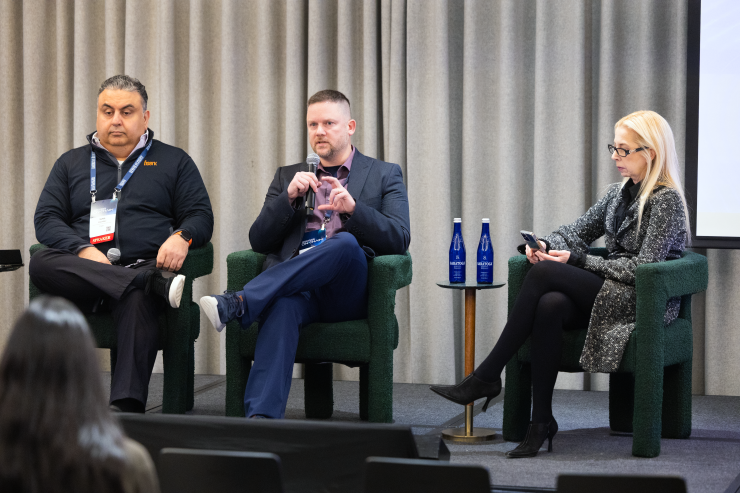
The Roughrider Coin is a stablecoin developed by Bank of North Dakota (the nation's only state-owned bank with $10.8 billion in assets) in partnership with Fiserv, announced at the American Banker's On-Chain Executive Summit in March 2026. It's designed for bank-to-bank wholesale payments and after-hours settlement, addressing the operational gap where banks currently process 400-500 million daily ACH transfers with cutoff times that force inefficient workarounds like physical cashier's checks. The full launch is scheduled for later in 2026. Community and mid-tier banks are exploring similar stablecoin implementations for cross-border transactions and wholesale settlement, making this a template for regional adoption.
How does stablecoin settlement accelerate working capital for e-commerce sellers?
Traditional wire transfers settle in 2-3 business days; stablecoin rails enable same-day settlement, freeing up working capital 1-2 days faster. For a seller with $100,000 in daily cross-border revenue, this acceleration unlocks $100,000-$200,000 in immediate liquidity without additional financing. Combined with 60-75% cost savings on wire fees, sellers can reinvest freed capital into inventory, marketing, or trade finance products. Fiserv's FIUSD platform and Bank of North Dakota's Roughrider Coin both prioritize settlement speed as a core competitive advantage, making payment method selection a direct working capital optimization lever.